Get Full Government Meeting Transcripts, Videos, & Alerts Forever!
Get email alerts on the School Music Program topic
No spam. Unsubscribe anytime.
Parents, students and teachers press Neshaminy board to retain elementary music teacher amid staff realignment
Summary
Dozens of parents, students and music teachers urged the Neshaminy Board of School Directors on May 13 to reverse a planned staff realignment that will eliminate one itinerant elementary music teacher position after a retirement.
Dozens of parents, students and music teachers urged the Neshaminy Board of School Directors on May 13 to reverse a planned staff realignment that will eliminate one itinerant elementary music teacher position after a retirement, saying the change would harm students and the district’s award-winning music program.
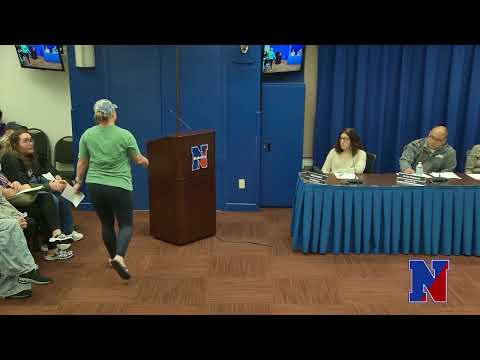
The push came during the board’s public-comment periods at a public works session at Maple Point, where speakers cited petitions, program awards and personal stories of students who rely on music teachers for daily support. Board members and staff responded that the district described the change as a staff realignment, not a programmatic cut.
The concern centers on a reduction in the district’s itinerant instrumental music staff from 10 to 9 following one retirement, a change parents and teachers said would leave some schools staffed less frequently and would stretch remaining teachers across multiple buildings. "The music program has had an immeasurable impact on our children," said Linda Pritchard, a Langhorne resident and parent. "I hope that we keep the program strong for our students and for the community."
Dan Weiner, identified in public comment as a Neshaminy instrumental music teacher, told the board the staff learned by Zoom that the district would not replace the retired teacher’s contract and that the reduction "will likely cause our music program to suffer across the board with orchestra, band, and chorus from third grade to twelfth grade." Weiner said the change was announced to staff the same morning.
Parents and student speakers described how music directors provide extended supervision and mentoring beyond instruction. "They are mentors who build deep, lasting relationships with our children," said Robin Hartman, a Carl Sandburg Music Boosters member. Student speakers said music rooms serve as safe spaces; one student said her band director "is like an older brother" and pleaded for the board to keep the current staffing structure.
Speakers also described fast community organizing after the proposal became public. Lynn Rentecke, a teacher in a neighboring district and Sandburg volunteer, said a petition launched that afternoon had "over 800 signatures" when she arrived; another speaker later said the petition had grown to more than 911 signatures and hundreds of written positive comments about music teachers.
Board members acknowledged the public response. At the Educational Development Committee summary, Board Member Rodriguez said the district is attempting to "realign staff to ensure equitable experiences and services for our students and staff" and reiterated the administration's statement that no programmatic cuts were being made. "As of right now, it is definitely a realignment of staff, and we're not cutting programs," Rodriguez said.
Several parents and teachers challenged that characterization as a meaningful difference. Tony Harvey, a Neshaminy alum with two children in the district, said the proposal would remove "a non-choral general specialist at our second biggest elementary school" and leave a reduced instrumental department covering nine schools, which he said would force teachers to lose prep time or increase travel between buildings.
Board and administration responses at the meeting did not identify a final personnel action that day. The record shows the district intends further discussion: the board’s proposed final budget for 2025–26, which the board approved for public inspection on May 13, includes staffing decisions and will be taken up for final adoption June 24. Superintendent and committee remarks said the proposed change arose through normal attrition following a retirement.
Votes at a glance (motions taken at the May 13 public works session): - 2.01 Administrative appointments (motion to approve specified administrative hires). Motion made by Board Member Rodriguez; second by Board Member Procious. Vote: passed, 8–0. - 2.02–2.12 Master motion (certificated and support appointments, retirements, resignations, leaves of absence and related personnel items). Motion made by Board Member Brocious; second by Board Member Rodriguez. Vote: passed, 8–0. - 2.13 Memorandum of Understanding (temporary network services for Pearl S. Buck Elementary School with Bucks County Intermediate Unit). Motion made by Board Member Sporney; second by Board Member Waldbeizer. Vote: passed, 8–0. - 2.14 Aramark food services contract renewal (one-year renewal for 2025–26; guaranteed surplus $102,769.62; management fee $163,008.08). Motion made by Board Member Waldbeizer; second by Board Member Marshall. Vote: passed, 8–0. - 2.15 Proposed final budget for 2025–26 (board authorized proposed final budget for public inspection; revenues $221,457,251; expenditures $226,407,676; adoption scheduled for June 24). Motion made by Board Member Marshall; second by Board Member Lafferty (nod). Vote (roll call): passed, 7–1; record in transcript shows 7 yes, 1 no (individual roll-call votes were not read aloud in the public record excerpt). - 2.16 Bucks County Technical High School 2025–26 budget ($35,079,532 total; Neshaminy payment $5,537,200). Motion made by Board Member Allen; second by Board Member Sporney. Vote (roll call): passed, 8–0.
What the district and speakers asked for next: multiple parents and booster representatives asked the board to reconsider the staffing decision and explore alternate budget offsets. Several speakers requested the board restore the vacated position rather than realign duties across more buildings. Board members said they would continue committee-level and board-level discussions before final budget adoption.
Why it matters: speakers said elementary music instruction forms the foundation for later band, orchestra and choral programs and that reducing elementary staffing risks weakening student pathways into middle- and high-school ensembles. The district's proposed 2025–26 budget — which the board approved as a "proposed final" budget for public inspection on May 13 and will vote on for final adoption June 24 — contains staffing decisions that parents said should be reconsidered.
The board did not take a final personnel vote on the music staffing at the May 13 session. The matter remains under discussion in committee and will be reflected in final budget decisions for 2025–26. The board’s next scheduled public meeting for final budget adoption is June 24, 2025.