Get Full Government Meeting Transcripts, Videos, & Alerts Forever!
Get email alerts on the Taxation topic
No spam. Unsubscribe anytime.
Business and wage-tax changes spur testimony from developers, small businesses and tech firms
Summary
Philadelphia business groups, tech firms and small business owners urged council to cut the wage and business taxes and opposed a proposed increase in the realty transfer tax, while other witnesses warned the repeal of a $100,000 business exemption could harm misclassified workers.
Philadelphia City Council heard a string of testimonies urging tax reform as part of the city's FY26 budget review, with developers, contractors, tech firms and small business owners pressing for lower wage and business taxes and opposing increases that they say would hamper investment and recovery.
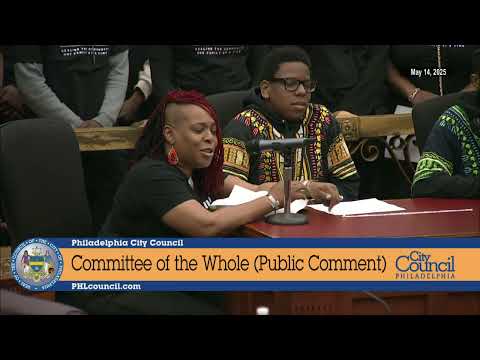
At a Committee of the Whole public hearing, Sarah McGinnis, executive director of NAOP Greater Philadelphia, told council the organization supports "actionable, phased tax reforms," including reductions in the wage tax and the net income (BERT) component of the business income and receipts tax. McGinnis said she "strongly oppose[d] increasing the realty transfer tax, a .3% increase," arguing it would make office-to-residential conversions and small-business ownership more expensive.
The testimony echoed across speakers from different sectors. Lawrence James, president and CEO of Connexus Technology, said the city's combined wage, net profits and business taxes make it hard for small firms to hire and grow: "Every dollar matters when you're running a business." Chris Durer, CEO of ArcGrip Technologies, urged simplification, recommending a "15 second test" to explain the tax code and urging elimination of BIRT's double tax and the prepayment requirement he described as a "second year slap." Several small business owners, including Noor Farida, said the end of the $100,000 exemption for the business income and receipts tax would be a significant blow to their ability to survive and expand.
Speakers also raised equity and enforcement concerns. Omid Faroozzi, director of the Temple Law Low Income Taxpayer Clinic, warned that repeal of the $100,000 exemption would disproportionately affect workers misclassified as independent contractors, who already face barriers to challenging misclassification and may be unable to claim expenses to offset taxes.
Why it matters: Council is weighing proposals that would change revenue streams and business costs citywide. Witnesses said tax changes could influence private investment, job creation, and the feasibility of redevelopment projects already facing high vacancy rates in the office market.
Council did not vote on the tax measures during the hearing; the bills and ordinances read at the start of the session remain under consideration.
Votes and formal actions: None taken during public testimony; bills read at roll call, including multiple ordinances affecting wage, real estate, and business taxes, were on the calendar for the FY26 package.