Get Full Government Meeting Transcripts, Videos, & Alerts Forever!
Get email alerts on the Medical Control Board Budget topic
No spam. Unsubscribe anytime.
Tulsa medical control chief outlines EMS equipment upgrades, minimal city cost share in 2025–26 budget
Summary
Chief Medical Officer Jeffrey Goodlow told the Urban & Economic Development Committee the medical control board seeks to keep most costs flat for 2025–26, cited new clinical equipment and a proposed 2.5% labor increase, and said 79.5% of the board's budget is funded by MSAA CQI funds.
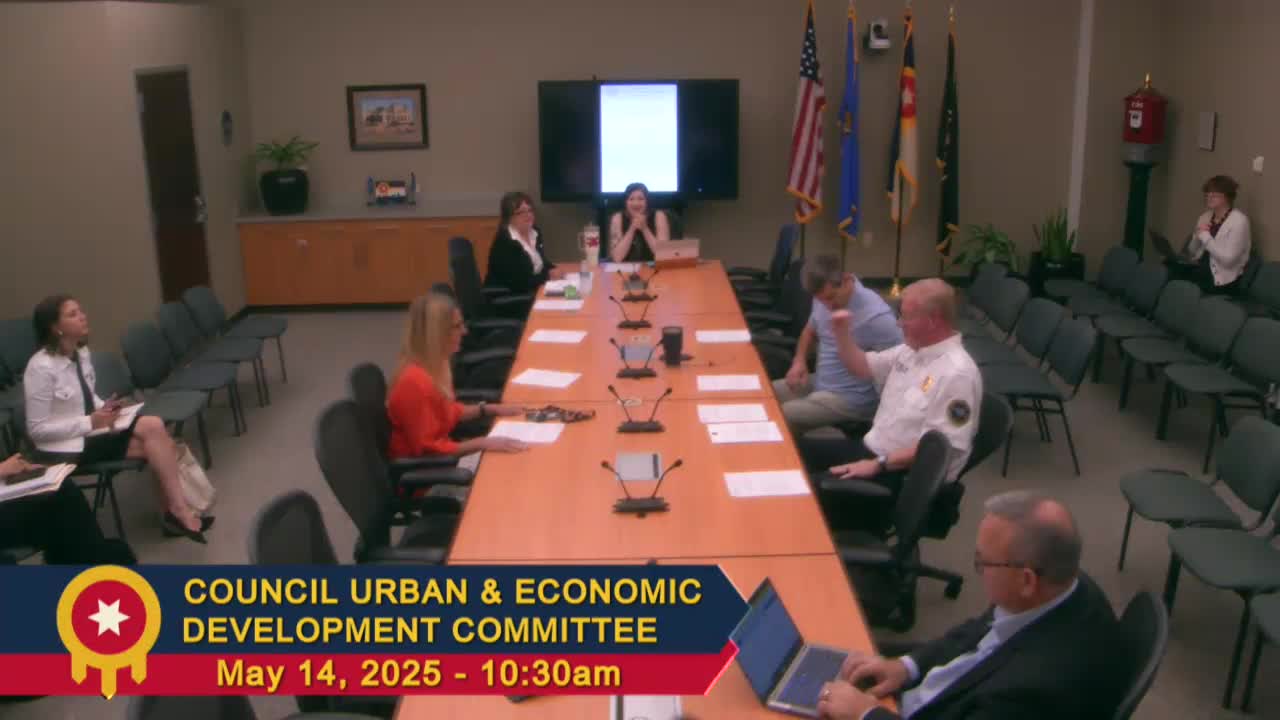
Dr. Jeffrey Goodlow, Tulsa’s chief medical officer, briefed the Urban & Economic Development Committee on May 14 about the proposed Medical Control Board budget for fiscal 2025–26, outlining recent clinical upgrades and a limited request that would be borne by city budgets.
"We are in a good place, in our overall EMS system. We have adopted the latest generation of cardiac monitors, defibrillators, airway management tools," Goodlow told the committee, adding that the system administered a unit of whole blood to a trauma patient the previous night. Goodlow said the board is seeking to hold most non-labor expenses flat while proposing a 2.5% increase for full‑time labor and a part‑time data‑entry position to support a growing cardiac‑arrest database.
Goodlow said the cardiac‑arrest registry has grown from about 12 resuscitations a year (likely a transcript ramping statement) to between 1,300 and 2,000 resuscitations annually, creating an operational need for an additional data clerk. "Our cardiac arrest database is something that we put a lot of attention on... We have moved from 12 to 1,300 resuscitations a year closer to 2,000 now," he said.
On funding sources, Goodlow told the committee that 79.5% of the board's budget comes from MSAA CQI funding and that only a marginal share would come from city funds; any city contribution would be included in Tulsa Fire Department budgets. "So there really is very marginal cost that would come from any city funds," Goodlow said. He also discussed broader payer‑mix pressures — noting Medicaid and Medicare reimbursement levels and the role of commercial insurance in covering the cost of care.
Committee members asked about how Medicaid enrollment and potential federal/state policy changes might affect billing and revenue. Goodlow deferred technical reimbursement details to the CFO for MSAA but warned that government payer reimbursement remains below the cost of care and cited the commercial insurance cohort as a key revenue source for the health system.
The committee did not take a formal vote during the presentation. Staff and the medical oversight team indicated they would follow the standard budget review and adoption timeline with the council.
The committee heard additional remarks about clinical support for Tulsa Fire Department programs; Dr. Patrick Cody was present and identified as the MIH (Mobile Integrated Health) physician working on downtown and behavioral health response initiatives. Goodlow praised the independence of medical oversight and framed the budget request as a value proposition for both Tulsa and its regional partners.