Get Full Government Meeting Transcripts, Videos, & Alerts Forever!
Get email alerts on the Financial Empowerment Center topic
No spam. Unsubscribe anytime.
Tulsa officials briefed on Financial Empowerment Center outcomes as staff seek $150,000 in city gap funding
Summary
City staff and contractor representatives told the Urban & Economic Development Committee that the Financial Empowerment Center has helped clients reduce debt and increase savings, and asked the committee to approve $150,000 in city funding as a six‑month bridge while they pursue additional grants and private contributions.
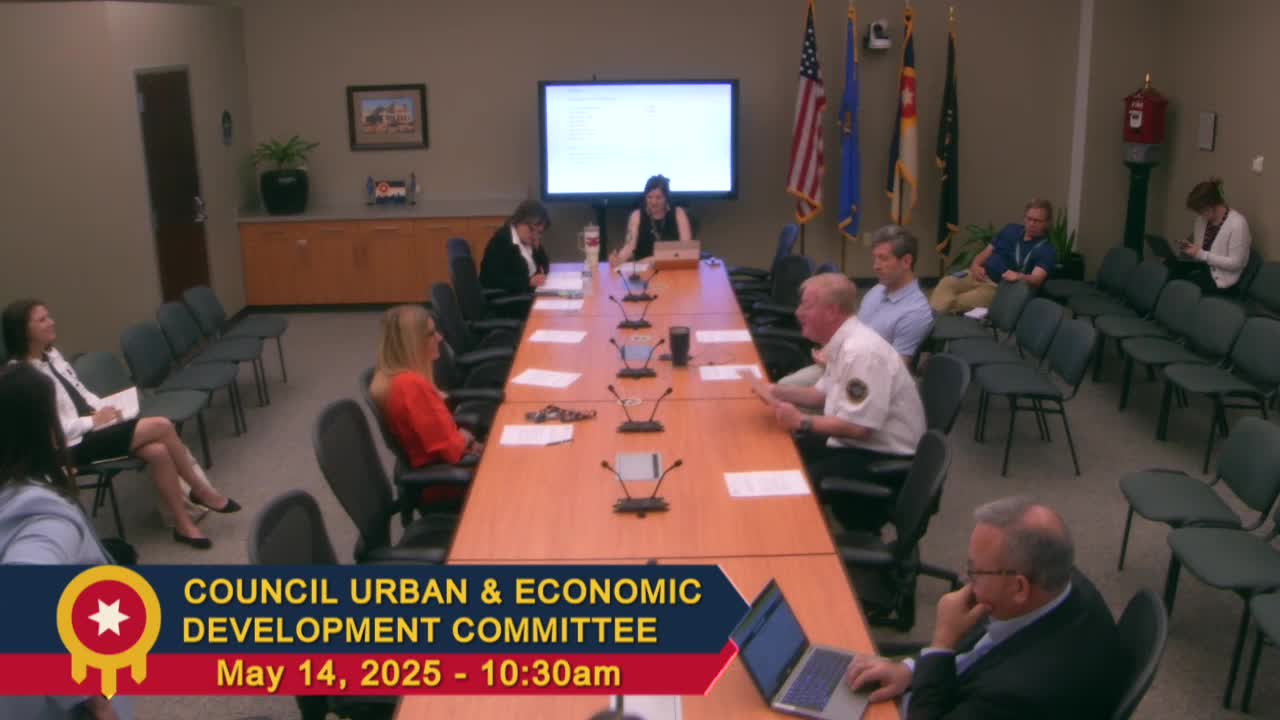
Tulsa City officials on May 14 told the Urban & Economic Development Committee that the city-run Financial Empowerment Center (FEC) has produced measurable debt-reduction and savings outcomes and asked the committee for a $150,000 city contribution to bridge funding through a grant cycle.
City staff said the FEC — launched in 2020 and operated through two contracted providers, Goodwill and Tulsa Response — has helped clients reduce more than $2.06 million in nonmortgage debt over roughly four years and record more than $664,000 in savings. "The biggest one being that we've been able to help all of our clients reduce their non mortgage debt by $2,060,000," a program presenter said during the committee meeting.
The request to the council is $150,000 for the coming fiscal year (and the same amount in the next fiscal year in the current plan) to keep both contracted providers operating while the city and providers pursue grant matches and private funding. City staff described the ask as a partial share of program cost: each FEC provider operates under roughly $300,000 annual contracts, the presenters said, and the program currently has two providers under contract.
City staff described program reach and client demographics in response to council questions. Presenters said the FEC has served about 5,894 individual client records across its history (the presentation counted unduplicated and active-client totals separately), with an average client income of about $28,000 and about 70% of clients identifying as women. Staff said the program typically provides about 1,900 counseling sessions per year for roughly 1,000 active clients in a fiscal year.
The FEC partnership with municipal court was highlighted as a priority. City staff said a counselor is on-site three days a week at court to help clients address fines and set payment plans; continued on-site presence depends on sustaining the FEC contract funding. "Without the Goodwill program in place, there would be no continuation of the municipal partnership once those funds expire," the Office of Resilience and Equity representative told the committee.
Program staff and contractors described typical client interventions and outcomes. A Tulsa Response program manager explained how small monthly household savings (for example, switching to a lower-cost phone plan) are translated into annualized savings that clients can redirect to rent or other urgent needs. "That $70 cut down by 25, you save $45 and what you gonna do? Put that into a savings account," a Tulsa Response counselor said.
Committee members asked for more detailed budget documents. Councilor Goldberg and others requested two years of historical financial statements and a forecast showing city funds versus private and grant funding sources so the council can evaluate sustainability and leverage. Staff agreed to provide a follow-up packet with revenue/expense detail, partner contract scopes, and capacity estimates for current counselor staffing.
Multiple councilors also pressed staff on program scale and access: staff reported that about 35–40% of scheduled clients currently attend their appointments and said closing that attendance gap is a program priority. Staff described efforts to expand co‑locations (Dream Center, South Tulsa Community House, Parent Resource Center, Women in Recovery and others) and virtual options to reduce transportation barriers.
No formal appropriation vote was taken during the committee discussion. Staff said the requested $150,000 would be considered in the fiscal year budget process and that they are continuing to seek matching grants and private partners; Tulsa Response has a separate $300,000 grant that runs through December 2026, staff said.
Next steps: committee members asked staff to return with a follow-up financial packet (two years of historicals, current grant commitments and forecasts), clarification of unduplicated annual client counts and capacity assumptions (clients served per counselor at full staffing), and metrics for referral conversions to partner services.