Get Full Government Meeting Transcripts, Videos, & Alerts Forever!
Get email alerts on the Governance topic
No spam. Unsubscribe anytime.
Council debate over expanded governance manual exposes sharp divisions; changes would add fines, social‑media rules and limit some verbal dissents
Summary
The Spokane Valley City Council debated a comprehensive rewrite of its governance manual May 13 that would impose new enforcement tools, social‑media preservation duties and stricter decorum rules, prompting extended public comment and sharp divisions among council members.
The Spokane Valley City Council held heated debate May 13 over a proposed repeal and replacement of the governance manual that would add new enforcement provisions, tighten decorum rules and create a mechanism to end non‑action item discussion.
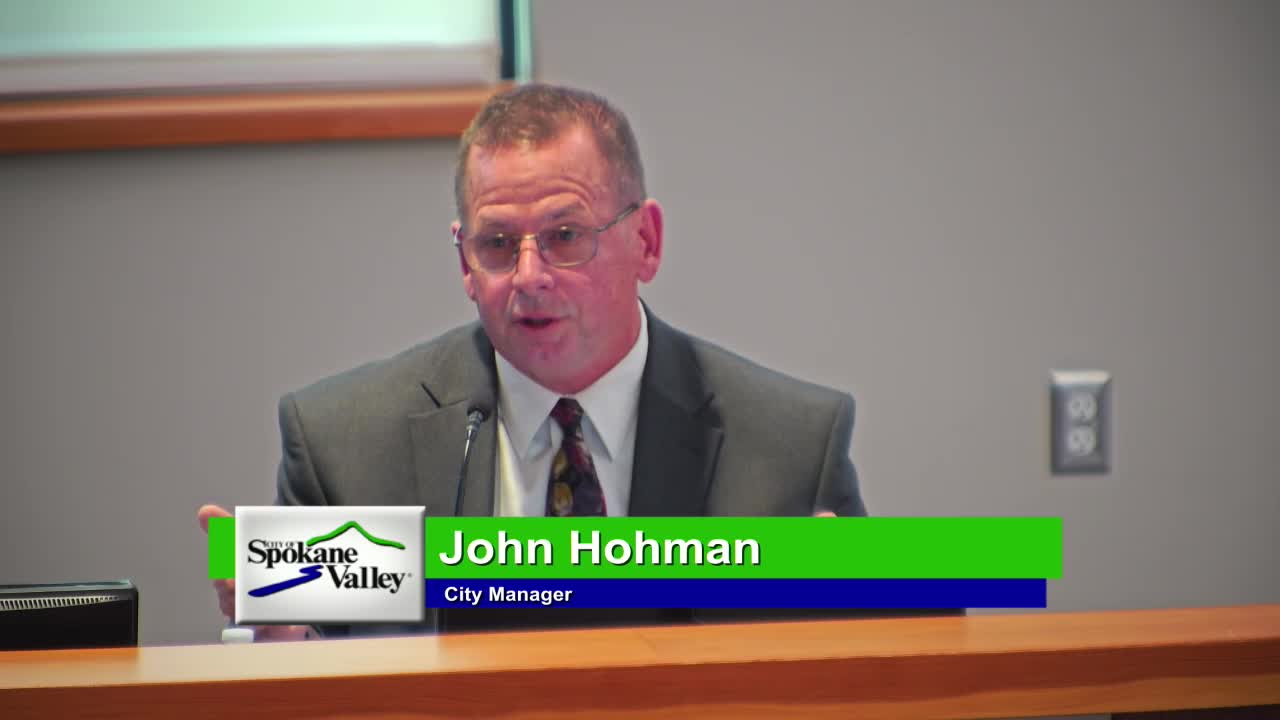
City Manager John Holman introduced the draft resolution and said the governance manual is the council’s document and that the proposed changes grew from committee work and repeated issues in council meetings. Among the most contested changes are: fines tied to certain social‑media posts about city business if the posts are not preserved as public records; a clarified definition of defamation; restrictions on council members’ use of electronic devices during meetings; a reduced five‑minute response time (from 15 minutes) for council members subject to disciplinary process; and a new procedure allowing a motion to end discussion on non‑action items.
City Attorney Kelly Concrete explained the social‑media element would target posts about city business made on accounts that are not configured as official council member accounts and posts that are not preserved in the city’s archiving software (PageFreezer). Concrete said some platforms (he cited Nextdoor) do not archive reliably and that council members using personal accounts could be required to take additional steps to preserve posts for public‑records purposes; failure to preserve could, under the draft manual, be a basis for a fine. Concrete told the council he had discussed the narrowed traffic‑sign code language with Spokane Realtors and that the Realtors had indicated support for the traffic‑sign amendment being scoped separately.
Council members split sharply. Supporters said the manual provides clarity, protects staff and the public records process, and offers tools to contain repeated disruptive behavior. Opponents — led by Councilmember Al Merkel — said the changes are being used to silence dissent, penalize speech and centralize power in the majority and the mayor. The public comment period brought a large number of speakers; several members of the audience urged the council not to use the manual to target one councilmember and described the debate as retaliation. Other speakers, including several who said they had reviewed public records and investigative findings, urged stiffer enforcement and supported the manual’s changes.
The governance changes were the most protracted item on the agenda. Council members and members of the public repeatedly returned to whether proposed fines and a narrowed right to speak would be applied uniformly, how the defamation language would be interpreted, and whether certain council conduct violated existing rules. City staff and at least one council supporter said the changes were driven by repeated incidents over 16 months that have created legal and financial liabilities for the city.
Why this matters: the governance manual is the council’s operative rules for meetings, decorum and conduct; changes to it affect council procedure, public‑records obligations and whether and how the city can enforce rules for members' speech, including on personal social media. The debate exposed deep divisions on the council and among members of the public over accountability, free expression and the scope of enforcement the city should exercise.