Get Full Government Meeting Transcripts, Videos, & Alerts Forever!
Get email alerts on the Municipal Budget topic
No spam. Unsubscribe anytime.
Council coalesces around a conservative budget template; staff to present COA 6 as starting point
Summary
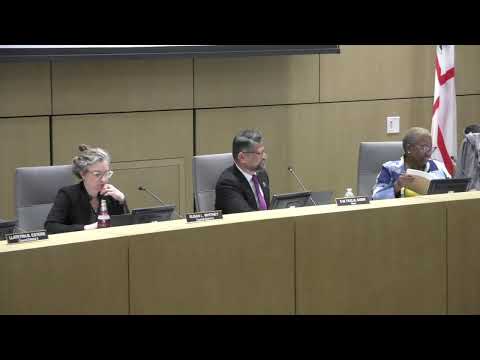
During a May 13 work session the council discussed a range of proposed budget amendments and by informal straw polling settled on a compromise template (referred to in discussion as COA 6) as the starting point for next week’s formal action; staff will prepare the proposed budget using that template and perform legal/financial balancing.
The College Park City Council spent a large portion of its May 13 work session reviewing multiple proposed budget amendment packages and settled, by an informal show‑of‑hands process, on a compromise package staff labeled COA 6 as the working template for next week’s formal budget adoption.
Finance Director Gary Fields reviewed a spreadsheet of council proposals and noted staff’s ability to balance the budget after council identified priorities. City Manager Young and Fields told the council that city reserves remained ahead of worst‑case October projections and that staff could rebalance and prepare a final budget based on council guidance.
Three councilmembers submitted competing packages of proposed amendments (identified in the staff materials as several COAs). Councilmembers argued over the pace and scale of additional spending given fiscal uncertainty from state action and potential impacts on fund balance. Some councilmembers argued for increased spending on emergency assistance, business retention and bilingual resident services; others urged caution and preferred no changes to the manager’s proposed budget.
After discussion, councilmembers used an informal preference exercise in which each councilmember stated which COA best matched their priorities. Several councilmembers signaled support for COA 6, described in the staff spreadsheet as a middle‑ground package that, among other items, adjusts business attraction/retention funding, maintains some sidewalk/CIP design funding, and includes modest targeted increases while preserving reserves. Councilmembers asked staff to prepare the FY2026 proposed budget using COA 6 as the baseline and to limit any additional amendments to relatively small, de‑minimis amounts going into next week’s meeting.
Fields and the city manager noted staff’s ability to reallocate contingency funds and to prepare the formal budget document for the council’s May 20 meeting. Councilmembers also asked staff to follow up with clarifications, including exact mapping for flood‑prone parcels discussed in the Lakeland plan presentation and more specific cost estimates for sidewalk design and economic incentive programs.
No formal vote occurred at the work session; council members used the informal straw‑poll to guide staff work. The council directed staff to return a balanced budget next week incorporating the COA 6 template and requested that any material contract or program changes be returned to council for formal action.