Get Full Government Meeting Transcripts, Videos, & Alerts Forever!
Get email alerts on the Traffic Enforcement topic
No spam. Unsubscribe anytime.
College Park adopts ordinance allowing stop‑sign monitoring systems in school zones
Summary
The College Park City Council on May 13 adopted Ordinance 25‑0‑02 to add stop‑sign monitoring systems in school zones under state law; supporters said the technology could improve pedestrian safety while some residents and advisors raised privacy concerns about non‑driver identification in camera footage.
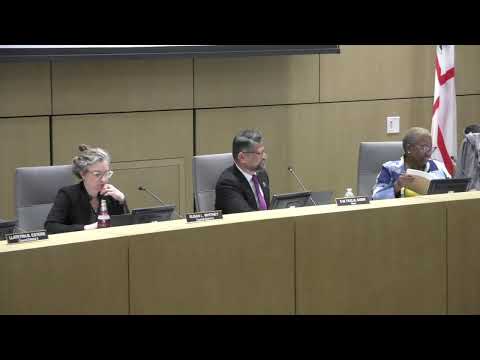
The College Park City Council on Tuesday adopted Ordinance 25‑0‑02 to add “stop‑sign monitoring systems” to the city code, allowing use of camera systems to record drivers who fail to stop in school zones.
The measure, presented by Jatinder Coker, the city’s director of public services, implements language authorized in the state Transportation Article and adds Article 9, §184‑46, to the City Code. Coker told the council that the state statute authorizes local jurisdictions in Prince George’s County to use stop‑sign monitoring systems in school zones and that an owner or driver whose vehicle is recorded can be subject to a civil penalty if no traffic citation was issued by an officer.
Supporters said the cameras would improve pedestrian and bicyclist safety near schools. Mark Schroeder, chair of the Bicycle and Pedestrian Advisory Committee, told the council the committee “felt that stop sign enforcement would be a significant assistance in ensuring the safety of pedestrians and bicyclists” and offered the committee’s endorsement. Schroeder also urged the city to redact the faces or other identifying marks of pedestrians captured in footage who are not the offending driver.
Council discussion referenced prior demonstrations and conversations with other jurisdictions that have used similar systems. Councilmembers noted they had seen videos during a vendor demonstration showing vehicles rolling through stop signs and cited that evidence as part of the rationale for the ordinance.
Coker said staff would confirm technical details with the vendor, including whether camera angles or software settings could obscure or redact non‑driver faces. “Typically, they can angle the camera to only get the necessary information. But I’ll confirm it with the vendor,” Coker said.
The council completed a public hearing on the ordinance before voting. No roll‑call vote tally was recorded in the meeting transcript; the council approved the ordinance by voice vote.
The ordinance references the Transportation Article of the Annotated Code of Maryland (authority cited in the staff report) and amends Chapter 184 (Vehicles and Traffic) of the College Park City Code to add the stop‑sign monitoring provisions.
What happens next: the city will work with the vendor on operational details, including data access, retention and redaction protocols, and will move forward with implementation per the ordinance’s language and applicable state law. Councilmembers signaled a desire for further details from staff on privacy and data handling before final operational rollout.