Get Full Government Meeting Transcripts, Videos, & Alerts Forever!
Get email alerts on the Property Tax Exemption topic
No spam. Unsubscribe anytime.
Committee debates one-year partial county tax exemption for low-income homeowners; many members raise fairness and fiscal concerns
Summary
Ordinance 25-047 would create a one-year, income-qualified partial county property tax exemption (income cap $50,000) after reassessment; committee debate was lengthy and no final vote is recorded in the transcript.
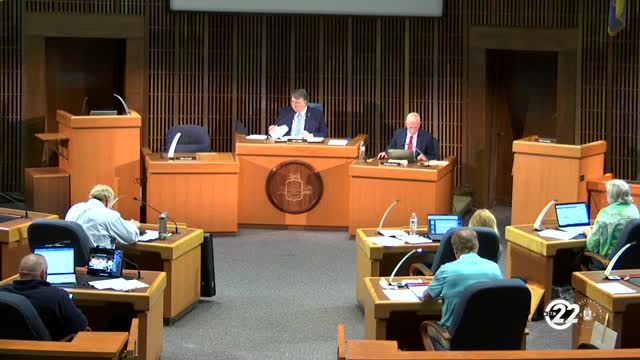
New Castle County’s Administrative Finance Committee spent an extended portion of its May 13 meeting debating Ordinance 25-047, which would authorize a one-year, partial county property tax exemption targeted to low-income homeowners following the county’s reassessment.
The ordinance would create a means-tested, one-year county property tax exemption for qualifying owners (income $50,000 or less as stated in the discussion). The county fiscal note presented to the committee estimates a potential maximum of 7,514 eligible parcels and a maximum tax discount of $276 per eligible residential parcel; the administration estimated reduced county revenue of about $1.3 million and said any impact would be reflected in the rollback-tax-rate calculation for fiscal year 2026.
Council members raised multiple concerns. Several members — including Councilmen Smiley, Hollins, Carter and Councilwoman Kilpatrick — argued the exemption is an imperfect short-term fix that could create a false expectation because the benefit is described as a single year and would not affect the much larger school portion of property tax bills. Smiley and others said relief tied to income does not directly address who will see assessment-driven tax increases and warned the exemption shifts the county’s fiscal burden onto other taxpayers. Several members called for longer-term, more targeted approaches (for example, homestead caps, circuit-breaker-style rebates, or phased approaches used in other states).
CFO Flory (S. Flori) told the committee the administration had researched alternatives but said the short window between final assessed values and the statutory June 1 filing deadline for exemptions limited the administration’s ability to design a broader program in time for the July tax roll. She said that implementing a rebate or more complex means-tested program later is possible but would require a funding source (reserves or other budget changes) and additional administrative time.
Committee members also asked about implementation details. If the ordinance passed as written, applicants would have to file by the county’s June 1 deadline, consistent with other exemptions, because tax bills are prepared for July. Councilman Koneko confirmed that June 1 would be the filing deadline if the ordinance were enacted. Members raised equity questions about the $50,000 cap (for example, combined-spouse income), whether Social Security should be excluded, and whether a “low-to-moderate” threshold would be more appropriate.
Some council members said they favored designing a more durable fix rather than a one-year relief measure. Councilman Carter and others urged study of longer-term options such as circuit-breaker credits, homestead protections, caps on annual increases for long-term residents, or other models used in neighboring states. Several members said the administration’s one-year approach was well-intentioned but politically risky because it could create expectations of continued relief while tightening budgets might force higher tax rates the next fiscal year.
The administration said the exemption is revenue-impacting and will be reflected in the tax-rate calculation; if the committee excludes the exemption from the tax rate and instead pays relief from reserves or contingency, that would require a different budgetary approach. The committee did not record a final vote on the ordinance in the transcript; the sponsor indicated intent to move the ordinance to a vote that evening, and members debated whether to proceed.
Ending: Committee members agreed the topic warrants further study and alternative models; the transcript records no final committee vote on Ordinance 25-047.