Get Full Government Meeting Transcripts, Videos, & Alerts Forever!
Get email alerts on the Transit And Transportation topic
No spam. Unsubscribe anytime.
Kittleson analysis: Benton County transit costs below market but compliance findings risk federal funding
Summary
A consultant presentation urged Benton County to choose a transit service model aligned with county values and to address repeat federal audit findings; staff will return with service alternatives and cost estimates in a coming months' meeting.
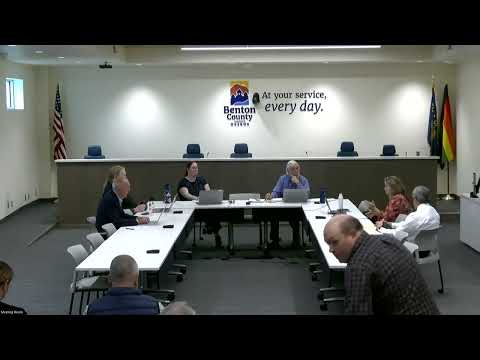
County staff and consultants presented a self-performance analysis of Benton Area Transit and recommended the county align a chosen service model with its operational values while addressing outstanding federal compliance issues.
Kittleson consultants said Benton County’s fixed-route and demand-response operating costs are below market averages but that rides per hour are lower than peer agencies. Consultants and staff noted a November 2023 federal triennial audit (published in November) had eight compliance findings and one advisory recommendation; some findings were repeats from a prior audit. Presenters warned repeat findings must be disclosed on grant applications and could jeopardize future federal funding.
Key compliance issues included incomplete contractor-to-county reporting and gaps in ADA (Americans with Disabilities Act) and Title VI (nondiscrimination) documentation. Charlene (Corvallis transit staff) said most outstanding concerns now center on ADA and Title VI reporting and that one procurement-related finding—reliance on sole-source documentation for contractor operations—remained to be addressed.
Presenters outlined service-delivery options: continuing with the current nonprofit contractor model, switching to a private for-profit contractor, or bringing operations in-house (self-performance). Consultants said each model carries trade-offs but that appropriate county staffing is required under any option. A common recommendation was to align the chosen model with a clear service vision and stable revenue forecast.
Board input and direction: Commissioners suggested the county’s vision for transit should explicitly include customer-focused service in addition to fiscal sustainability and legal compliance. Staff and consultants said they will return with concrete service alternatives and associated costs in a follow-up session in the coming months, timed to inform the next STIF (transit payroll tax) funding cycle.
Ending: The county will continue technical work on procurement and grant compliance and present scenario costs and staffing plans to the board before making any contract or service-model switch.