Get Full Government Meeting Transcripts, Videos, & Alerts Forever!
Get email alerts on the Land Use Development topic
No spam. Unsubscribe anytime.
Developer asks Pendergrass City Council to ease Townsquare commercial square‑footage requirement
Summary
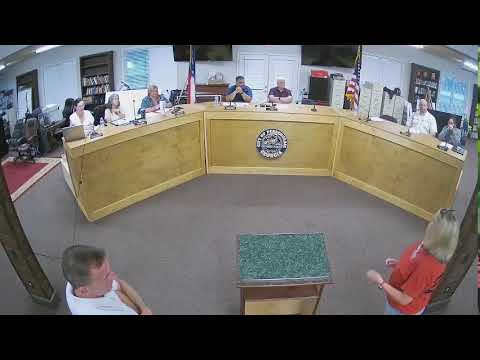
Stegall (developer, representing T9/TDON Development) asked the Pendergrass City Council at its May 13 work session to relax the Townsquare development’s commercial square‑footage requirement, saying the city did not grow at the pace projected when the development agreement and resolution were adopted.
Stegall (developer, representing T9/TDON Development) asked the Pendergrass City Council at its May 13 work session to relax the Townsquare development’s commercial square‑footage requirement, saying the city did not grow at the pace projected when the development agreement and resolution were adopted. "If the city isn't going to move forward with those development needs...we would ask that we could relax the amount of square footage that we build in Townsquare," Stegall told council members.
Stegall said the development’s original agreement called for a minimum of about 44,000 square feet of commercial space, with an eventual target as high as 100,000 square feet if rooftops increased. He said developers had actively marketed Townsquare for about 3½ years but could not find a commercial builder willing to take the full 44,000. "We have actively marketed for 3.5 years our town center and I cannot find that we cannot find a commercial builder to build it for 44,000 square feet," he said.
As an alternative, Stegall proposed allowing two street‑front pads to be built with a reduced footprint—he described a target of roughly 15,000–20,000 square feet for the frontage parcels—and giving developers 12 months to market the remaining pads. If the city grants that marketing period and the back pads remain unleased, he asked to be able to convert the unsold pads to townhomes. He said his firm would restrict the two front pads to commercial uses during the 12‑month marketing period. "If we can't meet the further requirements of the 44,000 after actively marketing it, that we'd be allowed to turn those into townops [townhomes]," he said.
Stegall described the tradeoff as a way to finish parts of the project sooner and to exit the development if the longer commercial vision does not materialize. He said his company has invested in the project and cited figures during the meeting: about $25 million invested in land and infrastructure and roughly $100 million in overall development to date for projects in the area. He estimated that constructing about 20,000 square feet of commercial space would cost in the neighborhood of $5 million in vertical construction.
Council members and residents pressed Stegall for details. A council member asked whether a 12‑month marketing period would be sufficient; Stegall said he had builders willing to take the risk on a 20,000‑square‑foot footprint but that 44,000 would be "suicide." He also said Townsquare began before the Jackson County moratorium on accepting new water plans and that the moratorium did not affect the Townsquare approvals.
Members of the public urged the council to create clearer planning guidance. An unnamed resident recommended the city conduct a charrette or hire a planning group to set a long‑range vision for where commercial, residential and industrial uses should go. The commenter said the city’s current development code dated to 2005 and urged updating it before changing approvals. Another resident said a high‑end wedding venue under discussion could help support a smaller amount of commercial space by bringing outside patrons to the area.
Multiple residents raised concerns about infrastructure and access, noting parking and sidewalks in the Townsquare area and asking what benefits, beyond rooftops for developers, would accrue to current residents. One resident asked the council to ensure any change is handled through the formal public‑hearing process and documented in ordinance or resolution form.
No formal motion, vote or council decision on Stegall’s request was recorded in the transcript. Council members asked Stegall to provide documents referenced during his remarks, including the Townsquare resolution and the developer’s marketing materials, and several council members suggested the city staff review options and return with recommendations for council consideration.
Stegall said he would provide matrixes and materials to staff and council members, and he encouraged working together to find a path that would make part of the development successful rather than leaving pads vacant for many years. "All I'm asking is help me for an extra time," he said.
The discussion closed with members of the council and members of the public agreeing on the need for additional staff analysis and the likelihood of a future public hearing before any change to the development requirements.