Get Full Government Meeting Transcripts, Videos, & Alerts Forever!
Get email alerts on the Workforce Education topic
No spam. Unsubscribe anytime.
Flint Hills Technical College outlines five-year strategic plan, workforce training and plans to expand into Coffee County
Summary
Flint Hills Technical College president Karen Doherty briefed commissioners on program outcomes, economic impact, and plans to expand short-term training and new programs such as precision agriculture and early childhood education in the seven-county service area.
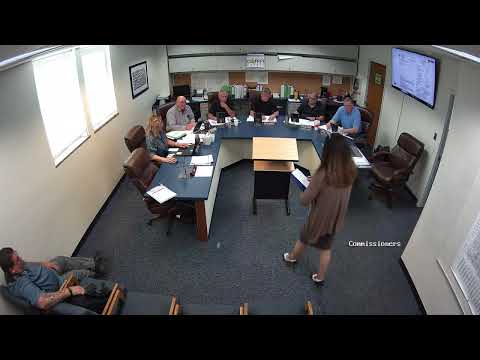
Flint Hills Technical College President Karen Doherty updated the Coffee County commission on the college’s strategic plan, program placement rates and workforce training initiatives as she continued outreach to service-area counties.
Doherty said the college reports a 98 percent placement rate for recent graduates and highlighted program wage outcomes: for example, dental-hygiene graduates showed average starting wages near $69,000 this year. She described recent and planned program additions: an early-childhood education program (recently completed its second year) and a precision agriculture program to begin this fall that combines drone technology, GPS and crop-science coursework.
Doherty emphasized the college’s short-term training focus for rapidly re-skilling workers, citing an example of truck drivers at a Tyson facility who obtained CDLs through the college’s short-term CDL pathway and secured higher-paying positions within weeks. The college has expanded short-term offerings (CDL, robotics, cybersecurity and other customized training) and is developing mobile training units, including a mobile CDL simulator and a mobile welding unit.
Doherty outlined a planned 27,000-square-foot campus expansion on the west end of Flint Hills Technical College’s campus to create additional space for growing programs (automation/robotics, power-plant technology and industrial engineering), with some programs backfilled into vacated spaces. She presented an economic-impact report the college prepared estimating an annual regional impact of about $11.4 million and about 93 supported jobs from the college’s activities in its service area.
Commissioners and Doherty discussed outreach plans to serve Coffee County and neighboring counties and asked about concurrent-enrollment programs with local high schools; Doherty said concurrent enrollment represents more than half of the college’s enrollment and the college intends to continue and expand those partnerships.
Doherty said the college is not requesting county funding at this time and that she was providing the update to reintroduce the college and its capacity to help meet workforce needs in Coffee County.