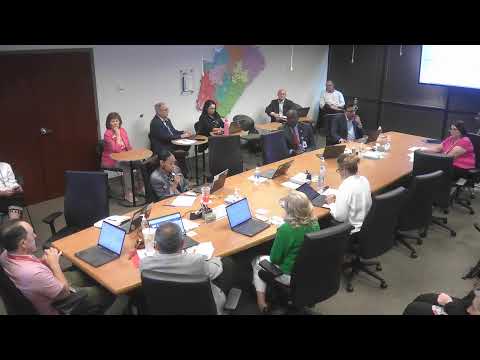
Facilities leaders outline life‑cycle budget, SNAP/BRAMP priorities and potential CIP tradeoffs
Loading...
Summary
Life‑cycle and partial‑renovation plans, site feasibility studies and bond/CIP funding strategies were presented; staff described a rising life‑cycle budget and options to accumulate bond funds for large renovations while feasibility and design work continue.
Wake County Public School System facilities staff briefed the board on the district’s life‑cycle and capital improvement priorities, including a larger life‑cycle budget, space needs analysis (SNAP) site studies, a queue of partial renovations (BRAMP) and the district’s approach to funding multi‑year projects.
Tony Champion, director of Facilities Assessments, said the life‑cycle budget was about $40 million for fiscal year 2025 and is planned to increase to about $45 million for fiscal 2026. Staff presented a typical life‑cycle allocation split—about 50% for HVAC projects, 17% for other building systems (fire alarm, intercom), 18% for site and athletics, and roughly 15% for building envelope work. Staff said FY25 work included more than 40 HVAC and other building systems projects, seven site/athletics projects and five major building envelope replacements.
Facilities staff described SNAP work (space needs analysis and prioritization) and feasibility studies at central sites—Rock Quarry Road, Capitol Boulevard and Piney Plains—intended to create more efficient central operations, regional transportation hubs, satellite customer service/central office locations and swing space for large renovations. Partial renovation work (BRAMP) was summarized: 14 projects completed in 2024, 17 projects currently in design or construction for 2025, and 92 projects submitted but awaiting funding.
Staff explained the district’s funding approach for large renovation projects: perform feasibility studies, accrue local bond program funds over multiple years and begin design when adequate funds are available. Examples cited included Fuquay‑Varina Elementary (a FY25 allocation of about $9 million toward a larger ~$30 million renovation cost estimate) and an earmark of $1.5 million for design with a $35 million anticipated construction target in later years. Staff said the district must accumulate funds in the bond program across years to pay for large multi‑year projects and noted the county has flexibility in moving funds among debt‑funded and cash‑funded CIP categories, though the two sources are tracked separately.
Board members pressed staff about tradeoffs and possible reallocation of CIP funds—land acquisition, technology and other program allocations were discussed as candidate sources to address urgent facilities needs such as HVAC, trailers, safety and security, and library collections. Staff said some flexibility exists but emphasized that reprioritization would require explicit board direction and changes in multi‑year planning.
Staff also described partial renovation projects queued for feasibility and design and said many large renovation projects require two years of design and municipal approvals before construction can start. They reported adding two positions to the life‑cycle department and seeking to fill a vacancy before FY26 project design work begins.
The committee did not take a formal vote on reprioritizing CIP funding at the meeting; members asked staff to return with options and additional detail on tradeoffs.