Get Full Government Meeting Transcripts, Videos, & Alerts Forever!
Get email alerts on the Childcare Policy topic
No spam. Unsubscribe anytime.
Residents urge Eau Claire council to support $480 million state child‑care investment; large public comment turnout
Summary
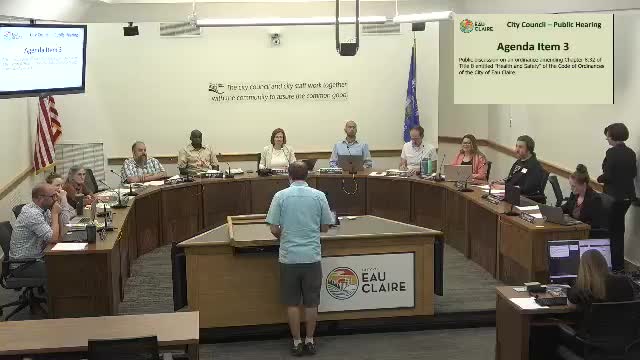
A large group of parents, child‑care providers and local business owners used the May 12 public comment period to urge the Eau Claire City Council to adopt a resolution supporting Governor Tony Evers’ proposed $480 million state investment in early childhood education and child‑care infrastructure.
A large group of parents, child‑care providers and local business owners used the May 12 public comment period to urge the Eau Claire City Council to adopt a resolution supporting Governor Tony Evers’ proposed $480 million state investment in early childhood education and child‑care infrastructure.
Resident Jeremy Craighart read the resolution aloud during public comment and urged the council to endorse the governor’s proposal. The resolution, as read into the record, asks the Wisconsin state legislature to adopt the $480 million allocation in the state budget to support child care providers, workforce development and access for low‑ and moderate‑income families; it directs the city clerk to forward the resolution to the governor, state legislators representing Eau Claire, the Wisconsin Department of Children and Families and the League of Wisconsin Municipalities.
Multiple speakers described an urgent local shortage of child‑care capacity and low wages for early childhood educators. Becca Albert, who identified herself as representing Child Care Partnership, the local child‑care resource and referral agency, said providers face staffing shortages and razor‑thin margins and that access to child care supports parents’ employment and the local economy.
Kaylin Cammers, who identified herself as a former child‑care provider and engagement specialist with the Wisconsin Early Childhood Association, cited local wage figures and program trends as part of her testimony: she said the median wage for early educators in the region is about $13.78 an hour and that family child‑care provider rates can be substantially lower; she said the county has experienced declines in regulated child‑care programs and that many programs reported they might close or reduce capacity without additional funding. Cammers and other speakers urged the council to send a strong message to state lawmakers about the local economic and workforce impacts of the child‑care shortage.
Other speakers included working parents and local business owners who described long wait lists, the financial strain of childcare costs, and the difficulty of recruiting and retaining staff in the child‑care field. Several speakers framed child care as infrastructure that supports workforce participation and long‑term economic growth; one business owner said attempts to open an on‑site center were not financially viable given current rules and costs.
Why this matters: Speakers told council members that without additional investment many families cannot find affordable, quality child care and providers cannot afford to stay in the workforce. Supporters said state investment could stabilize provider finances, raise teacher compensation and expand capacity, with downstream benefits for employers and the local economy.
Councilmembers present were told a formal vote on the resolution was scheduled for the next council session; on May 12 the council listened to extended public comment and did not vote on the resolution. Several speakers said they and other advocates planned to travel to Madison to press for the funding in the state budget.
Clarifying details provided during testimony included local wage estimates for early educators, reports of program closures and reductions in capacity, and the resolution text the council was being asked to transmit to state officials. Testimony cited the governor’s $480 million proposal and asked the council to endorse it and forward the resolution to the governor and state legislative representatives.