Get Full Government Meeting Transcripts, Videos, & Alerts Forever!
Get email alerts on the City Auditor Engagement topic
No spam. Unsubscribe anytime.
City auditor outlines office duties, independence and ethics rules to Tulsa Animal Welfare Commission
Summary
City Auditor Nathan Pickard told the Tulsa Animal Welfare Commission the auditor’s office will solicit community requests, perform audits and that the city’s new ethics ordinance applies to commission members.
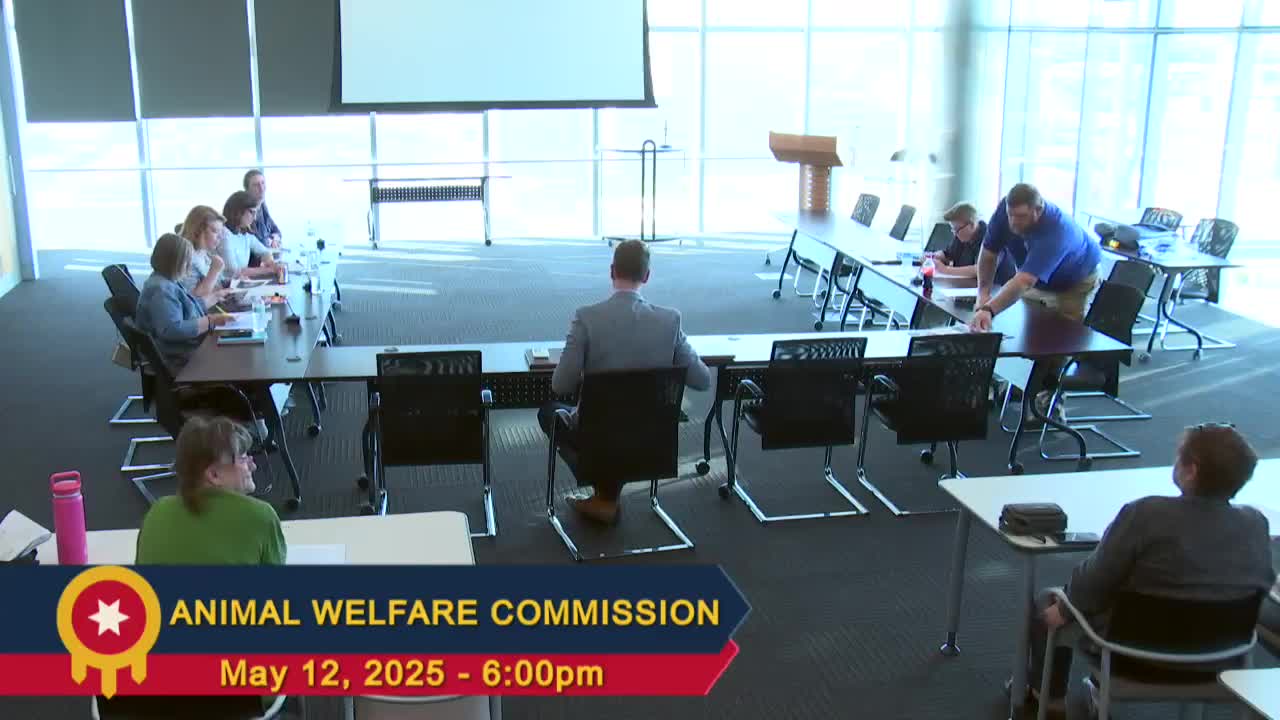
City Auditor Nathan Pickard told the Tulsa Animal Welfare Commission on May 12 that his office conducts performance and financial audits, investigates ethics complaints and is increasing outreach to boards, commissions and the public.
Pickard said the auditor’s office exists to “provide accountability and build community trust” and described a charter-backed independence that allows the office to obtain city records and report to the mayor and city council. He urged commission members to suggest audit topics and described a more public-facing approach his office plans to take, including a public-facing website, tulsacityauditor.org.
Pickard summarized the office’s scope and history, saying the elected city auditor position dates to the early 1900s and that the role shifted toward internal performance auditing under Tulsa’s strong-mayor government. He described types of work the office performs — from accounts audits to performance reviews — and gave examples of prior projects including hiring and promotion reviews, sewer cleaning audits and an investigation of an animal-care incident.
The auditor said his office ran a public survey that drew “over 300” resident responses and an employee survey that received “over 200” responses; he said those results will help shape the annual audit plan that begins in July and will be presented to the city audit committee in June.
Pickard also reviewed the city’s new ethics ordinance and told commissioners it applies to “members of boards, commissions, or committees.” He outlined the ordinance’s main points as described in his remarks: financial and organizational conflicts of interest, the prohibition on using city resources for private gain, limits on disclosing nonpublic information and the role of the city’s ethics advisory committee for handling questions about potential conflicts. He said disclosures are typically filed with the city clerk and recommended that boards consider an annual acknowledgment or conflict-of-interest form as a best practice.
Commission members asked whether commissioners are covered by officers-and-directors insurance and whether advisory commissions have different liability or disclosure requirements because they do not exercise fiduciary authority. Pickard said he would follow up on insurance coverage questions and reiterated that the ethics ordinance covers commission members. He also offered to share the audit committee’s disclosure template as a model for commissions that want to adopt an annual acknowledgement.
Pickard closed by inviting suggestions for future audits and by noting the auditor’s office accepts requests from the mayor and, under certain circumstances, from council resolutions.
The commission did not vote on any auditor-led audit during the meeting; Pickard’s presentation was presented for information and for commissioners to propose topics for future work.