Get Full Government Meeting Transcripts, Videos, & Alerts Forever!
Get email alerts on the Budget And Staffing topic
No spam. Unsubscribe anytime.
Battleground School District outlines deep cuts, staff receive reduction-in-force notices
Summary
Superintendent Denny Waters and district staff described a plan that has produced about 65 reduction-in-force notices and about 25 position eliminations from retirements as the district finalizes options to reduce a projected shortfall after a failed levy.
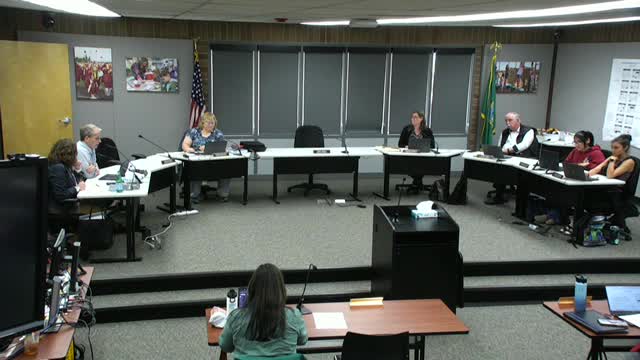
Superintendent Denny Waters told the Battle Ground School District Board of Directors on May 12 that the district has delivered roughly 65 reduction-in-force (RIF) notices to certificated staff and identified about 25 positions that will be eliminated because of retirements as the district narrows options to close a budget shortfall after a failed levy.
Waters said the roughly $20 million in cuts the district outlined at the prior meeting represented a worst-case scenario and that the administration is studying whether fund balance could be used to restore some programs. Chief Financial Officer Michelle Scott told the board staff are examining the fund balance and said any use would need to be spread over two years because of levy timing; Waters gave examples showing, for instance, $10 million of fund-balance support would be applied as $5 million each year under the district’s planning assumptions.
Board members and district staff framed choices around prioritizing “student safety and well-being.” Waters and Scott said district leaders are exploring partial restorations instead of outright eliminations — for example, replacing full middle‑school sports seasons with shorter tournaments and stipends, or bringing back a portion of counselors or nurses rather than full positions — but emphasized the complexity of reassigning certificated staff because endorsements and certifications are content- and grade-level specific.
Multiple staff and parents urged the board to preserve counselors, prevention intervention specialists (PIs), associate principals and licensed practical nurses (LPNs). Middle- and high-school counselors and PIs described day-to-day duties they said are central to crisis response and prevention. Middle-school counselor Geralyn Friesen said counselors regularly conduct long, safety‑planning conversations including suicide risk assessments and pleaded to keep counselor positions. High-school counselor Lexi Groves said two high‑school counselor positions, including her own, were listed for elimination and warned that counselors’ caseloads would “increase dramatically” if positions are cut.
Prevention intervention specialists and parents described long-term outcomes they attribute to the PI program. PI Carrie Koehler Oberg noted a district prevention program’s long-term reach in helping students avoid substance misuse and quoted cost‑savings research cited to the board about prevention; PI Charice Lee read letters from former students crediting the PI program with life‑saving interventions.
District staff emphasized procedural constraints: not all certificated staff are interchangeable because many are endorsed for specific grade bands (K–8 or 9–12) or content areas. Waters thanked HR and principals for hand-delivering RIF notices and described the process as “complicated,” noting staff were not simply chosen by lowest seniority. Michelle Scott reported the district is attending regional workshops and continuing to refine revenue projections as state legislative action is still being clarified.
Multiple community members offered to help the district find alternatives. Parents and program supporters said they are available for focused committees to explore fundraising, grants, and program-restructuring ideas to preserve parts of programs such as the Aspire magnet and after-school activities.
The superintendent said the district hopes to present a draft recommendation for program restorations or cuts at the next board meeting and reiterated the board’s fund-balance policy that the district should not drop below a 4% reserve. Waters said that even using available fund balance would likely restore only part of the initially proposed cuts, and that the administration is trying to target any restorations to supports that affect the greatest number of students.