
Middle‑school teachers tell Wayzata board new schedule harms instruction, behavior management
Get AI-powered insights, summaries, and transcripts
Sign Up Free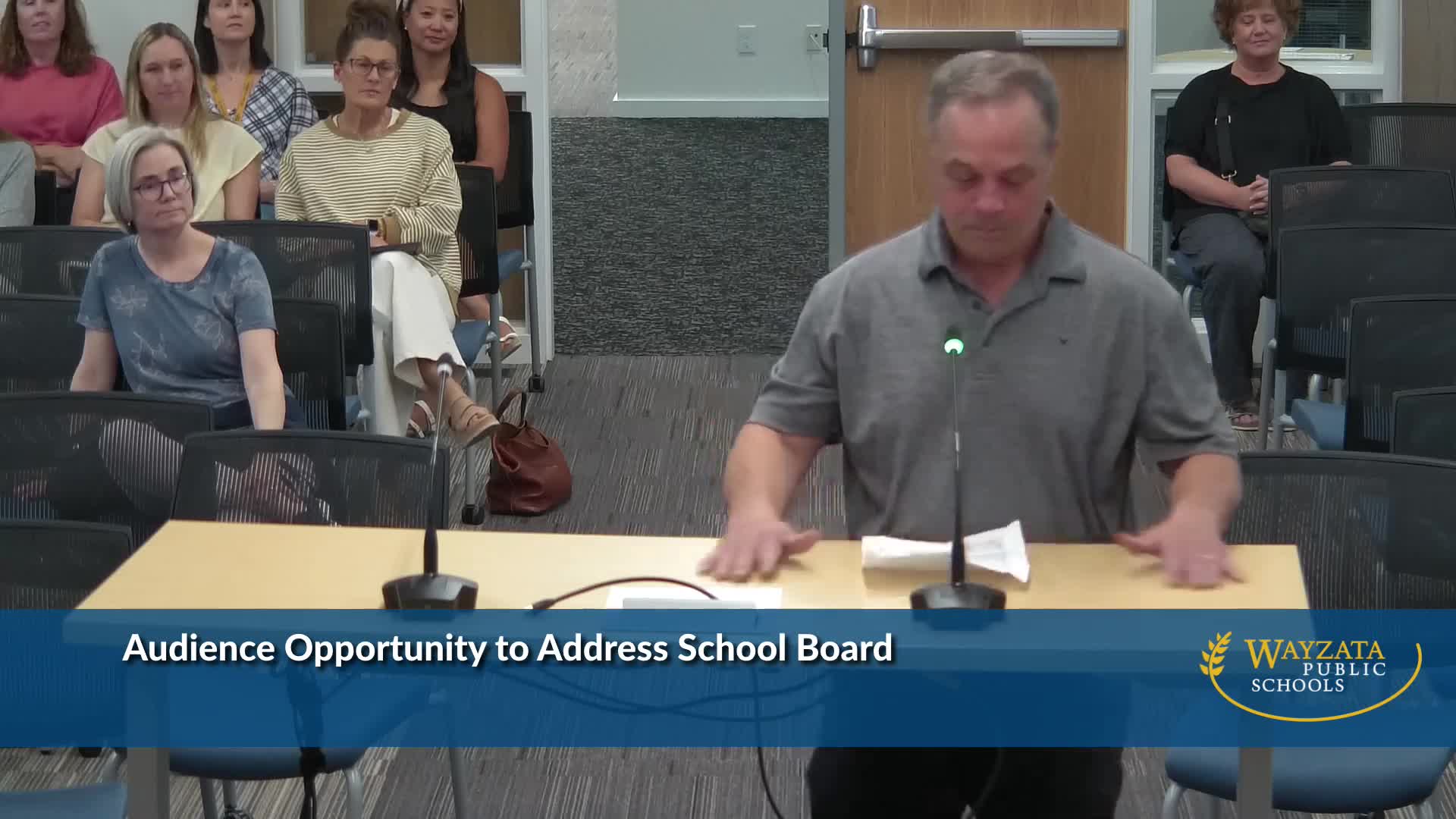
Summary
Two middle‑level teachers told the Wayzata school board during public comment that a district schedule change has reduced prep time, weakened team structures, and worsened student behavior, and they asked the board to pursue alternatives or restore the former model.
Two veteran middle‑school teachers used public comment at the May 12 Wayzata Public Schools board meeting to urge the board to revisit a recently adopted middle‑school schedule, saying it has reduced teacher collaboration time, weakened relationships with students, and undermined behavior‑management systems.
Chris Bizans, a social studies teacher at Wayzata West who said he has taught in the district for 32 years, told the board that his class sizes and workload have changed so that “the amount of minutes I spend with a given student has been reduced by 25% each month.” He said the change has diminished his ability to build relationships and provide timely academic feedback.
“For the first time in my career, I’m feeling like I’m not living up to the high Wayzata standards,” Bizans said, adding that middle‑school teams that previously shared students and coordinated interventions no longer function in the same way.
Sally Dietzenbach, a teacher at East Middle School, focused on behavior supports. She told the board the previous middle‑school structure enabled teachers and administrators to implement PBIS (positive behavior interventions and supports) more effectively because teams could plan consistent expectations and responses. Dietzenbach said the new schedule has “completely taken away all of our systems for being able to respond appropriately and efficiently to student behaviors.”
She said teacher feedback was solicited during planning but that many concerns were overlooked, and she asked the board to provide the data that was used to justify not returning to the prior model. “The only reason we’ve been given for not returning to middle school model is cost,” she said, requesting transparency on the district’s estimated savings and the tradeoffs involved.
Both speakers said they remain committed to students but warned that continued implementation of the current schedule risks lower instructional quality, worsening behavior, and teacher burnout. Bizans compared Wayzata to a five‑star restaurant that is now serving “substandard meals” and asked the board to seek creative solutions to preserve middle‑level team structures.
Superintendent Chase Anderson and other board members did not announce a formal response during the public‑comment period beyond noting that administration had met individually with a teacher after a prior meeting. The board did not take immediate action on the concerns during the May 12 meeting.
The speakers asked the board for follow‑up: one offered to provide additional information by email; Dietzenbach said she had emailed directors offering to meet and share specifics. No timeline for a district response was stated at the meeting.