
Gleeson Lake students demonstrate ‘building thinking classrooms’ approach in school spotlight
Get AI-powered insights, summaries, and transcripts
Sign Up Free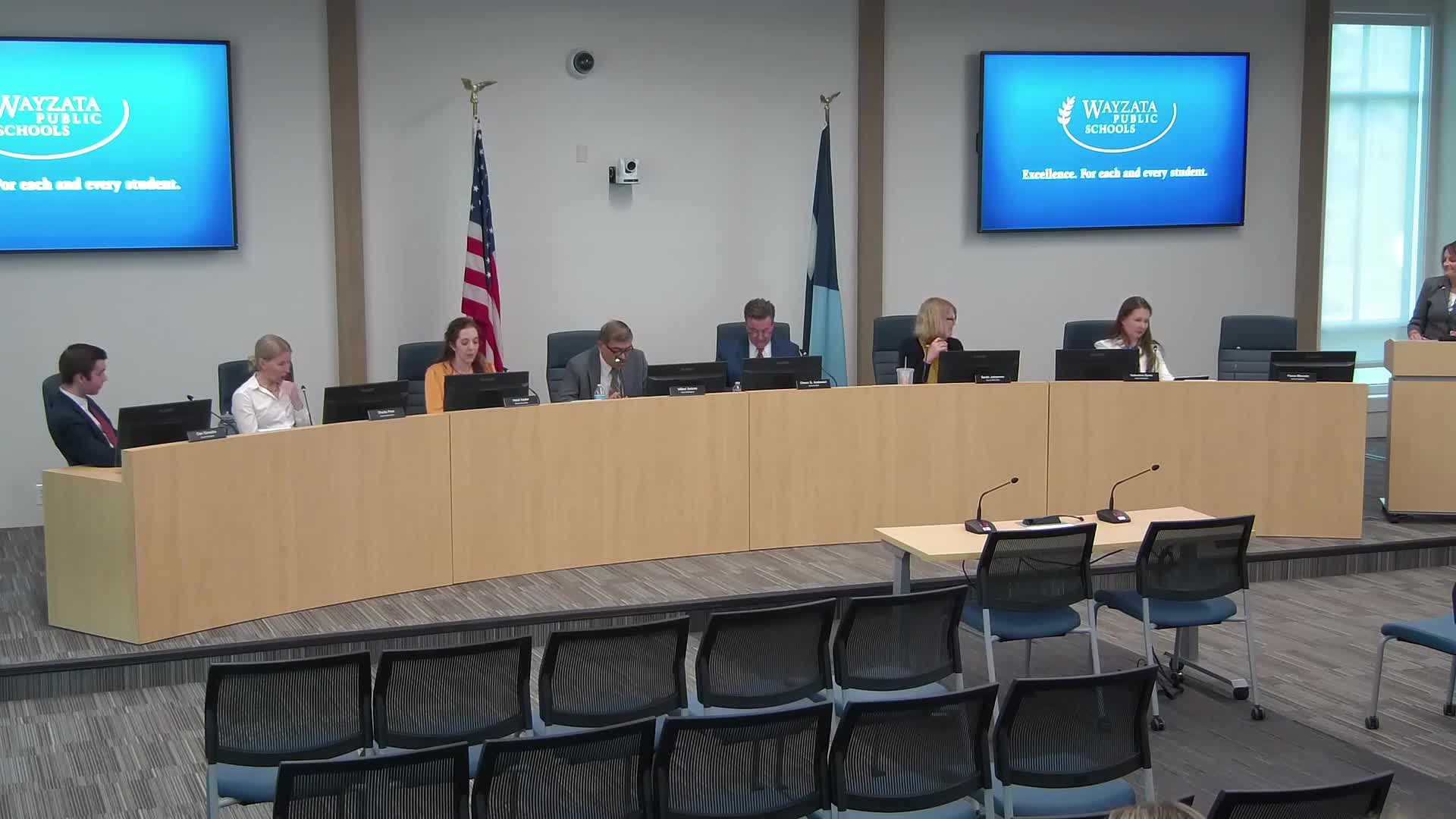
Summary
At the May 12 Wayzata Public Schools board meeting, Gleeson Lake Elementary staff and fourth-grade students demonstrated classroom strategies aimed at increasing student voice and collaboration, including visibly random groups and vertical nonpermanent surfaces.
Gleeson Lake Elementary teachers and fourth graders showcased a year of instructional change that emphasizes student-led problem solving and collaboration during the Wayzata Public Schools Board of Education meeting on May 12.
The school’s presentation described a model drawn from the book Building Thinking Classrooms that shifts classroom routines so students “try first” and work together to make their reasoning visible. Principal Mary Macassie said the school’s goals focus on increasing students who achieve “typical or aggressive growth” on FAST assessments and on improving students’ experience by expanding opportunities for classroom discussion.
Sarah Winans, district resource teacher for science and mathematics, said the model uses micro moves teachers can make so students “do rigorous thinking about complex math problems and work collaboratively to discuss and solve them.” Lakshmi, a fourth‑grade teacher at Gleeson Lake, described two classroom practices the school has used consistently this year: visibly random grouping, where students form different small teams regularly, and vertical nonpermanent surfaces, where students stand and solve problems on erasable whiteboard sheets.
Students who presented said the protocols changed how they engage in class. “We use gallery walk a lot in math,” said Rowan, a fourth grader. “We do white books, which is where Miss Lakshmi gives us a math problem to solve. After solving the problem, we find a partner to walk around the room and look at people’s white books. The benefits of this is we get to see what our classmates are thinking.”
Marissa, another fourth grader, described a movement-based review called walk and learn: “We make two laps around the room with a partner and share what we know about prefixes, suffixes, or other topics. Moving helps my brain focus and function better.” Arvon said the stand up, hand up, pair up protocol gives students a chance to engage before reading: “It helps me be more engaged in the lesson.”
Family partnership lead Emily Lewis framed the classroom practices as culturally responsive: teachers use a range of protocols to balance students who learn best through social interaction and those who need independent think time. Lewis said the district’s definition of culture informs the work: visible behaviors such as clothing or food sit above deeper cultural preferences — for example, attitudes about space and time — that shape learning.
Board members spoke in support after the presentation. Director Valentina Ayers said she appreciated the movement and variety of engagement strategies; Director Heidi Kader called the students’ comfort at the microphone “a very good sign.” The presentation closed with a short wrap-around protocol in which board members shared single-word takeaways such as “collaborative” and “engaging.”
Gleeson Lake’s staff told the board they are using the approaches across subjects, not just math, and that the practices aim to make learning student-directed whenever possible. The school’s stated objective for achievement is to increase the share of students showing typical or aggressive growth from fall to spring on FAST measures; staff said the progress is being tracked but did not provide district-level numeric outcomes at the meeting.
The spotlight demonstration lasted through the school‑presentation segment of the agenda and drew questions from several directors. The board did not take policy action tied to the presentation; the segment was informational.
The presentation included classroom demonstrations by students and teachers and concluded with board members thanking the Gleeson Lake team for attending.