Get Full Government Meeting Transcripts, Videos, & Alerts Forever!
Get email alerts on the Robocalls Spoofing topic
No spam. Unsubscribe anytime.
Resident urges Collin County court to address robocall spoofing; court staff gives reporting guidance
Summary
A Wylie resident told the Collin County Commissioner's Court that spoofed robocalls showing local school caller IDs have continued despite prior reports and asked about federal and state bills aimed at curbing robocalls. Court members advised filing police reports and directed the resident to state and federal legislators for advocacy.
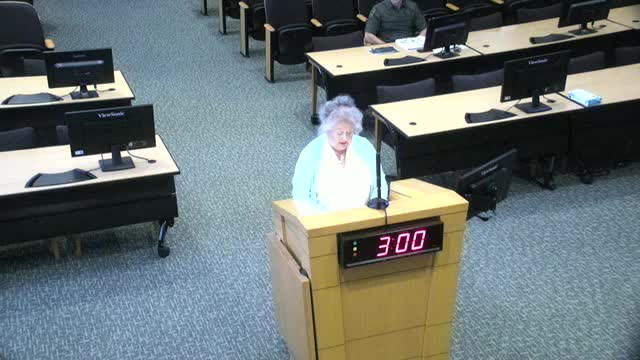
Barbara Lyke, a Wylie resident, told the Collin County Commissioner's Court during public comment that she and other residents have received recurring spoofed robocalls that appear to come from Wylie ISD and asked whether federal or state legislation such as the "Stop Bad Robocalls Act" (referred to in the comments as the Trace Act) could help stop the practice.
Lyke said the legislation had progressed through the House in 2019 and later reached the president's desk, and that she had been told by local school officials spoofed caller IDs were not actually coming from Wylie ISD. She also told the court that Lieutenant Robert Longwell filed a police media report on Sept. 9, 2021 (case 21123994) after residents at 130 Squirrel Ridge in Wylie reported spoofing on landlines and cell phones.
The exchange continued as court members clarified which officials handle what. An unnamed court member (Presiding official, Commissioner's Court) told Lyke that the state legislator who represents Wylie ISD is Representative Candy Noble and that the U.S. House member for the area is Representative Keith Self. The court member also advised that Texas law can make spoofing a violation of the Texas Penal Code if the intent is to defraud, harass or cause harm, and that such incidents should be reported to local law enforcement or the Collin County Sheriff's Office for investigation.
Lyke asked whether county staff could track or help advance the federal or state bills she referenced; court members said county staff monitor bills that the court asks them to and can advocate on matters germane to the county, but staff cannot introduce or pass state or federal legislation. Court members suggested Lyke contact her state legislator's district office for updates and the appropriate congressional office if the matter is at the federal level.
No formal action or vote on the substance of Lyke's request occurred; the item was recorded as public comment and the court moved on to adjourn. The Commissioner's Court then adjourned and convened separate consent-agenda votes for the Collin County Health Care Foundation and the Toll Road Authority, each of which the court approved as presented.