
Legislature considers letting certain general improvement districts raise board compensation cap to reflect inflation
Get AI-powered insights, summaries, and transcripts
Subscribe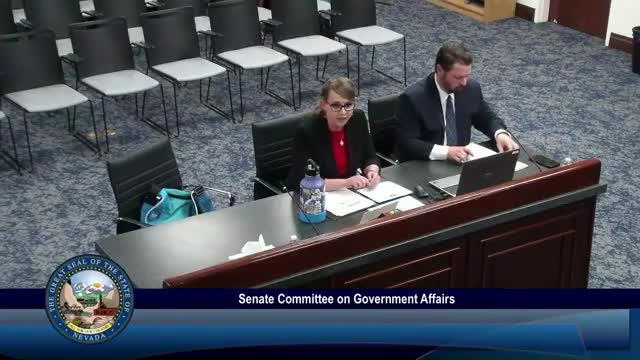
Summary
AB301 would let certain general improvement districts that provide water, sewer and trash and are governed by elected boards adjust a statutory trustee compensation cap that dates to 2005.
Assembly Bill 301 would allow certain general improvement districts (GIDs) that provide water, sewer and solid‑waste services and are governed by independently elected boards to increase the statutory cap on board member compensation.
Attorney Matt Morris, presenting for the Sun Valley GID, told the Senate Government Affairs Committee the existing $9,000 cap for the subset of GIDs that provide water, trash and sewer was set in 2005 and has not kept pace with inflation. He said about 75 GIDs operate in Nevada, roughly 40 provide water/trash/sewer, and about 25 of those are governed by elected boards, so AB301 would apply to that narrower group. The proposal would enable boards to take a local vote to increase compensation up to a higher limit (testimony referenced a $14,500 figure derived by adjusting the $9,000 cap for inflation).
Morris emphasized that the change is enabling, not mandatory: any board that wanted to raise compensation must have an adequate budget, adopt the change by majority vote, and the adjustment could not take effect until after the next biennial election — protections already present in current statute. Supporters including the Nevada League of Cities and representatives from Sun Valley and Kingsbury GIDs said modestly higher trustee compensation can expand the pool of qualified candidates and help boards manage more technically complex utility decisions.
Opponents testifying by phone raised fiscal‑watch concerns in specific districts. Several callers from Incline Village and other districts under state fiscal watch objected, saying their GIDs are not financially stable and that increasing trustee pay would ultimately increase fees or property assessments. Callers cited accounting irregularities and missing funds in at least one GID and asked the legislature to address governance and audit issues before enabling pay increases.
Several trustees and local leaders said they would not vote to raise trustee pay in their districts; others said modest compensation acknowledges the time trustees spend on oversight of technical services. The committee did not vote on AB301 during the hearing.
Ending: The bill advanced to a hearing with a mix of supportive local‑government testimony and public callers opposed where local fiscal concerns exist. Sponsors emphasized the enabling nature of the change and statutory safeguards requiring budget adequacy, parity, and deferring effect until after elections.