
Lawmakers consider expanding Nevada HEAL loan‑repayment list to include more behavioral‑health and allied professionals
Get AI-powered insights, summaries, and transcripts
Subscribe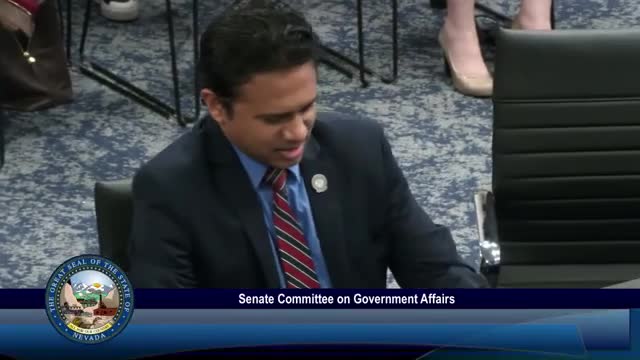
Summary
AB269 would add marriage and family therapists, alcohol and drug counselors, applied behavior analysts and other allied health and public‑health professionals to the Nevada HEAL student‑loan repayment program for providers who serve underserved areas.
Assembly Bill 269 would expand the Nevada Health Equity and Loan (HEAL) assistance program to include additional behavioral‑health and allied health professions for student‑loan repayment awards targeted to providers who work in underserved census tracts.
Sponsor Assemblymember Ruben DeSilva told the Senate Government Affairs Committee the program — established in 2023 — is administered by the state treasurer and was designed to increase provider retention in underserved areas. "Given ... workforce shortages in our state, I thought it imperative to work with UNLV to offer this student loan repayment program to licensed marriage and family therapists, alcohol, drug, and problem gambling counselors, and ABA therapists, among others," DeSilva said.
Sarah Hunt, executive director of Be Here Nevada and a psychologist, told senators those added professions provide "much needed mental health and substance abuse treatment throughout our state as health care providers," and that including them in the HEAL program is another tool to retain them in Nevada. UNLV and the Treasurer's Office joined sponsors in testimony supporting the expansion and said they reviewed fiscal and operational implications.
Eric Jimenez of the Treasurer's Office described the program's financing: the statute authorizes an annual transfer of $2.5 million from the unclaimed property trust to support the program. Awards are structured as five‑year commitments paid in 20% increments; the office said its regulatory scoring rubric prioritizes providers serving higher proportions of Medicaid or underserved patients and uses a sliding scale so higher‑debt professions receive larger awards. The treasurer's office reported it received 881 applications for the first cohort and awarded 67 providers in that round.
Committee members pressed on sustainability and geographic targeting. Senators asked how the program's dollars would cover a growing list of eligible professions and whether the bill's language allowing eligibility for providers in census tracts "adjacent to" designated underserved tracts could broaden the program beyond its intended focus. Jimenez and the sponsor said the program uses cohorts and actuarial modeling to sustain commitments year‑to‑year and that regulators can adjust scoring; DeSilva agreed to work with senators on language to ensure the program serves targeted underserved communities and to consider adding reporting requirements to show community impact.
Supporters included public‑health groups, universities and hospital systems; written testimony from public‑health associations, university workforce centers and hospital systems argued the expansion would address documented shortages of behavioral‑health and allied professionals, particularly in rural and low‑income urban areas.
Ending: The committee heard AB269 with broad stakeholder support but asked the sponsor and treasurer's office to clarify cohort sizing, scoring and reporting to ensure awards are targeted to census tracts of greatest need. Senators asked for regulatory and reporting language to better track impact on underserved communities.