Get Full Government Meeting Transcripts, Videos, & Alerts Forever!
Get email alerts on the Pbia Assessment topic
No spam. Unsubscribe anytime.
Downtown committee recommends status quo on PBIA assessment, asks staff for broader review next year
Summary
The Downtown Parking Committee recommended the City Council adopt a status-quo Parking and Business Improvement Area assessment for fiscal year 2026 but asked staff to return next year with a strategic review, including possible inflation adjustments and structural changes.
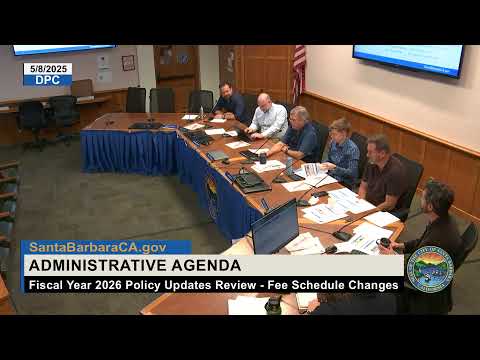
The Downtown Parking Committee on May 8 recommended that City Council adopt a status-quo assessment for the Parking and Business Improvement Area (PBIA) for fiscal year 2026 and asked staff to return next year with a broader review of the PBIA structure.
The recommendation followed a staff presentation of the PBIA annual assessment report. Ethan Bitney, parking resource specialist, presented the report and said the staff recommendation is a “status quo assessment for fiscal year 26,” noting the proposal aligns with a two-year outlook that limits changes for the coming year.
The PBIA was established in 1970 as an agreement between the downtown business community and the City of Santa Barbara to support downtown parking. Bitney told the committee the district now covers more than 50 blocks, includes five garages and eight surface lots with roughly 3,200 public parking spaces, and serves an estimated three million transactions in fiscal year 2025, of which about two million are within the 75-minute courtesy period. He said the PBIA projection for fiscal year 2026 is roughly $1.0 million in revenues.
Committee members pressed staff on options to address the long-term gap between PBIA revenue and program costs. Vice Chair Newkirk and others said current assessment categories and thresholds have not been updated in many years and that inflation and changes in downtown patterns have eroded the PBIA’s purchasing power. Staff said any change to assessment rates or to which entities are assessed would require an addendum to the engineer’s report and a multimonth lead time for study and outreach. Staff also told the committee that the current temporary configuration of State Street complicates reevaluating zone-of-benefit walking distances.
Committee discussion included whether to bring non-assessed entities (for example, live performance theaters and some nonprofits) into the assessment, and whether to build an annual inflation adjustment into PBIA policy. Mayor (attendee) and other members urged caution about launching a large engineering study immediately, arguing downtown’s business mix is in flux following post-pandemic changes.
Committee action: Vice Chair Newkirk moved that the committee recommend City Council approve the draft annual PBIA report and a status-quo assessment for fiscal year 2026, and that staff return in the next fiscal year with discussion and next steps for the PBIA and explore establishing an inflationary adjustment policy. Committee members seconded the motion; the committee voted in favor and the motion carried. Committee member Sean Pratt left the room and was recused from the PBIA discussion and vote.
Next steps: Staff told the committee the report is scheduled for City Council on June 3 (declaration of intent to levy) and for a public hearing on June 17, with assessments to take effect July 1, 2025. The committee requested staff bring a broader PBIA strategic discussion back for committee consideration during the next budget cycle.
Why it matters: The PBIA assessment is one of the revenue sources that pays for downtown parking operations and subsidizes the 75-minute courtesy period for downtown customers. Committee members said a refreshed analysis could affect revenue distribution, which businesses and organizations pay assessments, and long-term capital planning for parking facilities.