Get Full Government Meeting Transcripts, Videos, & Alerts Forever!
Get email alerts on the Grease Management topic
No spam. Unsubscribe anytime.
Wausau water commission directs staff to draft grease management program and revise hauler fee schedule
Summary
On May 6 the Wausau Waterworks Commission voted to have staff draft a grease management program to be incorporated into city ordinance and to revise the sewer hauler/holding-tank fee schedule to better reflect treatment costs.
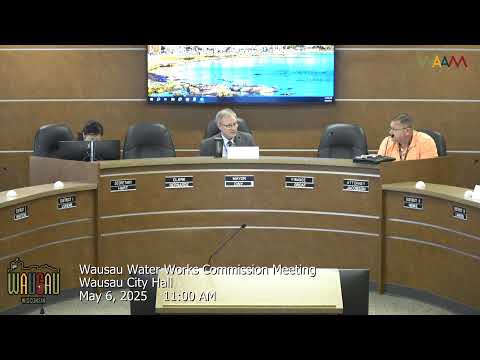
WAUSAU, Wis. — The Wausau Waterworks Commission voted May 6 to ask staff to draft a grease management program for inclusion in city ordinance and to update the fee schedule for septic/holding-tank and grease-hauler waste to better reflect treatment costs.
Commissioner Forrest moved to direct staff to draft a grease control program; Commissioner Watson seconded the motion and commissioners voted in favor. Commissioner Robinson moved to authorize staff to update the hauler fee schedule to reflect costs and comparables; Forrest seconded that motion and it passed.
The utility reported it currently receives roughly 40,000 gallons of grease-trap waste each month at the treatment plant. Staff described repeated instances in which grease traps at some food-service establishments had not been pumped in years and then were delivered as concentrated loads that strained the plant.
Under the proposed approach, staff said the program would likely require an annual permit for food-service establishments and third-party inspections of grease interceptors; the utility would not perform the inspections itself. Permit applicants would submit inspection records and pay a nominal annual fee, with a permit required to discharge to the sewer system. Commission members asked staff to coordinate with Marathon County Health Department while developing the draft.
On the hauler fee schedule, staff recommended dropping a blended rate and switching to a per-1,000-gallon pricing unit so haulers and owners can more easily see surcharges tied to waste type. Staff said some utilities use equipment to distinguish waste types (for example by pH), but that onsite testing equipment and automated monitoring are costly. The commission authorized staff to prepare a revised fee schedule using comparables and return a draft for review.
Commissioners emphasized enforcement and compliance mechanisms during the discussion. Robinson urged staff to evaluate whether retail food inspections administered by the health department could be used as a vehicle for ongoing compliance; staff said they had begun outreach to the health department but had not yet developed a formal integration plan.
The commission asked staff and the city attorney to prepare ordinance language and bring back drafts and cost estimates for commission review later this year.