Get Full Government Meeting Transcripts, Videos, & Alerts Forever!
Get email alerts on the Ww2 Commemoration topic
No spam. Unsubscribe anytime.
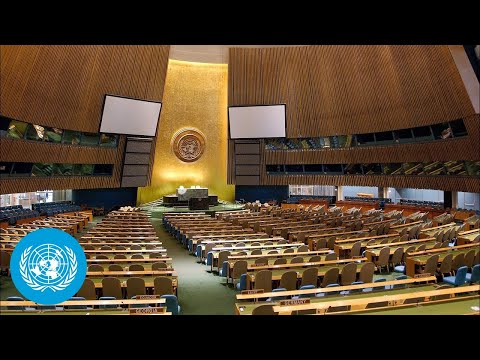
UN General Assembly holds solemn meeting to mark 80th anniversary of end of World War II
Summary
Member states met in the General Assembly to commemorate the 80th anniversary of the end of World War II, emphasizing remembrance, the UN Charter and multilateralism while several delegations warned against historical revisionism and the politicization of memory.
The United Nations General Assembly convened a special solemn meeting on the 80th anniversary of the end of the Second World War to “commemorate all victims,” open with reflections on the sacrifices of veterans and to reaffirm the purposes of the UN Charter, assembly officials said.
Delegations from across the globe used the floor to honor victims and veterans, recall the founding purpose of the United Nations “to save succeeding generations from the scourge of war,” and press for renewed commitment to multilateralism and international law. Speakers also highlighted the dwindling number of living veterans and the resulting urgency of preserving first‑hand testimony.
Representatives stressed common themes: remembering the human cost of the conflict, defending historical truth, and strengthening international cooperation to prevent future large‑scale wars. Several delegations urged reforms to make the UN better equipped to meet modern challenges and to uphold the legal and normative framework—citing the UN Charter, the Universal Declaration of Human Rights and postwar accountability mechanisms as foundational.
While the meeting was largely commemorative, speakers used the occasion to warn against what they described as attempts to distort wartime history and to emphasize that remembrance must accompany action to uphold human rights and international law. Delegations from regions that suffered the greatest losses urged preservation of historical records and education programs so new generations understand the scale and causes of the war.
The event included intervention by groups of states speaking jointly (for example, the representative speaking on behalf of Australia, Canada and New Zealand) and statements recalling national wartime experiences, humanitarian contributions, and postwar reconstruction. Several delegations also tied commemoration to contemporary priorities such as nuclear disarmament, peacekeeping support and international cooperation on development and humanitarian law.
The assembly concluded the formal segment of the commemorative meeting after a program of national statements and collective tributes.