Get Full Government Meeting Transcripts, Videos, & Alerts Forever!
Get email alerts on the Gaza Humanitarian topic
No spam. Unsubscribe anytime.
UN: Aid stuck, food and water supplies dwindling in Gaza as civilian sites hit
Summary
United Nations briefers said crossings remain largely closed, humanitarian stocks are depleted and attacks have struck schools and shelters across Gaza, worsening civilian suffering and hampering aid delivery.
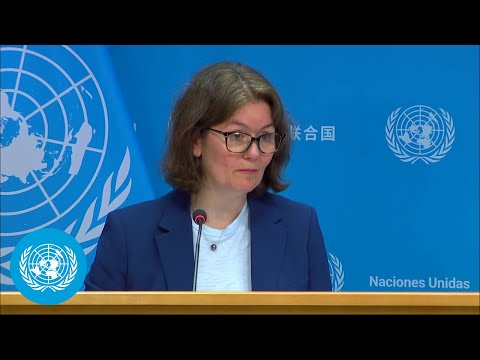
Stephanie Tremblay, an associate spokesperson for the United Nations, told reporters at the noon briefing that aid flows into Gaza are severely constrained and humanitarian needs are rising after months of fighting.
"As of yesterday, 1 in every 3 community kitchens supported by the UN and our partners in Gaza has closed," Tremblay said, describing multiple strikes on facilities sheltering civilians and repeated denials of UN requests to move inside the strip.
The UN and partners reported widespread damage to civilian infrastructure. Tremblay summarized partner analyses showing that "over 95% of school buildings have sustained at least some level of damage," and that attacks on schools sheltering displaced people have led to dozens of reported deaths, including women and children. She said malnutrition-prevention supplements are exhausted and that remaining treatment stocks will be depleted unless crossings reopen to cargo.
Tremblay said water, sanitation and hygiene conditions are deteriorating: a partners' report found that about 90% of assessed families faced water insecurity last month, with more than three-quarters reporting a worsening situation. She added that community kitchens are running out of supplies and that adults are prioritizing children when food is available.
On logistics, Tremblay said more than 240,000 metric tons of supplies are ready to be dispatched from warehouses outside Gaza, in addition to stocks waiting at crossings. She said OCHA — the UN Office for the Coordination of Humanitarian Affairs — reported that "3 quarters of the UN's requests were denied. That is 6 out of 8," and that half of the denied requests were to retrieve supplies from militarized areas.
The briefing repeated the UN position that humanitarian movements and cargo entry must be facilitated and that partners stand ready to distribute assistance at scale as soon as crossings allow.
Tremblay attributed casualty figures and damage reports to UN partners and OCHA and did not present new on-the-ground casualty counts beyond partner reports. The spokesperson also noted that partner-run community kitchens and malnutrition prevention programs are at acute risk of collapse if access and cargo movement remain restricted.
Looking ahead, the briefing did not announce new deliveries or confirmed re-opening of crossings; Tremblay said UN agencies and partners are prepared to scale up distributions once authorities permit the entry and internal movement of cargo.