Get Full Government Meeting Transcripts, Videos, & Alerts Forever!
Get email alerts on the School Budget topic
No spam. Unsubscribe anytime.
Lake Oswego SD projects $10 million shortfall, proposes 112 FTE reductions; legal budget committee to review May 21
Summary
District finance staff presented a preliminary general fund budget showing roughly $10 million in reductions for 2025–26, plans to cut about 112 full‑time equivalent positions and lower its contingency reserve; board committee scheduled a final review and possible approval on May 21.
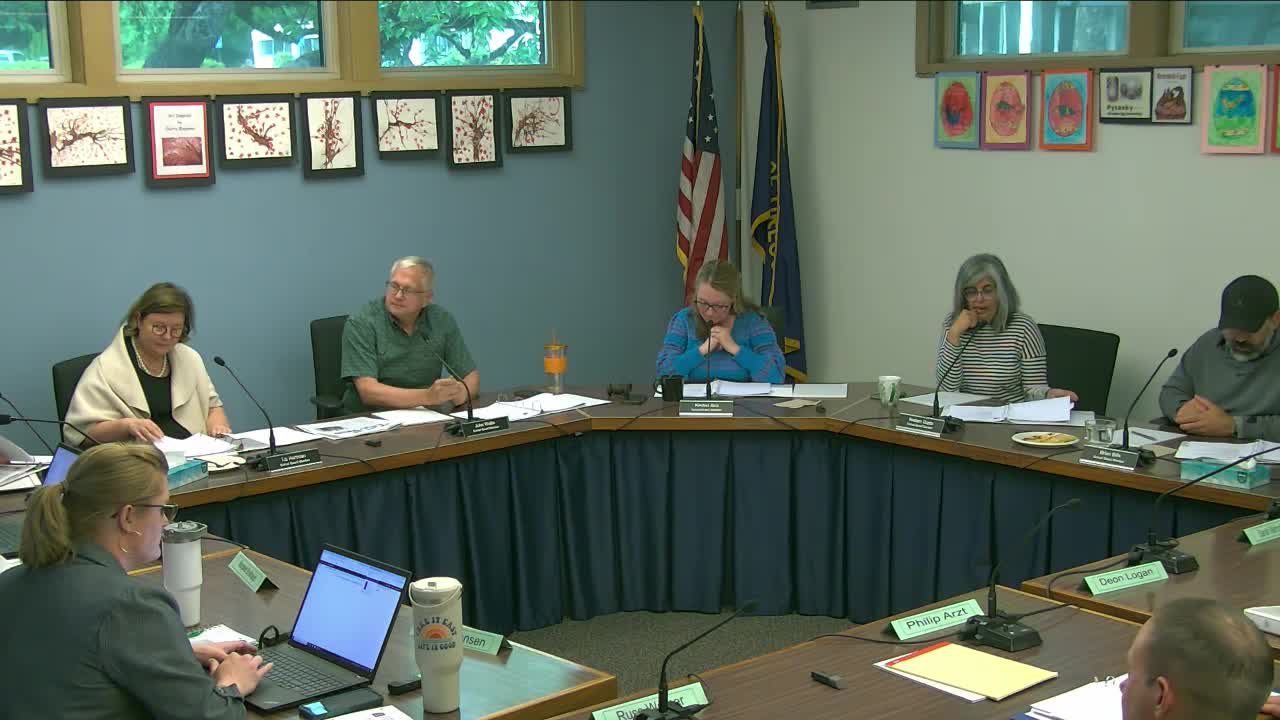
Lake Oswego School District legal budget committee members heard a presentation on a preliminary general fund budget that assumes roughly $10 million in reductions for fiscal year 2025–26 and would reduce the district’s planned reserve to $500,000 while keeping a proposed total general fund budget of about $123 million.
The presentation by district finance staff showed an updated financial model that narrowed a December projection of about a $12 million deficit to “under $2 million” for 2025–26 after the district implemented hiring freezes and the program of cuts, but it still projects a preliminary shortfall of approximately $1.5 million in 2026–27 if current assumptions hold. Stuart Ketzler, the meeting presenter, told the committee that the model does not yet include possible PERS (Public Employees Retirement System) rate relief expected from a bill recently signed by the governor and pending final actuarial calculations by Milliman and the PERS board.
Why it matters: the proposal would shrink the district’s ability to respond to emergencies and would change service levels in classrooms and support programs. Committee members repeatedly pressed that if temporary state relief or additional reimbursements for high‑cost special education materialize, the district intends first to restore fund balance rather than immediately re‑fund cut positions.
The most tangible changes in the draft budget are personnel reductions. Ketzler outlined a net reduction of 112 FTE (full‑time equivalent) between the district’s November peak staffing and the 2025–26 proposed budget. That figure combines 27 classroom teaching positions (7 elementary and 20 secondary), 64 non‑classroom positions (a mix of classified, licensed and administrative roles) and about 20 positions already reduced through retirements or voluntary resignations. Ketzler and other staff also said that 41 FTE were added after last year’s budget adoption (three licensed and about 38 classified), which the reductions now seek to reverse.
“We have the $10,000,000 plus in budget reductions accounted for in the 25–26 forecast,” Ketzler said as he walked committee members through revenue and expenditure line items. He added that the district’s assumptions for state reimbursements for high‑cost disabilities and for the state school fund remain uncertain while the legislature completes appropriations.
Special education and PERS: committee members and staff emphasized two statewide elements driving district costs. First, special education costs have risen sharply; the district’s presenter said statewide averages have moved closer to 15 percent of enrollment compared with an earlier 11 percent cap, and the district’s high‑cost disability reimbursements in recent years have covered roughly 30–40 percent of eligible costs (historically higher in earlier decades). Ketzler told the committee the district expects to collect about $2.3 million from the high‑cost disability pool this year and used $2.5 million as a planning estimate for next year.
Second, Ketzler explained a recently enacted temporary PERS rate relief bill that directs the PERS board to take action this spring; preliminary indications are for roughly a 1.68 percent rate credit in the 2025–27 biennium. He estimated that, if finalized as expected, the credit would reduce the district’s rates by roughly $900,000–$950,000 systemwide, but he cautioned that the district has not yet included that credit in the budget because the PERS board and actuary must issue formal numbers.
Reserves, fund balance and contingency: the proposed general fund budget totals roughly $123 million. Under the financial model assumptions Ketzler showed, a projected ending fund balance of about $3.1 million for 2025–26 would leave the district below its policy minimum and “out of compliance with policy by just under $6.7 million.” To reflect shrinking balances the draft budget reduces the district’s planned reserve (contingency) from $1,000,000 in prior years to $500,000 for 2025–26, and it sets a working reserve line of $2.3 million in the document. Committee members repeatedly raised that the district’s projected ending balance is less than one month of payroll; Ketzler said monthly gross payroll exceeds $6 million, so an ending balance around $5 million would be insufficient to cover multiple months.
Program impacts: committee discussion highlighted how the reductions will be felt in schools. Staff said elementary physical education frequency will drop (staff explained elementary students’ PE exposure could fall by about 30 percent) as the district reassigns existing licensed staff to “top‑of‑license” teaching duties and shifts some nonteaching tasks (recess duty, pick‑up/drop‑off) to lower‑paid staff. A board member cited a prior written presentation estimating cuts of roughly four stipends per school for some co‑curricular teams; the board discussed that eliminating several stipends districtwide would reduce stipend costs by about $24,000 combined (approximately $3,000 per stipend), though the administration has not finalized stipend proposals.
Other budget notes: Ketzler reviewed revenue assumptions anchored to Oregon Department of Education formal district estimates for state school support, local option levy collections, and local assessed value calculations. He said expected increases in facilities maintenance, utilities and technology licensing continue to pressure the budget. The district also discussed its investments in solar arrays and battery storage at newer schools; staff said the infrastructure to export power back to the grid would require substantial additional investment (PGE grid work and chargers) and grants do not fully cover those costs.
Process and next steps: the committee approved the minutes from its April 23 meeting at the start of the session (motion by Director Wallin; second by Director Bills; voice vote, motion approved). No written or in‑person public testimony was filed for this legal budget committee meeting, staff said. Ketzler told the committee the district will bring the remaining fund pages (other funds and long‑term debt items) to the next legal budget committee meeting on May 21, with the goal of presenting a budget approval resolution that would complete the legal budget committee review and allow the full board to hold the public hearing and adopt a budget in June.
What committee members said: several directors expressed that cuts are painful and highlighted the district’s obligation to educate students with high needs. “This is not a function of discretionary spending decisions,” one director said of the special education increases; another director urged continued advocacy for state funding and noted the need to pass the district bond to protect the general fund from capital emergencies.
Votes at a glance - Approval of minutes, April 23: Motion to approve minutes moved by Director Wallin and seconded by Director Bills; voice vote with ayes recorded; motion approved. No other formal votes were taken.