Get Full Government Meeting Transcripts, Videos, & Alerts Forever!
Get email alerts on the City Budget Forecast And Process Reform topic
No spam. Unsubscribe anytime.
San Antonio projects multiyear budget shortfalls; consultants urge hybrid budgeting and deeper reviews
Summary
San Antonio city officials said on May 7 that slower sales and property tax growth, lower permitting and airline activity, and rising personnel and operating costs are creating a structural imbalance in the city’s finances and projected multiyear deficits; consultants recommended a hybrid budgeting approach that emphasizes outcomes, targeted zero‑based reviews and a longer council goal‑setting window.
SAN ANTONIO — City officials told the San Antonio City Council on May 7 that the city faces recurring revenue shortfalls and structural deficits over the next five years and proposed process changes that could reshape how the city sets budgets.
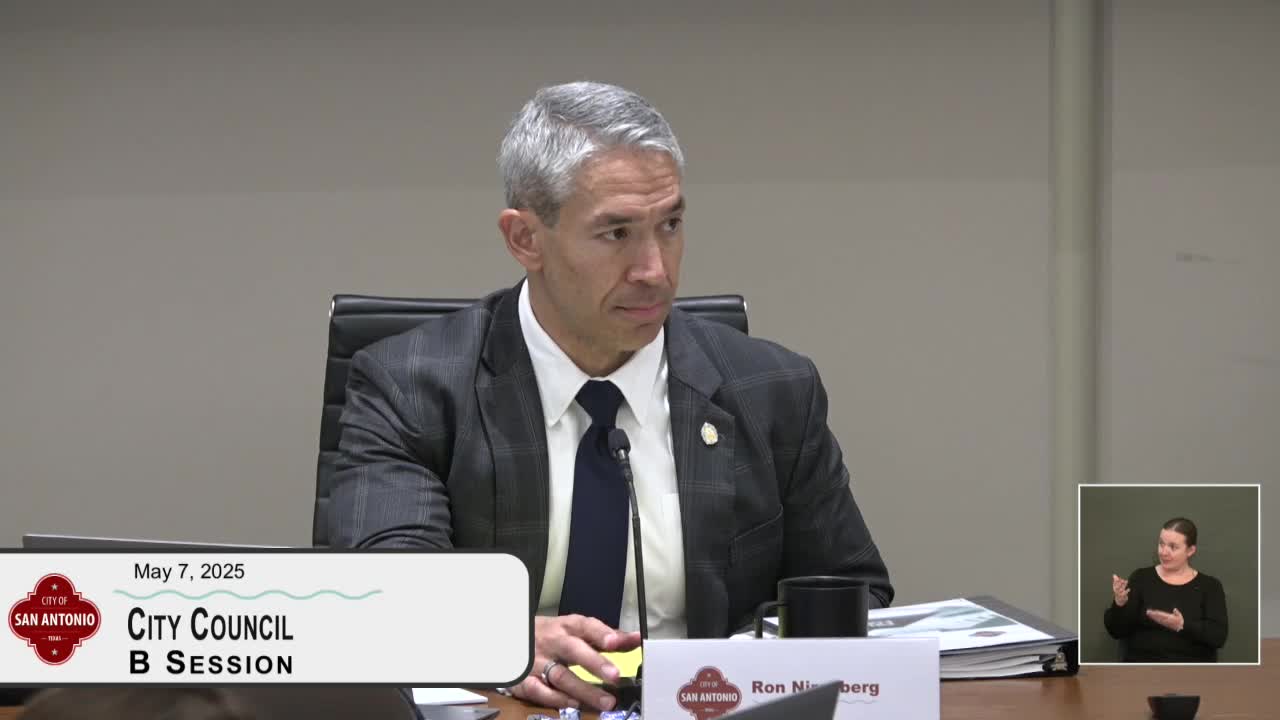
At a B-session budget briefing, Justina Tate, the city’s budget director, called the five‑year forecast “not structurally balanced” and said the forecast “projects deficits for the five years,” citing slower-than-expected growth in sales tax and property tax collections along with rising personnel and operating costs.
The forecast shows that for fiscal 2025 the general fund is running behind the adopted budget by an estimated $9.7 million, Tate said, with sales tax about $5.2 million below budget and property tax about $9.8 million below budget. Taxable value declined by roughly $3.4 billion after the certified roll because of additional protests, litigation/arbitration and exemptions — figures Tate gave as about $900 million, $1.3 billion and $1.2 billion, respectively. The forecast projects an approximate $31 million deficit in 2026 that grows to about $148 million in 2027 if no structural changes are made.
City Manager Eric (City Manager) emphasized that “the forecast is not the budget,” saying the document is an early outlook that staff will refine before formal budget decisions. He and Tate both warned that the revenue trends are recurring and therefore will affect future budgets unless spending growth is aligned with revenue growth.
PFM Public Finance (PFM), the consulting firm retained to review the city’s budget process, recommended a hybrid approach that combines outcome‑based budgeting with targeted uses of zero‑based budgeting (ZBB) and continued comprehensive budget reviews (CBRs). “Our preliminary recommendation is a hybrid approach,” Danielle Scott Parker, a PFM director, told council, outlining a transitional timeline that shifts longer goal‑setting into a period designed to align multiyear priorities with budget decisions.
PFM’s suggested changes include a longer, more in‑depth council goal‑setting window (to be used particularly during a transition year), targeting ZBB at selected programs and rolling CBRs that review departments on an annual rotation. The consultants said those steps are intended to clarify core versus supplemental services, reduce duplication, and give council clearer outcome targets for departments.
Tate and PFM staff also described current fund trends: hotel occupancy tax revenues were running above 2024 totals for 2025 but are expected to slow; airport passenger activity is up only about 0.5% compared with an assumed 3.5% increase used in the 2025 budget; and development services revenues have fallen — residential permits down about 13% and commercial permits down about 1.6% compared with 2024 — producing a multi‑year forecasted decline in that enterprise fund.
Tate said the city follows a CPS off‑system sales policy adopted in the 2025 budget that caps off‑system sales retained by the city at $10 million; amounts above that are held in a capital reserve. Through March the city had exceeded the $10 million cap by about $4.6 million and anticipates a capital reserve of roughly $22 million by year end after required transfers and shortfall adjustments.
Councilmembers asked about options to close projected gaps. Staff said they will prepare updated revenue and expenditure projections for the trial budget and the council goal‑setting session on June 27. A proposed mid‑year budget adjustment that “right‑sizes” revenues and expenses for presented funds was announced; staff said council will consider that adjustment at the A session on May 15. Other near‑term steps include launching the community budget survey May 12, presenting a trial budget at the June goal‑setting session, issuing a proposed budget on August 14 and adopting the FY2026 budget on September 18.
No formal votes were taken during the briefing. Council members expressed a range of reactions: some welcomed the hybrid approach as a way to reduce duplication and better align spending with outcomes, while others cautioned about burdening departments already stretched thin and urged protection for core services.
The city’s next steps are to refine the forecast with updated appraisal district values and other data, present options on the property tax rate if council wishes to consider the state’s up to 3.5% allowable increase, and return with specific spending‑reduction options and timing for any ZBB or CBR work that would be used to rebalance the five‑year outlook.