Get Full Government Meeting Transcripts, Videos, & Alerts Forever!
Get email alerts on the Active Transportation topic
No spam. Unsubscribe anytime.
Toledo committee hears plans to expand bike network, pilot slower Washington Street and boost safety programs
Summary
City staff, regional planners and Metroparks outlined projects, maintenance plans and community events aimed at connecting bike facilities across Toledo; advocates urged protected lanes, lower speeds and quick, low-cost safety measures.
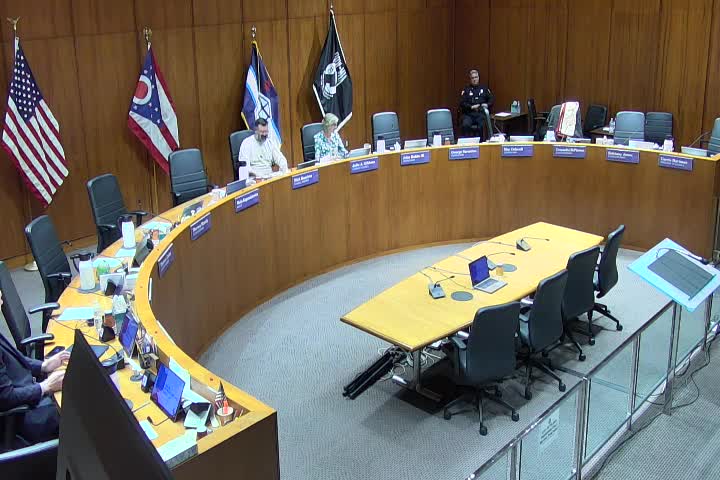
The Toledo City Council Mobility, Sustainability and Beautification Committee on May 7 heard updates from city traffic staff, regional planners and Metroparks on projects meant to expand and better maintain the city’s bicycle network, along with a series of community events and safety programs timed to Bike Month.
The presentations and dozens of public comments stressed two linked goals: build a more connected, year‑round network and prioritize safety through infrastructure, operations and community outreach. “Providing infrastructure for safe cycling is an essential first step, but it's only the beginning,” Stephanie Bartlett, the city of Toledo’s commissioner of traffic management and Vision Zero coordinator, told the committee.
City staff described existing bicycle mileage, near‑term construction and a months‑long ODOT pilot aimed at reducing speeds on a busy corridor. Bartlett said Toledo has about 88 miles of dedicated bike facilities in the city limits (including paths inside parks and at the University of Toledo) and that “almost 70 miles of this is maintained by the city,” a total that includes on‑street bike lanes, multiuse paths and signed routes. Projects planned or under way include completing a Riverside Trail connection into Point Place, a multi‑phase Summit Street cycle track expected in 2026–27, a side path on Secor Road between Kenwood and Central, conversions to separated side paths on older lanes such as sections of Telegraph Road, and the Emerald Bike Path connection slated for 2027. Bartlett said five of eight major City projects this year include bike facilities.
She also described maintenance and operations work intended to keep facilities usable year‑round: regular sweeping and improved snow removal schedules, and coordination with departments such as engineering and road and bridge maintenance. On the subject of speeds and safety, Bartlett referenced the Washington Street pilot, a $5,000,000 grant from the Ohio Department of Transportation that aims to test a 25 mph target speed and buffered bike lanes; the project will be monitored for speed and crash data over the next several years.
Regional planning partner Timucog (presenting as Team Macog) detailed Bike Month programming and a nascent regional active transportation plan. “Our priority is always bike safety,” Raj Nagasetty, a transportation planner at Timucog, said, and he described recent events — the Anthony Wayne Trail connection ribbon cutting linking Toledo and Maumee, a planned Bike to Work Bus on May 16 that will run through seven to eight neighborhoods, and a Ride of Silence memorial for people killed in vehicle‑bicycle collisions. Timucog staff said the regional active transportation plan will consolidate existing jurisdictional plans and be offered through Timucog’s data portal to help smaller jurisdictions prepare grant applications.
Metroparks reported its own trail inventory and made the case for continued investment. “Lucas County has 275 miles of bike paths; Metroparks owns or maintains 99 miles of that, about 36%,” Matt Killam said. He added county off‑road totals and Metroparks’ share: Lucas County has about 183 miles of off‑road bike paths and Metroparks owns or maintains 97 miles (about 53%). Metroparks staff said the agency maintains roughly 214 miles of trails, and about 46% of those allow bikes.
Public commenters — cyclists, nonprofit organizers and neighborhood residents — urged faster implementation of protected lanes, clearer and connected routes, route painting and signage, lower speed limits on certain streets, and low‑cost safety measures such as flex posts, plastic delineators and painted route markings. “A bicycle is a life‑saving device,” Laura Schafer, who spoke as a cyclist and member of the public, said, arguing that many Toledo households rely on bikes for basic mobility and that incomplete or unprotected infrastructure harms vulnerable users.
Speakers from commerce and community groups described outreach and small‑scale actions that could increase usage and safety: Toledo Bikes and community bike clubs offer repair clinics and youth programs; advocates suggested color‑coded route paint tied to existing community maps, improved crossings at major arterials, expanded Safe Routes to School efforts, and considering rebates or partnerships to improve access to e‑bikes. Multiple speakers also noted that painted lanes without physical separation can give drivers a false sense that a facility is adequate, and that short, visible protections (bollards, curb extensions or parking‑separated lanes) often increase perceived and actual safety.
Committee members and city staff discussed near-term operational steps and the need to coordinate project phasing and communications. Council member Melvin urged the committee to set short‑term goals and a timeline for a set of pilot or quick‑win actions, such as targeted paint and soft‑barrier installations and route wayfinding. No formal vote or ordinance was taken at the meeting; the session consisted of presentations and public comment.
The committee meeting also served as a forum for residents to describe where connections remain missing — for example between neighborhoods and downtown facilities such as the Glass City Riverwalk and the zoo — and to press for continuing community engagement as projects move from planning into construction. Timucog and city staff said they are developing a more detailed public map of existing and planned facilities for broader public use.
The committee did not adopt any formal actions at the May 7 session. City staff and regional partners said they will continue design and monitoring work on the Washington Street pilot, advance the Summit Street cycle track phases, and pursue the Riverside and Emerald path connections on the timetable described. Council members and several advocates signaled intent to pursue both longer‑term capital projects and lower‑cost interim treatments to improve safety and connectivity in the coming year.