Get Full Government Meeting Transcripts, Videos, & Alerts Forever!
Get email alerts on the Special Assessment topic
No spam. Unsubscribe anytime.
Commission hears plan for $4.6 million 3 Islands guardhouse and traffic-calming project funded by city-imposed special assessment
Summary
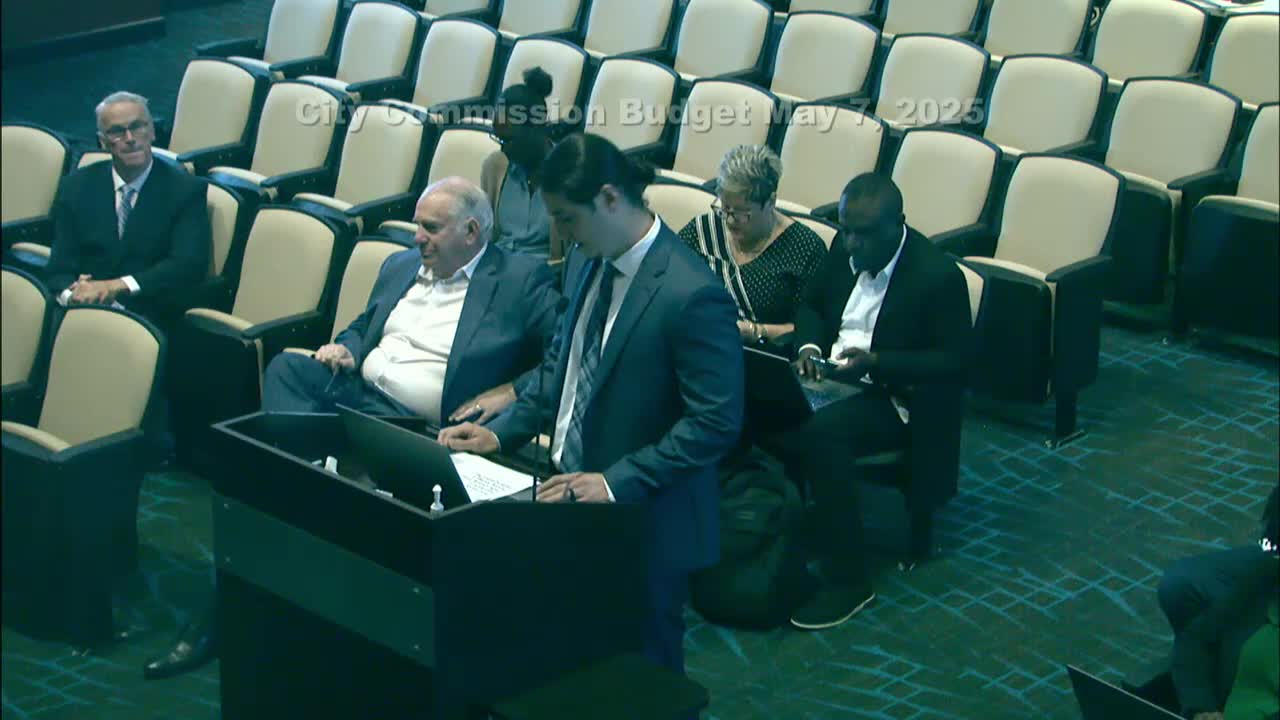
City staff recommended a city-imposed special assessment to pay for a planned 3 Islands guardhouse, roadway and traffic-calming project, telling the Commission on May 7 that the approach would avoid a voter referendum and allow construction to start this year.
City staff recommended a city-imposed special assessment to pay for a planned 3 Islands guardhouse, roadway and traffic-calming project, telling the Commission on May 7 that the approach would avoid a voter referendum and allow construction to start this year.
Assistant Finance Director Sean Lee and outside counsel Christopher Rowe (Bridal Miller Olive) presented a funding strategy that sizes the project at roughly $4.6 million (about $4.0 million direct construction plus contingency, outreach, legal and advisory costs). Paul Lambert of Lambert Advisory said the recommendation would spread the cost across about 4,142 tax folios in the district and estimated a maximum per-parcel assessment of roughly $1,000 (about $200$260 per year over five years under staff calculations). Staff noted the assessment calculation can be adjusted if actual construction costs come in lower.
Rowe, the city's bond counsel, told commissioners that a city-imposed special assessment typically does not require a referendum and can be implemented quickly; that collection can be performed by putting the assessment on the ad valorem tax bill (turning collection over to the county tax collector); and that a court validation process is available to reduce legal challenges and lower borrowing costs. Rowe said one disadvantage is the need for a written showing that the properties bearing the assessment are specially benefited by the improvement.
Staff described three financing paths they considereddistrict-issued debt (a "geo" style loan), an internal general-fund loan to be repaid by assessments, or a city special-assessment issuance. City staff recommended the city special-assessment approach as the fastest, referendum-free path that isolates the cost to benefited properties.
Key numbers and scheduling presented by staff: - Project estimate (engineer opinion of probable cost, Oct. 2024): ~$4,000,000 direct construction; $4,600,000 total including 10% contingency and soft costs. - District snapshot: about 4,142 tax folios, roughly 91% condominiums; about 88 folios are tax-exempt or at zero tax; staff said the district fund balance is about $1.5 million and recommended the commission consider applying a portion of those reserves to lower per-parcel assessment. - Staff estimate of the average per-folio assessment is about $1,000 total (roughly $200$260 per year on a five-year repayment schedule), with options to prepay and to exempt certain low-income or otherwise exempt folios if the Commission chooses.
Construction schedule staff described: go to bid at the end of the month for design/construction; staff said they expect award and start between September and November 2025 and roughly a 12-month construction period after award.
Staff outlined the public process and timeline they will use for the assessment: - May 7: first reading of procedural ordinance establishing the assessment framework and authority. - May 21: second reading and adoption of the assessment procedure ordinance and adoption of an initial assessment resolution. - May 29: mailing and public-notice steps. - June 18: second reading/adoption of the final assessment ordinance and a reimbursement resolution authorizing potential issuance of assessment revenue bonds or notes (but not obligating issuance). - Aug. 29: validation hearing in circuit court (optional but suggested to blunt litigation risk). - Sept. 5: issue bank-loan RFP if staff determines external financing is needed. - Nov. 7: first-year direct billing of assessments (because timing won't permit collection on the tax roll until the following year); years 25 would be collected on the ad valorem tax bill.
Commissioners asked about use of district reserves to lower per-parcel costs; staff and consultant said the district fund balance of roughly $1.5 million could be applied and showed examples (e.g., $500,000 or $1 million would reduce annual per-parcel cost noticeably). Commissioners also pressed staff on whether paving south of the bridge would be covered by the project; staff said the 3 Islands project limits of work stop at the bridge and additional repaving south of the bridge would be a separate CIP.
No final vote was taken May 7. Staff sought and received direction to proceed with the assessment process and with ordinance drafting and public notices under the timetable above so the city can begin construction on schedule if the Commission adopts the assessment in June.