Get Full Government Meeting Transcripts, Videos, & Alerts Forever!
Get email alerts on the City Budget topic
No spam. Unsubscribe anytime.
Hallandale Beach officials outline FY26 budget timeline, warn of property tax risk and tariff-driven cost pressures
Summary
City officials presented a cautious FY26 budget plan focused on infrastructure and fiscal stability, flagging a possible November ballot measure to reduce or eliminate property taxes, rising pension costs and tariff-driven construction cost increases.
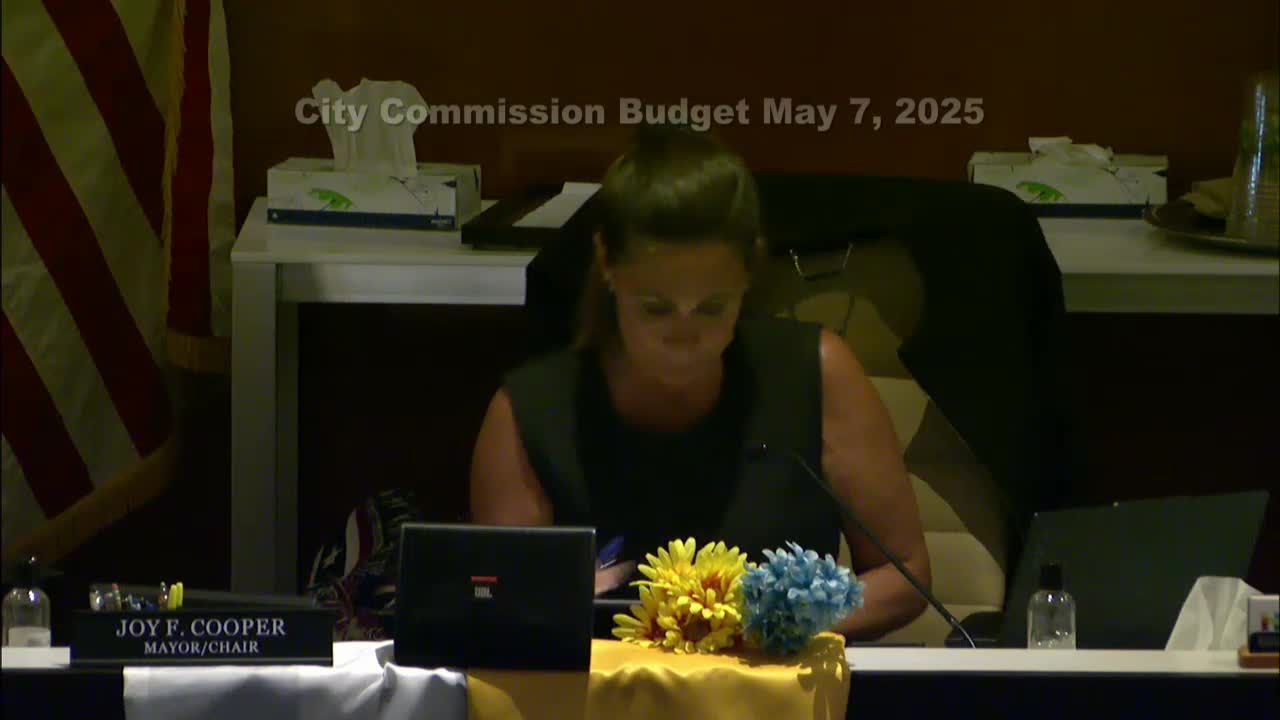
Hallandale Beach city staff presented a first-look at the proposed fiscal year 2026 budget on May 7, saying the plan prioritizes infrastructure repairs and fiscal stability while preparing for possible changes to the state property tax framework.
City Manager Earl said the administration is "shoring up our finances" and that the city's recent audit supports continuing current priorities. Budget and Program Monitoring Director Natasha Mazzi outlined the schedule toward budget adoption, beginning with the May 7 workshop, a second workshop on June 4 and the citys planned June 18 meeting to set a tentative millage and budget for FY26.
Mazzi told commissioners the city is planning FY26 on "the reality of economic uncertainty" and listed major external risks: potential changes to property tax law that could shift revenue sources, rising tariffs that increase project costs, and other market forces. She said property tax currently provides roughly 54% of general-fund revenue and that the citys overall budget is about $206 million with roughly $64 million in property-tax revenue.
The presentation emphasized three budget "pillars" that will guide FY26 spending: results from the resident survey, the commissions annual action plan and the citys strategic plan. Mazzi said departments were asked to reduce operating expenses 2%–3% with minimal service impact and no staffing increases. Staff singled out unavoidable cost pressures including salary and benefit increases, the BSO fire contract, CRA/TIF payments, pension obligations, and liability insurance.
Human-resources director Reddy Dodia told commissioners the next pension valuation (as of Oct. 1, 2025) will show higher pension costs due primarily to a reduced assumed rate of return adopted by the pension board rather than immediate market losses.
City Manager Earl and staff also said they will run analyses this year on the possible fiscal impact if statewide ballot action reduces or eliminates property taxes, including estimates of what sales tax would need to rise to replace current revenues. Commissioners and staff discussed possible communication to residents explaining trade-offs (for example, how public-safety funding and water rates might need to change).
Staff said a second tranche of the utility bond and continued capital spending will remain priorities for addressing long-delayed infrastructure work, including drainage, water and sewer repairs, sidewalks and roadway improvements. The Commission scheduled additional budget workshops and expects to return with utility and capital project items at the June 4 meeting and to finalize tentative numbers on June 18.
Looking ahead, Mazzi said the budget process will emphasize flexibility and resilience: "We are doubling down on our investments," she said, while also preparing for lower revenues or higher costs if proposed changes to property tax or continued tariff pressure materialize.
The commission did not take formal action on the FY26 budget at the May 7 meeting; staff said further decisions and formal readings will be scheduled in the coming weeks.