Get Full Government Meeting Transcripts, Videos, & Alerts Forever!
Get email alerts on the Housing Affordable Rentals topic
No spam. Unsubscribe anytime.
Hawaii County Council advances change to affordable-rental tax classification amid debate over East–West impacts
Summary
The Hawaii County Council passed Bill 39 on first reading to change how the affordable-rental real property tax class is calculated, tying it to HUD AMI and explicitly allowing Section 8 landlords to qualify.
The Hawaii County Council passed Bill 39 on first reading on May 7, moving the county’s affordable-rental real property tax classification from a payment-standard basis to a formula tied to HUD area median income (AMI) and adding Section 8 landlords to the program.
Supporters said the change would simplify administration and encourage more landlords in West Hawai‘i to accept Section 8 vouchers. “Detaching [the affordable-rental class] from the payment standard will provide stability and make certification easier,” Housing Administrator Kejal Costa told the council, adding that HUD’s AMI charts are published earlier and would reduce annual disruption.
Opponents and several council members said the proposal risked different effects across the island. Council Member Lani Kaguata pointed out the bill’s ZIP-code rent data, saying many ZIP codes on the East side already show market or fair-market rents below the proposed AMI-based caps: “...a good portion, two-thirds, more than half are going to now have market rates that are lower than our proposed affordable rental rates,” she said, arguing that could let owners outside current affordable programs obtain tax benefits while continuing to charge market rents.
Real Property Tax Administrator Lisa Maira told the council that most parcels currently in the affordable-rental program were not charging the program’s maximum allowed rent: only 4.3% of certified parcels were at the current cap, and 7.2% were within $100 of it. “Eighty-eight percent are not within even $100 of the max rent right now,” she said, noting that historical data showed participants generally charge below the cap.
Housing Administrator Costa and other supporters said the change is intended to increase participation by West Hawai‘i landlords, where Section 8 uptake is low because payment standards lag market rents. Costa said the bill “would incentivize landlords in West Hawai‘i to participate” by bringing allowable rents closer to market there, which could increase the inventory of subsidized long-term rentals.
Council members pressed for more study and possible geographic tailoring. Several members — including Michelle Kalimba and Heather Kimball — urged follow-up work to determine whether a single AMI threshold is the best long-term approach or whether a small number of geographic tiers (for example: East / West) would reduce unintended impacts.
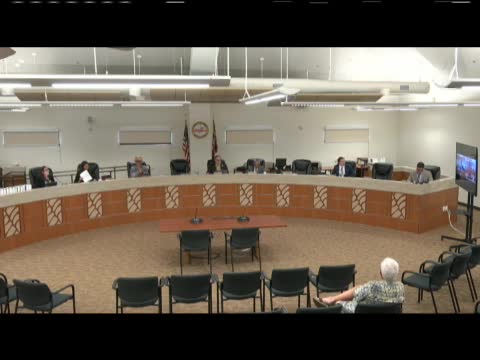
After debate the council voted to pass Bill 39 on first reading. The roll call showed eight votes in favor and one no; the motion carried. Council members said they would continue committee-level work to consider implementation details.
What’s next: Bill 39 will return for additional readings and any implementing language; council members asked the administration and housing staff to develop comparative analyses and possible geographic options for future consideration.