Get Full Government Meeting Transcripts, Videos, & Alerts Forever!
Get email alerts on the Cannabis Legalization topic
No spam. Unsubscribe anytime.
Pennsylvania House narrowly passes HB 1200 to legalize adult-use cannabis after close constitutional vote
Summary
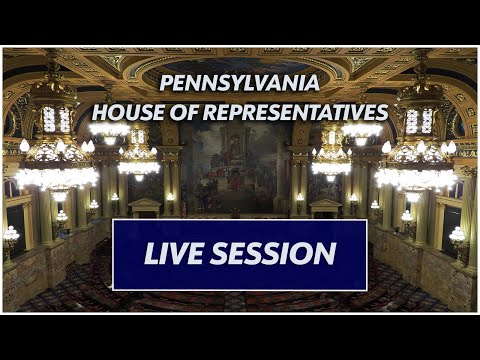
The Pennsylvania House of Representatives passed House Bill 1200 on a 102‑101 vote Wednesday, approving legislation to legalize and regulate adult‑use cannabis and to establish a state‑controlled retail framework.
The Pennsylvania House of Representatives passed House Bill 1200 on a 102‑101 vote Wednesday, approving legislation to legalize and regulate adult‑use cannabis and to establish a state‑controlled retail framework.
Supporters said the bill creates a tightly regulated system intended to keep potent products out of unregulated channels and direct revenue to Commonwealth priorities. Opponents argued the measure is unconstitutional, will harm young people, and will saddle the state with large startup costs.
The bill’s sponsor, Representative Krayjewski, said after multiple health‑committee hearings the measure "creates a balanced, responsible, and robust framework," and that legalization would allow the state to "reign in a market that is completely deregulated in terms of potency, content, labeling, or advertising." He told colleagues the proposal would pair publicly owned retail stores with social‑equity and small‑business licensing to prevent monopolies and direct revenue to Pennsylvania businesses and taxpayers.
Opponents raised multiple objections during a long floor debate. Representative Bonner moved that the House defeat the bill on constitutional grounds, saying House Bill 1200 "is in violation of 2 essential provisions of the Constitution of the Commonwealth." He and other critics pointed specifically to a provision they said forbids appellate review of certain local court decisions and to section 305, which directs post‑enactment expungement and resentencing for past marijuana convictions. Bonner cited Commonwealth v. Sutley (1977) and Article V, Section 9 of the Pennsylvania Constitution in arguing the bill improperly intrudes on judicial powers.
The chamber first voted on the procedural constitutional challenge. Representative Topper moved that the matter be declared unconstitutional; under House Rule 4 the House voted on constitutionality. The question whether the measure was constitutional was sustained by a 102‑101 vote.
Following that ruling, members debated policy and implementation details before voting 102‑101 on final passage. Proponents said a regulated market with state retail would prioritize public health safeguards such as potency limits, labeling, restrictions on advertising to minors and storefront siting rules. Representative Venkat, a physician, supported the bill’s public‑health measures, saying regulation can limit high‑potency products and reduce accidental pediatric exposures.
Opponents highlighted the projected startup costs and other fiscal risks cited during debate. Multiple speakers referenced a fiscal note that, as presented on the floor, estimated roughly $270 million in upfront implementation costs and authority for the Liquor Control Board to seek a $100 million bond for launch expenses. Several members also said the bill initially limits immediate adult retail to a small number of state stores (two dispensaries per five regions at launch — ten stores statewide), a structure critics said would delay legal retail availability and favor the illicit market in the near term.
Speakers on both sides repeatedly raised concerns about youth access, workplace safety, impaired‑driving enforcement and the effect on medical cannabis providers. Supporters countered those concerns by pointing to the bill’s regulatory controls, caps on per‑use potency and a funding set‑aside for substance use prevention and treatment.
After final passage, the clerk returned the bill to the Senate for concurrence.
Votes and formal actions - Constitutionality question (motion by Representative Topper): ayes 102, nays 101 — constitutionality sustained. - Final passage of House Bill 1200: ayes 102, nays 101 — bill passed the House and was returned to the Senate for concurrence.
Why it matters The vote sets Pennsylvania on a path to legalize adult‑use cannabis under a state‑centered retail model, a governance approach distinct from most other states that have used private licensing. The close margin and the constitutional challenge signal likely further legal, policy and legislative scrutiny in the Senate and potentially the courts.
What remains uncertain The bill as described on the floor gives the Liquor Control Board a central role in rollout, but several members said implementation timing, bond issuance, licensing fees and many regulatory details remain to be finalized. Opponents also flagged federal law (cannabis is currently a federal Schedule I substance), and some said that unresolved federal issues increase legal risk and implementation complexity.
Ending note The measure passed after extensive floor debate and a formal constitutionality test. It now moves to the Senate, where further amendment or review is likely before any final enactment.