Get Full Government Meeting Transcripts, Videos, & Alerts Forever!
Get email alerts on the Employee Wellness topic
No spam. Unsubscribe anytime.
Milwaukee presents annual employee wellness report; 76% completed biometric screenings
Summary
Department of Employee Relations, Froedtert Health and Workforce Health told the Finance & Personnel Committee that the city's wellness program achieved a 76% health-appraisal participation rate in 2024 and will expand access and incentives in 2025.
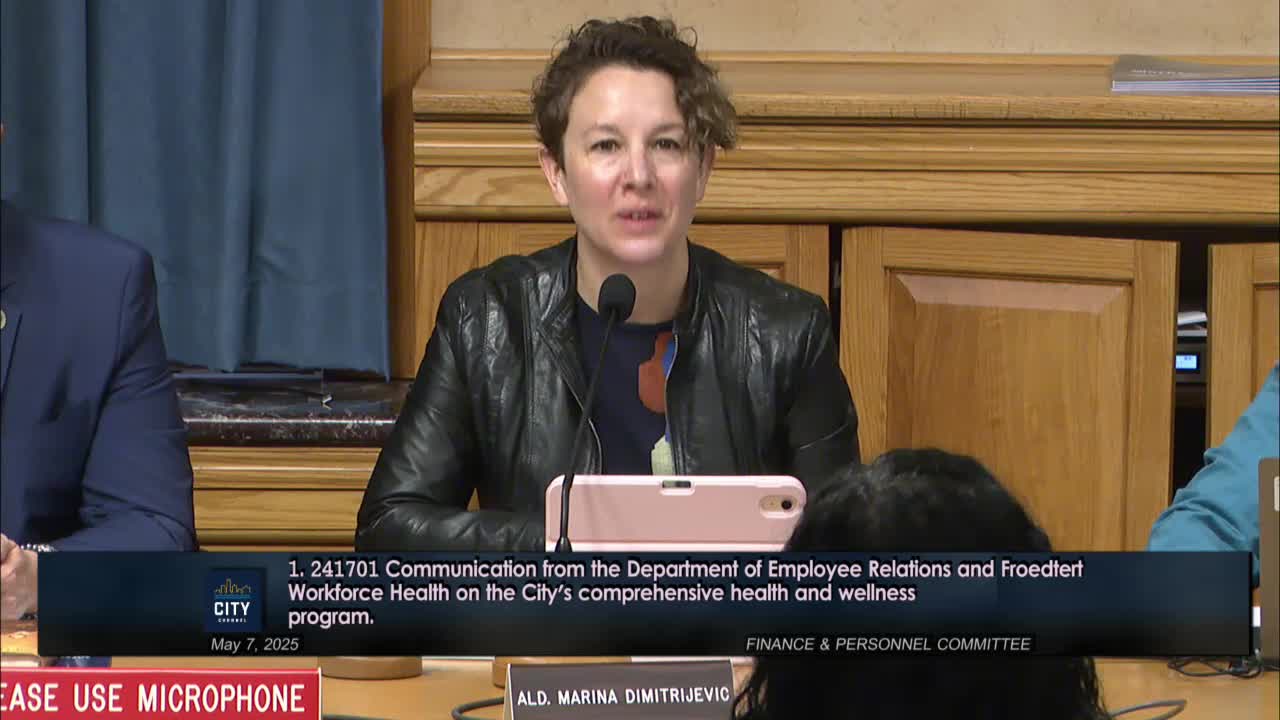
The Finance & Personnel Committee heard an annual update May 7 on the City of Milwaukee's employee wellness program from Department of Employee Relations benefits director Molly King and partner providers Froedtert Health and Workforce Health.
The presentation said two core components make up the city's program — voluntary, confidential health appraisals (biometric screenings) and the incentive-based Healthy Rewards program — and that the city reached about 76% participation in health appraisals in 2024. "The city of Milwaukee is continually achieving gold standard participation," Megan Grishow of Workforce Health told the committee. The presenters said the appraisal data are used to shape outreach and program design, including A1c outreach for diabetes risk and a new menopause education offering.
Why it matters: City staff and partners said high participation allows the program to provide a representative snapshot of employee health, direct people to care, and design targeted interventions that may reduce sick time and health costs over time.
Committee members pressed staff on barriers to participation. Department presenters and committee members said lack of time during the workday was the single largest reason employees cite for not participating (the presentation cited 31% reporting scheduling as a barrier). King and Workforce Health staff described multiple strategies to address that concern: more locations and extended hours, a traveling wellness team, targeted outreach to departmental "wellness champions," and an expansion of screening events on the South Side, including sessions at the Election Commission warehouse.
The report also named two program changes for 2025: switching nicotine testing from a laboratory blood test to a faster oral test, and removing a prior qualifying-biometric threshold so that everyone who completes a health appraisal is eligible to participate in Healthy Rewards. Patty Neiser of Froedtert Health said removing the qualifying biometric is intended to lower barriers: "We want everybody to come to this. Showing up is a first step," she said.
Committee members suggested operational changes to increase uptake: text reminders, more on-site sessions for shift-based departments such as fire and emergency communications, and clearer messaging that employees can participate in a health appraisal even if they do not take city insurance. King said fewer than 1% of participants did the biometrics without taking city insurance last year, and emphasized that appraisal results are confidential and provided to participants for their use.
At the meeting's close on this item, committee members placed the presentation on file.
The presenters at the meeting were Molly King (Benefits Director, Department of Employee Relations), Megan Grishow (Workforce Health), Robin Burnett (account manager, Workforce Health), and Patty Neiser (Vice President, Employer Services, Froedtert Health). Committee members who spoke included Alderwoman Marina Dimitrijevich (chair), Alderman Peter Bergellis (vice chair), Alderman Scott Speicher and Alderman Sharlene Moore. Alderman Melelee Coggs joined virtually and was noted present.