Get Full Government Meeting Transcripts, Videos, & Alerts Forever!
Get email alerts on the Maritime Infrastructure topic
No spam. Unsubscribe anytime.
Industry urges Michigan to boost port funding, expand maritime grant program
Summary
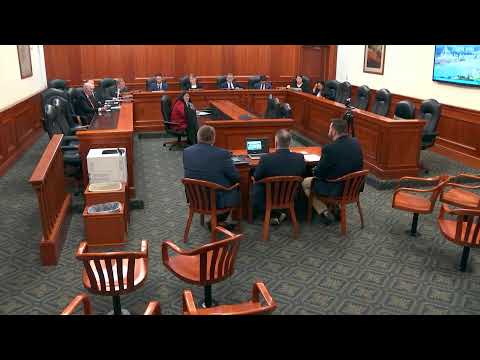
At a meeting of the Appropriation Subcommittee on State and Local Transportation, industry representatives and port officials told lawmakers the state needs more funding for port maintenance and expansion and for the Michigan Maritime Import Facility Assistance Grant Program, which was created in 2022 and administered through MDOT.
At a meeting of the Appropriation Subcommittee on State and Local Transportation, industry representatives and port officials told lawmakers the state needs more funding for port maintenance and expansion and for the Michigan Maritime Import Facility Assistance Grant Program, which was created in 2022 and administered through MDOT.
The presenters — Andrew Shephers, regional manager for government and public affairs for Holcim; Chuck Ryzak, marine operations director for Holcim; and Kyle Burleson, director of state advocacy for the American Waterways Operators (AWO) — described how the Great Lakes maritime network moves heavy bulk materials such as cement, slag, sand and gravel and urged the committee to add a line item to the budget for the grant program.
"Maritime transportation is the safest, greenest, and most cost effective way to move cargo," Kyle Burleson said. He told the committee the maritime industry supports more than 12,000 jobs in Michigan, produces roughly $700,000,000 in labor income and contributes about $3,000,000,000 to state GDP, with about $91,000,000 in state and local tax revenue. He said the state authorized a maritime office and fund in 2022 and that the office distributed a one-time $5,000,000 appropriation in fiscal 2024 in a single grant round.
Presenters described how port infrastructure and dredging affect capacity and costs. "So we're we are not maximizing what we can bring to market. That's a business problem for us," Chuck Ryzak said, describing reduced load sizes at Holcim's Alpena facility because of shoaling and lower water at some berths. Ryzak said Holcim moves just under 2,000,000 tons of material annually on the Great Lakes, including about 250,000 tons of slag, and operates three water terminals in Michigan.
Committee members and presenters discussed technical and policy constraints: grant awards in the initial round had a per-applicant limit of $2,500,000; applicants must certify compliance with state and federal environmental laws to receive awards; and MDOT currently administers the maritime office and grant program. Industry representatives requested the subcommittee consider at least a $10,000,000 appropriation to the Maritime and Port Assistance Fund in the next budget cycle to support dredging, terminal repairs, matching federal grants and cleaner technologies; they said marine infrastructure is capital-intensive but durable.
Speakers also raised regulatory and environmental cost concerns. Burleson warned that proposed state testing and disposal requirements for PFAS in dredge material could reduce the number of federal dredging projects by increasing costs for disposal and testing. He urged coordination between MDOT, EGLE and federal partners to avoid unintended reductions in dredging capacity that would harm commercial and recreational harbors.
On operational specifics, committee members heard that fully loaded cement vessels require roughly 26 feet of water plus keel clearance (about 27 feet) and that federal channels may be authorized to 35–40 feet. Presenters said that lowering lake levels following several years of higher water has increased dredging needs statewide, citing recurring maintenance needs in ports including Alpena, St. Joseph, Muskegon and the Saginaw River.
Committee business: Representative Borton moved to adopt the minutes of the April 30 meeting; there were no objections and the motion prevailed by unanimous consent. With no further questions, the chair adjourned the meeting.
The industry asked lawmakers to consider a dedicated, sustained funding stream for maritime infrastructure and additional staffing within MDOT to track maritime activity, administer grants and coordinate dredging priorities; lawmakers did not take a funding vote at this meeting.