Get Full Government Meeting Transcripts, Videos, & Alerts Forever!
Get email alerts on the Neighborhood Quality Of Life topic
No spam. Unsubscribe anytime.
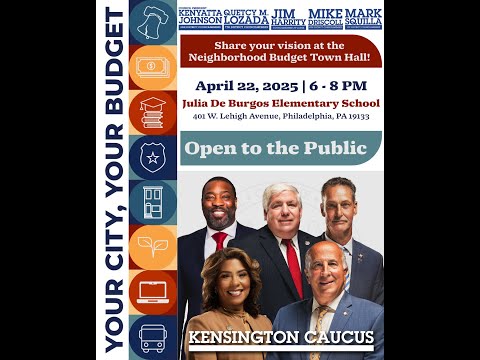
Kensington residents press council on alley lighting, land-bank sales, addiction and youth services
Summary
At the Kensington town hall residents sought city matching funds for a state RCAP grant to rebuild a pedestrian walkway, asked for new alley lights and raised long-running concerns about land-bank sales, addiction services and youth programming; council members outlined possible funding sources and follow-ups.
Residents from Kensington used the town-hall public-comment period to press council members on a set of neighborhood quality-of-life issues: matching a state RCAP grant for a pedestrian/roadway project, adding alley lights, reversing land-bank sales they say displace longtime neighbors, and expanding youth substance-abuse prevention and recovery programs.
A representative for the 1600 block of North 30th Street said the neighborhood had been awarded an RCAP grant of about a half‑million dollars for work under a pedestrian walkway and asked how the city could match that money so the project can proceed. Councilman Curtis Jones Jr. replied, "If that money is there from the state, we're gonna figure out a way to match that money because we can't let that money sit, and go, nowhere." He said the streets department and council staff would look for appropriate city funds and that some mayoral proposals include sidewalk and infrastructure money that could be used as matches.
On alley lighting, council members and staff said a proposed program in the budget includes $1.5 million for new street lights and that a new light can cost roughly $15,000 to install, depending on circumstances. Council staff and members said they would follow up with block captains and residents to identify sites where new lights or pole repairs could be prioritized.
Residents also criticized land bank sales and rising development costs. Longtime community leader Carlos Matos urged the council to prevent displacement, saying many new developments are priced out of reach for local residents and that land-bank and sheriff-sale activity has accelerated investor purchases. Council members acknowledged longstanding displacement concerns and said they are pursuing housing-preservation and neighborhood-parking options through the land bank and other city programs.
Addiction and youth services were another major focus. Soleiman Hassan of Soldiers for Recovery and other speakers asked what the city will invest to reach young people affected by substance use and to expand education about vaping. Council members cited funds included in the administration's proposal for violence-prevention and nonprofit supports (the presentation noted $25 million in anti-violence grants) and said council is pursuing mental-health supports in schools and additional out-of-school-time programming. Councilmember Nina Ahmad noted pending legislation and enforcement efforts aimed at retailers who sell vaping products to minors, saying in the hearing context that the city is pursuing stronger accountability and education efforts. "All you got to do is not sell to minors," Ahmad said during discussion about retail accountability and vaping.
Ending: Council members committed to follow-up: staff will collect details from residents about the RCAP grant and alley-light locations, council members said they will explore matching funds where possible, and public-safety and youth-service follow-ups were promised by relevant offices.