Get Full Government Meeting Transcripts, Videos, & Alerts Forever!
Get email alerts on the Police Reform topic
No spam. Unsubscribe anytime.
Board hears progress report on DOJ collaborative-reform recommendations; department says 96.7% compliance, nine recommendations remain
Summary
City officials told the Board of Supervisors on May 6 that the San Francisco Police Department has reached ‘substantial compliance’ on 263 of 272 DOJ collaborative‑reform recommendations, while nine recommendations — chiefly around electronic performance appraisals and management dashboards — remain to be completed.
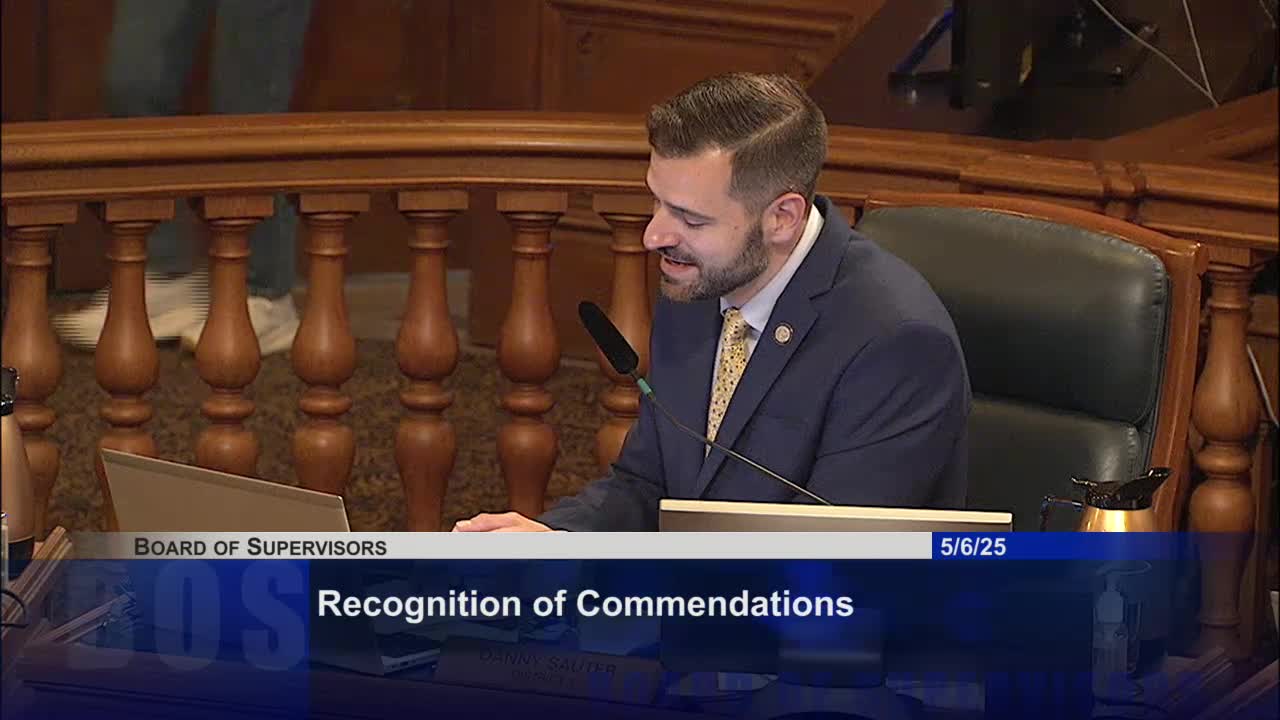
The San Francisco Board of Supervisors convened as a committee of the whole on May 6 to receive an update on the city’s implementation of the U.S. Department of Justice collaborative‑reform recommendations for the San Francisco Police Department (Item 38).
Chief Bill Scott and Catherine McGuire, executive director of the department’s Strategic Management Bureau, summarized the department’s progress, saying the state’s final report this January found the department in “substantial compliance” on 263 of 272 recommendations (96.7 percent). Officials emphasized reductions in use-of-force incidents and officer‑involved shootings compared with prior performance periods, and pointed to sustained executive leadership devoted to reform implementation.
Remaining items and next steps
McGuire said nine recommendations remain outstanding and primarily relate to electronic performance appraisals and a management dashboard; she described a pilot and phased rollouts for an electronic appraisal dashboard and a revised records-management architecture. The department said pilots for the appraisal/dashboard systems will launch within months and that the hope is to sustain gains and avoid backsliding on reforms already completed.
Questions from the board and public comment
Supervisors asked about implicit-bias training, accountability, quarterly meetings with the Department of Police Accountability (DPA), and how new technologies will be used. Chief Scott and McGuire said implicit-bias modules are incorporated into ongoing advanced officer training and online interactive modules; they said training covers all ranks from recruits to command staff and is periodically refreshed, with academic partnerships (Stanford and others) advising on curricula. McGuire described discipline‑focused quarterly meetings between department managers and the DPA to examine cases that raise systemwide policy or training issues and to recommend policy or training solutions.
Several supervisors and many members of the public pressed the department on data transparency, racial disparities in traffic stops and stops-to-arrests, and the department’s use of surveillance technology. Chief Scott said improved data systems and integrated management dashboards will allow supervisors to “take snapshots of stops” and identify emerging patterns sooner. McGuire said the department has a multi-year technology plan including records-management (RMS) replacement and an HRMS upgrade to show hours worked and compliance in closer to real time.
Public comment at the hearing included supporters and critics. Speakers asked for stronger independent oversight, public access to disciplinary records, whistleblower protections, and for investments that would ensure survivors and victims see results. Some speakers criticized surveillance technologies and asked for limits and safeguards; others welcomed new tools as ways to speed case resolution and avoid wrongful detentions.
Continuation and follow-up
Supervisor Walton moved and the board agreed to continue the hearing to October 7, 2025, to permit further updates on the outstanding recommendations. Supervisors said they expected additional follow-up reporting on metrics, the pilot rollout for the appraisal/dashboard systems, and any policy changes tied to technology or discipline processes.