Get Full Government Meeting Transcripts, Videos, & Alerts Forever!
Get email alerts on the Legislative Session topic
No spam. Unsubscribe anytime.
Pennsylvania House advances package of bills after hours of debate on energy, cannabis and workplace safety
Summary
The Pennsylvania House of Representatives on May 6, 2025 considered dozens of measures and approved multiple bills, including a health-care workplace violence prevention law and a state earned income tax credit; extended debates focused on community energy legislation and a proposed adult-use cannabis framework.
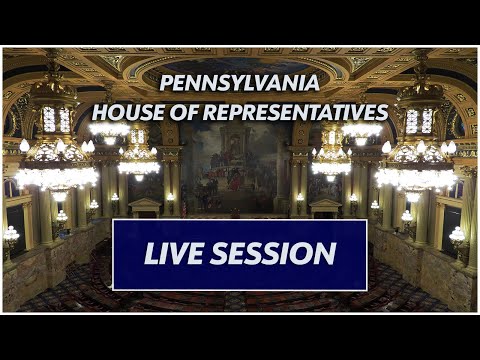
Members of the Pennsylvania House of Representatives met May 6, 2025 and conducted a wide-ranging floor session that produced votes on several bills and lengthy debate on energy policy and on a proposed adult-use cannabis regulatory structure.
The House adopted House Bill 9 26, the Health Care Workplace Violence Prevention Act, following debate and testimony from members who said the measure gives frontline health workers a formal role in developing prevention plans. Representative Krueger, prime co-sponsor, said the bill requires facilities to create prevention committees, conduct risk assessments, provide support services after incidents and protect employees who report violence. Representative Kosarowski, a nurse, urged passage on the first day of nurses week, saying the bill would give “frontline workers a seat at the table.” Opponents argued it adds regulatory burdens and paperwork without directly deterring violence; Representative Grove said the bill may duplicate existing oversight and not prevent every random act of violence.
The House also debated House Bill 504, legislation to authorize "community energy facilities" (commonly described as community solar) and related technologies. Representative Stambaugh offered an amendment aimed at consumer protections and program design; the amendment failed on a close vote (ayes 101, nays 102). A series of additional amendments were offered and rejected, and one amendment (A00470) was laid on the table after a leaders-only motion to table (ayes 102, nays 101). Members sparred over the bill's treatment of project scope, whether project costs could be borne by all ratepayers, and whether certain technologies (including combined-cycle gas turbines, liquefied natural gas, small modular reactors and nuclear) should be eligible. Representative Burgos, chair of the Consumer Protection, Technology and Utilities Committee, repeatedly stated several offered amendments were "not agreed upon" by committee leadership. The House agreed to the bill as amended in committee.
The chamber took up House Bill 1,200, the adult-use cannabis bill. Multiple proposed amendments were introduced and then withdrawn; Representative Lawrence pressed unsuccessfully for an amendment to allow local municipal referendums on state-run dispensaries, arguing for a local-option vote similar to liquor referendums. The chair ruled several amendments out of order under house rules. On second consideration the motion to agree to HB 1,200 passed by a narrow margin (yays 102, nays 101); the majority leader then moved to recommit the bill to the Committee on Appropriations (the motion carried). The bill therefore was not finally passed on the floor that day.
Other notable measures that passed on final passage or were agreed to included a state earned income tax credit bill (House Bill 8 20), House Bill 2 65 (allowing certain education support professionals to qualify for unemployment during school breaks), and a package of mostly noncontroversial bills ranging from river pilot rate adjustments to a veteran-owned business logo program. Representative Saffy, sponsor of HB 8 20, described the tax credit as an investment in working families and referenced analyses saying states with credits see benefits in maternal and child outcomes and workforce participation.
Votes at a glance (selected floor actions and final outcomes recorded on the floor): - House Bill 9 26 (Health Care Workplace Violence Prevention Act): final passage; yeas 124, nays 79. Outcome: approved. - House Bill 5 04 (Community energy facilities / community solar): agreed to (bill as considered on calendar); multiple amendments debated; several amendment votes recorded (see details below). Outcome: agreed to. - House Bill 1,200 (Adult-use cannabis): second consideration agreed (yays 102, nays 101); subsequently recommitted to Appropriations. Outcome: recommitted to committee. - House Bill 8 20 (Working Pennsylvanians Tax Credit / state EITC): final passage; yeas 185, nays 18. Outcome: approved. - House Bill 2 65 (Unemployment for education support professionals during breaks): final passage; yeas 105, nays 98. Outcome: approved. - House Bill 3 55 (Increased grading for certain corruption-of-minor convictions where perpetrator is a person of authority): final passage; yeas 203, nays 0. Outcome: approved. - House Bill 3 78 (Custody factors modernization): final passage; yeas 202, nays 1. Outcome: approved. - House Bill 7 54 (County pension law amendments): agreed to after floor consideration; several amendments offered; outcome: agreed to. - House Bill 1 11 7 (Powers and duties — statutory language updates): final passage; yeas 201, nays 2. Outcome: approved. - House Bill 8 1 (prohibiting extra fees for paper statements across some businesses—printer's number 0032 / HB81): final passage; yeas 123, nays 80. Outcome: approved. - House Bill 9 93 (Veteran-owned business logo development): final passage; yeas 203, nays 0. Outcome: approved. - House Bill 10 57 (River pilot rate adjustments): final passage; yeas 203, nays 0. Outcome: approved.
Selected amendment votes (House Bill 504, community energy bill): - Amendment A00454 (offered by Rep. Stambaugh): failed, ayes 101, nays 102. Representative Stambaugh framed the amendment as delivering community solar in a "fair, affordable, and responsible way." Representative Burgos opposed the amendment. - Motion to lay Amendment A00470 on the table (moved by Rep. Schlossberg): motion passed, ayes 102, nays 101. Minority Leader Topper spoke against the table motion and urged the body to allow a vote on the substantive amendment. - A sequence of subsequent amendments on eligible technologies (combined-cycle gas turbines, small modular reactors, nuclear, liquefied natural gas, and related proposals) were presented and failed by similar margins (record for the named amendments: ayes 101, nays 102), while other technical or agreed-to amendments were adopted on voice or recorded vote as noted on the floor. The bill as amended was agreed to and will be printed in its amended form.
What this means locally and next steps House bills that passed finally on the floor will be transmitted to the Senate for concurrence. HB 1,200 remains in play but was recommitted to Appropriations for further consideration; it was not finally enacted. HB 504 will advance in its amended form as adopted by the House. HB 9 26 creates a statutory framework requiring health-care employers to form prevention committees, conduct risk assessments, provide certain supports and protect workers who report incidents; the statute directs agencies and facilities to produce plans rather than prescribe a single mandated set of operational responses.
This floor session combined routine business—reading committee reports and welcoming visitors—with several extended policy fights: energy policy and financing mechanisms drew sustained debate over technology eligibility and ratepayer impact; cannabis regulation produced close procedural votes and a recommittal; and workplace-safety legislation drew bipartisan support but also objections about new regulatory burdens. The clerk will transmit approved bills to the Senate and the schedule for further action depends on committee work in the other chamber.
Votes and key quotes used in this summary are taken verbatim from the House floor transcript of May 6, 2025.