Get Full Government Meeting Transcripts, Videos, & Alerts Forever!
Get email alerts on the Records Management topic
No spam. Unsubscribe anytime.
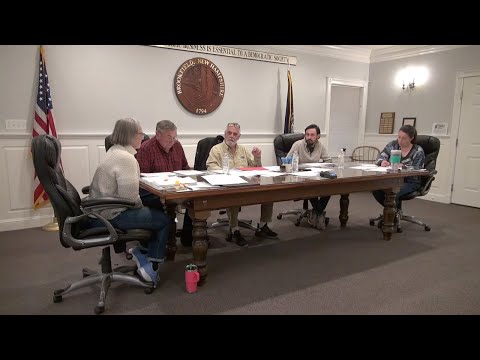
Resident demonstrates AI-assisted minutes workflow, offers automated summaries to town
Summary
A resident and frequent meeting recorder demonstrated an AI-based minutes-generation workflow to selectmen, showing fast draft summaries and proposing a system to produce adjustable meeting minutes and agenda synopses for town records.
A resident who records meetings for Brookfield described an AI-assisted process he has been piloting to generate meeting minutes and synopses. He said the tool quickly produced readable summaries and that, with human review, the AI drafts reduced the time required to prepare minutes. The resident explained the process: he compiles key action items, votes and speaker details manually and then uses an AI engine to generate a contextual synopsis and draft minutes for editorial review.
The resident said accuracy improves with an accompanying human record because AI currently struggles to identify individual speakers reliably; he still performs manual checks for motions and votes. He demonstrated that an AI summary of a longer meeting was ready in seconds and said the system could be integrated with a future website feature to make minutes and item synopses available to the public on demand.
Selectmen asked about costs and timelines; the resident said development is ongoing and that a usable municipal offering could be available sometime this year, depending on developer work. He noted the AI product he uses is Grok, and he expects more powerful models to improve outputs. Board members who reviewed sample drafts said they were impressed with the speed and that AI-produced drafts require human verification before being adopted as official minutes.
Why it matters Producing meeting minutes is time-consuming; an AI-assisted workflow that outputs accurate, editable drafts could reduce staff workload and make meeting content easier for residents to scan. The system still requires a human in the loop for speaker identification, vote verification and final approval.
Next steps The resident will continue development and share future demonstrations with the selectmen; the board expressed interest in seeing a production-ready workflow and asked staff to monitor the pilot’s progress.