Get Full Government Meeting Transcripts, Videos, & Alerts Forever!
Get email alerts on the Criminal Justice Recovery topic
No spam. Unsubscribe anytime.
Commissioners hear case to extend opioid‑settlement funding for Burke County Recovery Court; staff recommend extension through 2026
Summary
Staff recommended using opioid settlement dollars to continue Burke County Recovery Court through December 2026, supporting up to 30 participants; graduate testimony and judge endorsements underscored program outcomes but formal board action was left to the consent agenda.
Burke County staff briefed commissioners on a proposed extension of opioid‑settlement funding for Burke County Recovery Court, recommending county support through Dec. 31, 2026, which staff said would permit up to 30 participants under current funding.
Hugh Sandow, the county’s budget strategy and performance analyst, reviewed the program’s history and metrics, saying the vendor Cognitive Connections provides weekly reports and that program outcomes have improved since staff began more active oversight. He said as of April there were 19 active participants and 16 graduates since February 2022; the 12‑month success rate for graduates was 57 percent.
“We are hopeful and confident that in the future we’ll continue to identify other outside funding sources,” Sandow said, explaining that the county initially used opioid settlement dollars after a Bureau of Justice Assistance grant was not renewed and the board elected to keep the program running.
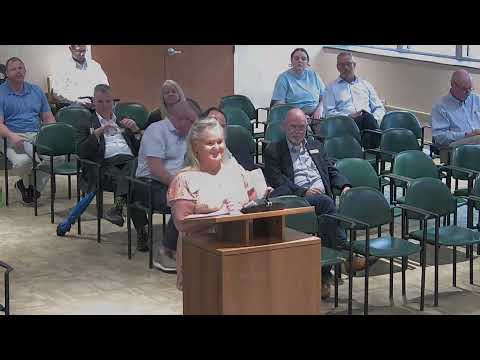
A recent program graduate, Chris Ocstadt, described his recovery and credited the court team. “Without this program I wouldn’t be standing here today. I’d be in prison or in jail or dead,” he told commissioners, later saying he now works with recovery court as a peer and helps mentor participants.
District Court Judge Robert Mullinax and other judicial partners described recovery court as a valuable tool for managing individuals with substance‑use disorders and stabilizing employment and housing outcomes. Judge Mullinax invited commissioners to observe recovery court sessions, which run on alternating Tuesdays in the county annex courtroom.
Sandow recommended the extension using opioid settlement funds through Dec. 2026 while staff continue to seek outside funding; the board kept the item on the consent agenda for formal action at the regular meeting rather than voting at the pre‑agenda session.
Why it matters: Recovery court links court supervision with treatment, housing and employment support; staff said graduates show high housing and employment stability post‑graduation. Commissioners and judicial leaders framed the extension as a way to preserve continuity of care for current participants while staff work to document outcomes and seek long‑term funding.
What’s next: The recommended extension will appear on the regular meeting’s consent agenda for formal approval; staff will keep reporting program metrics to the board.