Get Full Government Meeting Transcripts, Videos, & Alerts Forever!
Get email alerts on the Economic Development topic
No spam. Unsubscribe anytime.
Green Charter Township residents, officials tell state subcommittee Goshen project advanced without consent and amid intimidation allegations
Summary
Residents and newly elected township officials testified to a Michigan House subcommittee that a proposed Goshen Inc. battery-component project was advanced with secretive state involvement, led to alleged intimidation and improper conduct by local officials, and produced litigation now before federal courts.
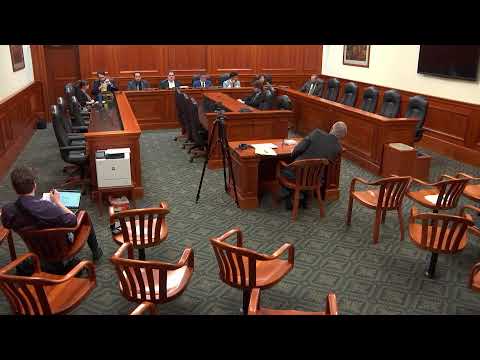
Residents and local officials from Green Charter Township told the Michigan House Oversight Subcommittee on Corporate Subsidies and State Investments that a proposed Goshen Inc. battery-component factory was advanced without community consent and accompanied by threats, improper coordination with local officials and misleading public statements.
The testimony on behalf of Green Charter Township centered on allegations that township leaders and Goshen coordinated in ways that intimidated opponents, that state-supported recruitment and grant activity lacked sufficient vetting, and that litigation filed by the company has imposed an injunction and litigation costs on the township.
“I oppose corporate welfare and would rather see every business in Michigan get a tax break instead of a hand-selected few,” said Lori Brock, owner of Majestic Friesians horse farm in Green Charter Township, during testimony describing rallies, a large community petition effort and what she called repeated attempts to silence opponents. Brock said her farm and family were targeted with messages and that one of her animals was poisoned; she said she has no proof tying the incidents to specific actors but described the threats as part of prolonged harassment.
Jason Cruz, the Green Charter Township supervisor elected after recall votes removed several prior township officials, told the committee he and other newly elected township leaders found evidence in discovery of what he described as “quid pro quo dealings” between Goshen representatives and prior board members and said the company has chosen to file litigation against the township. “Goshen chose to bring litigation against the township,” Cruz said, and he reported a Western District judge has granted an injunction that the township is appealing to a federal appeals court.
Ormond Hook, who helped organize local opposition, described the outreach to the township by state economic-development actors and said the project—identified in local materials as “Project Elephant”—appeared to have been planned and shepherded by state and regional economic-development entities before the community was informed. “The state of Michigan, with its elected, hired, or appointed officials and agencies … conducted a Pearl Harbor style assault on Mecosta County in September 2022,” Hook said.
Witnesses told the committee they used door-to-door surveys and organized rallies to document local opposition. Brock said a small door-to-door survey of 36 households produced 30 opposed and six in favor; she and others later cited larger surveys they said showed around 80–89% opposition. Organizers described a rally they estimated at several hundred to about 1,000 people and a petition drive that produced more than the required signatures for a referendum.
Speakers described multiple points of contact between Goshen representatives, Ferris State University and regional-development organizations, including a $3,000,000 MEDC grant proposal to Ferris State tied to job-training plans that committee witnesses said were connected to the company’s recruitment strategy. Witnesses also raised questions about proposed changes to Ferris State’s automotive and battery-training programs before the company’s plans were publicly known.
Committee members asked whether confidential information and health records had been circulated locally; Brock and Cruz testified that campaign- and personnel-related materials and, they said, private records were shared to discredit opponents, and that local prosecutions and campaign-finance complaints had produced limited enforcement to date. Cruz said the township will continue to litigate and appeal the injunction in federal court.
At the start of the hearing, the committee approved the minutes of its April 30 meeting on a motion by Representative Wigela; the motion passed without recorded objection.
The witnesses asked the subcommittee to scrutinize state-led economic-development processes and to consider changes such as banning nondisclosure agreements for local elected officials and improving transparency before taxpayer incentives are offered to specific companies. No formal subcommittee action on those recommendations was recorded at the hearing.
The litigation and appeals, the participants said, remain active and are shaping whether the project can proceed locally. Committee members asked staff and witnesses for any additional documents and said they would review the materials submitted by residents and township officials.
Ending: The subcommittee hearing closed after representatives thanked the witnesses; no further votes or committee directives were recorded on the transcript provided.