Get Full Government Meeting Transcripts, Videos, & Alerts Forever!
Get email alerts on the Workforce topic
No spam. Unsubscribe anytime.
Board holds AB 2561 vacancy hearing; probation and prosecutors identify pay and take‑home pay as primary retention drivers
Summary
Under AB 2561 the board heard detailed vacancy data and employee testimony. Probation and deputy district attorney units reported sustained vacancy and turnover of experienced staff and urged pay and benefit changes to retain personnel.
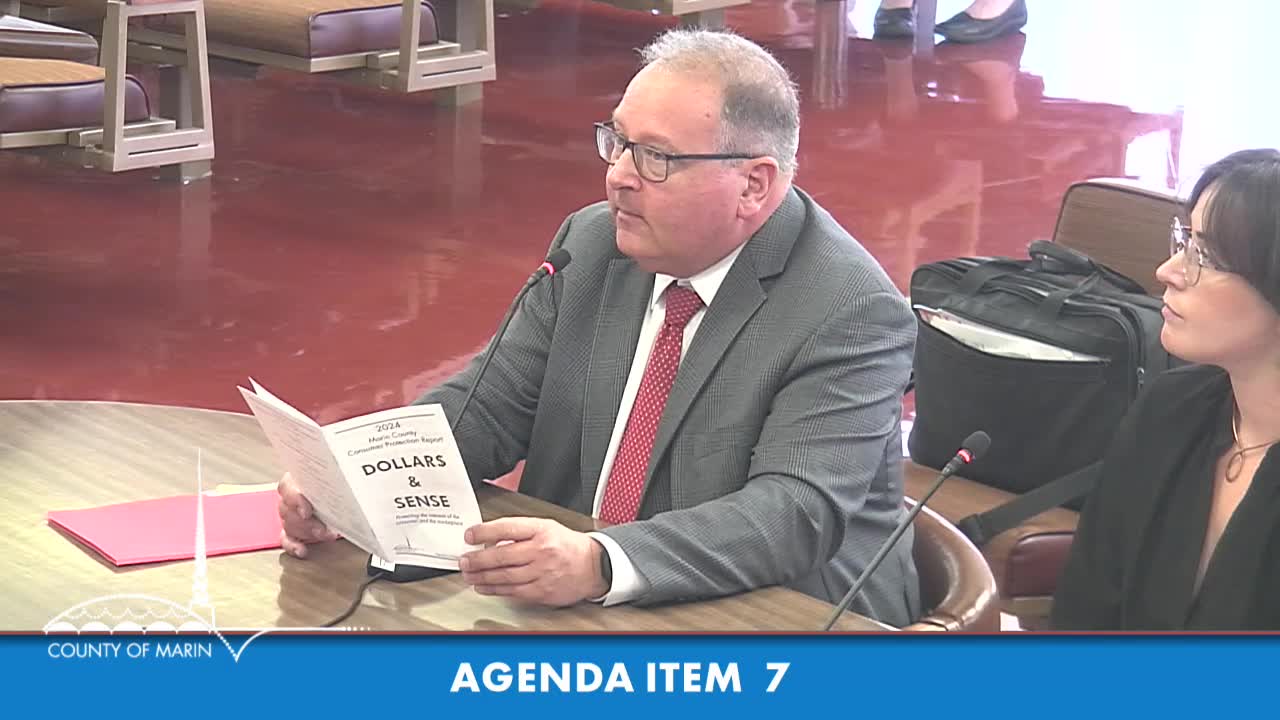
The Board held the first annual public hearing required by AB 2561 on May 6 to review county vacancy data, recruitment and retention efforts and bargaining‑unit presentations for units with high vacancy rates.
Human Resources Director Christina Kramer presented countywide workforce metrics: roughly 2,369 regular employees, a median age of 45, and 61% of employees commuting into Marin from other counties. For calendar year 2024 the county recorded about 219 hires and 69 separations, an 8.2% turnover rate. The county’s time‑to‑offer metric (opening to acceptance) averaged about 73 days across recruitments; law‑enforcement background checks produced substantially longer timelines for positions such as deputy probation officers.
The Teamsters (probation workers) presented data showing the deputy probation officer series had a vacancy rate above 20% at recent peaks and described how experienced worker losses had left the department relying on newly trained staff. Teamsters research director Timothy Matthews and Probation staff said the core retention issue is take‑home pay: when salary alone is compared it can look competitive, but after required retirement pickups, health‑care premiums and absence of Social Security participation, the county’s net compensation is substantially behind neighboring counties — staff cited mid‑teens percentage gaps in total take‑home comparisons. Probation managers and front‑line staff described operational impacts: supervisors carrying caseloads, juvenile hall staffing strain, and the practical challenges of training staff who then leave for higher pay elsewhere.
Deputy district attorneys and the DA’s office testified they have lost multiple experienced trial attorneys; the DA’s office presented a consultant’s work‑flow study recommending additional attorney FTEs and described how the loss of experienced prosecutors increases risk to public safety for complex cases such as homicides and child exploitation prosecutions. Other unions (DSA, DSA‑law enforcement, MAPE, MCMEA) described similar recruitment and retention pressures across departments, including weights & measures, libraries and public works.
Human Resources and department leaders identified recruitment steps — continuous recruitments, onboarding and training improvements, background‑process changes, outreach to community colleges and universities — and retention options — recruitment/relocation incentives, benefit design and compensation review. Board members asked for follow‑up materials and said they would consider budget options presented during current contract negotiations.
Ending: The hearing fulfilled AB 2561’s transparency requirement; staff will return with additional analyses and the board and bargaining units will continue negotiations and follow‑up work on pay, benefits and organizational changes.