Get Full Government Meeting Transcripts, Videos, & Alerts Forever!
Get email alerts on the Animal Welfare Shelter topic
No spam. Unsubscribe anytime.
Shelter volunteers and rescues press Prince George's Council to repeal pit-bull ban and fund shelter care
Summary
Multiple volunteers, rescue groups and residents testified at the FY26 budget hearing that breed-specific legislation and understaffing have worsened conditions at the county shelter and urged the council to repeal the ban and allocate funding for medical care and kennel staffing.
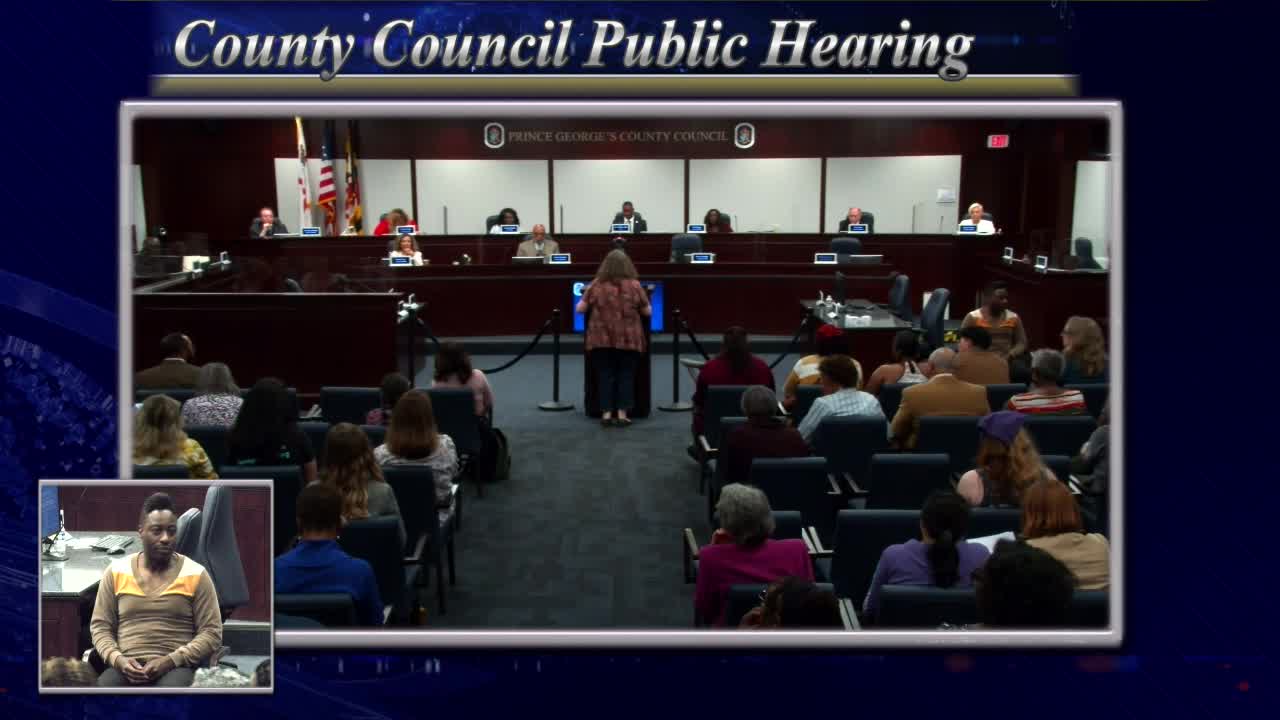
Volunteers, rescue partners and residents urged the County Council on May 6 to repeal Prince George's County's breed-specific laws and increase funding for the county animal shelter, saying the ban has not reduced dangerous-dog incidents but has left many adoptable animals labeled "not adoptable" and in need of costly rescue intervention.
The Most Newsworthy: Julie Marks, a District 4 homeowner and long-time volunteer in local animal rescue, said the pit-bull ban is "cruel and ineffective," citing shelter statistics she reviewed that showed a large percentage of dogs labeled as terrier mixes. Abby Collins, a recent shelter volunteer, described medical and staffing failures that, she said, led to avoidable animal deaths and asked the council to fund increased kennel staffing, enforce cleaning protocols and hire full-time veterinary staff.
Why it matters: Witnesses said roughly half of the shelter population is classified as breeds affected by the ban, limiting adoption options inside the county and increasing costs for rescues that pull animals for care and rehoming. Several speakers tied the issue directly to the FY26 budget, asking the council to reallocate funds away from enforcement of breed-specific rules and toward shelter operations and medical care.
Details and testimony: Julie Marks told the council she checked the shelter website and found that of 39 dogs listed that night, 61 were labeled as terrier mixes. "A county that has a ban doesn't sound effective to me," she said. Abby Collins described a dog named Chase who bled and later died; Collins said staff shortages contributed to delays in medical attention. Vanessa Davis, a senior volunteer and medical foster, said animals with clear medical needs waited days for treatment and that part-time veterinary staffing left animals untreated.
Several rescue leaders and volunteers called for concrete budget items: increased kennel staffing to ensure daily walks, consistent kennel cleaning, full-time veterinary staff and investment in spay/neuter and adoption outreach rather than enforcement. Amy Progoski and Sonia Wahi Miller asked the council to end breed-specific legislation (BSL) to save taxpayer money and allow rescues to place more dogs.
Council context: Speakers noted that the county updated its dangerous-dog code in 2019 but said enforcement of breed-specific restrictions continues and drains discretionary funds a shelter official previously testified were being used for enforcement. There was no council vote at the hearing; speakers asked council members to revisit the existing ordinance and shift budget priorities toward shelter care.
What's next: Rescues and volunteers asked the council to fund immediate operational fixes in the FY26 budget and to consider repealing the county's breed-specific restrictions.