Hanford staff presents balanced draft operating budget for fiscal 2026–27; Measure H shown separately

3210771 · May 6, 2025

Loading...

AI-Generated Content: All content on this page was generated by AI to highlight key points from the meeting. For complete details and context, we recommend watching the full video. so we can fix them.

Summary

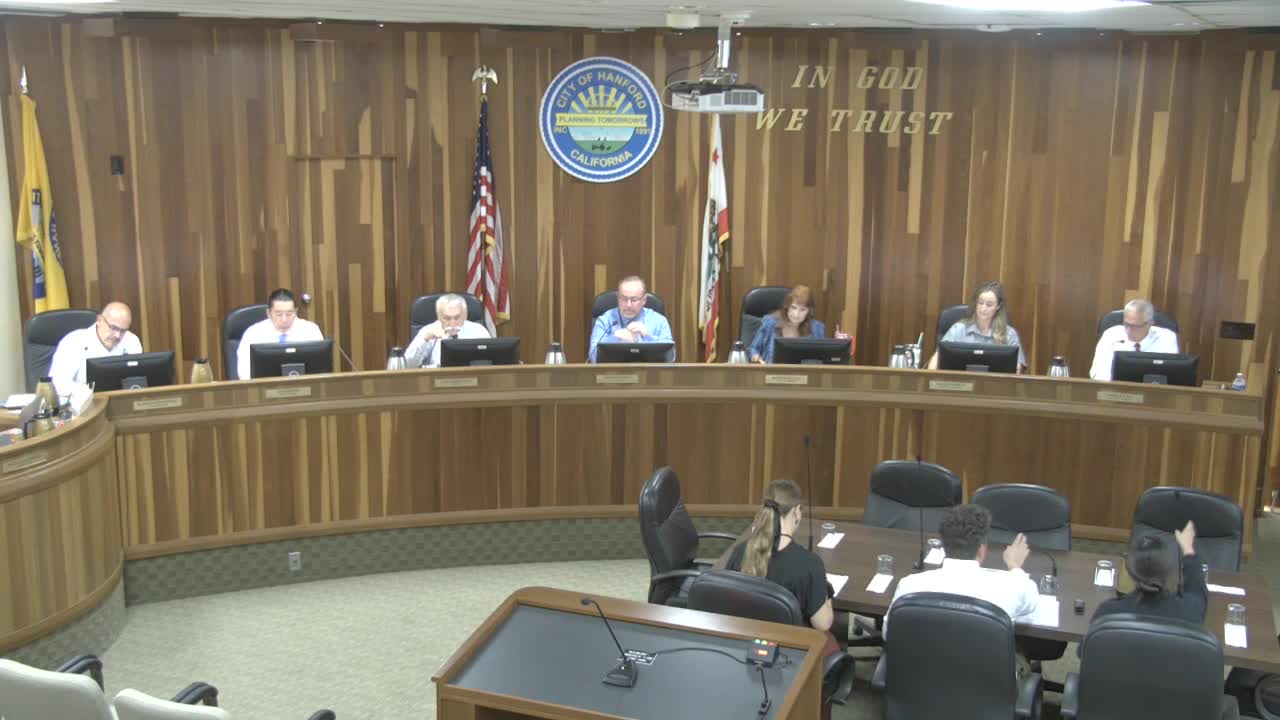
Hanford — City finance staff presented a draft operating budget for fiscal years 2026 and 2027 at the Hanford City Council study session on May 6, showing a structurally balanced general fund plan and separate accounting for Measure H revenue.

Hanford — City finance staff presented a draft operating budget for fiscal years 2026 and 2027 at the Hanford City Council study session on May 6, showing a structurally balanced general fund plan and separate accounting for Measure H revenue.

Finance Director Chris Tavares told the council the proposed appropriations total about $140.8 million for fiscal 2026 and $150.8 million for fiscal 2027 and that the document before the council is a balance of ongoing revenues and expenditures. “It’s a structurally, balanced budget and that the revenues cover the ongoing expenses,” Tavares said.

The presentation outlined revenue and expenditure assumptions and the city’s timetable: staff will return for a final overall budget review on May 20 and for a public hearing and adoption on June 3. No votes were required at the May 6 study session.

City staff highlighted several items that drive year‑to‑year changes. Property and sales tax projections show moderate growth into 2027, but staff said regional spending trends and economic uncertainty informed a conservative sales‑tax estimate for 2026. A one‑time insurance reimbursement of about $17.5 million is included in projected revenues to offset recent settlement expenses; staff described that amount as a nonrecurring item. General‑fund capital spending shown in the draft is roughly $2.1 million for 2026 and $4.1 million for 2027, but staff said grant offsets and reimbursements could reduce those general‑fund draws to “a little less than a million” in 2026 and about $700,000 in 2027 if grants are awarded.

Tavares said enterprise divisions — water, sewer, storm drain, refuse, utility billing and building safety — account for about 40% of total expenditures. Public safety (police and fire) is shown at roughly $30.6 million. The draft keeps the city’s full‑time employee count at 332 across the two fiscal years; the Measure H fund is shown separately and is projected to add 20 positions (staff noted 15 of those positions are public‑safety related).

On reserves, staff reported an unrestricted fund balance of about 12.61% based on audited figures and a council target of 35% of general‑fund appropriations. Staff said meeting the 35% target would require raising reserves to roughly 17.7%–18.9% by 2026–27 under the current budget assumptions. Council members raised questions about retirement, medical insurance and workers’ compensation cost increases, which staff said are largely driven by factors outside local control and which staff are actively monitoring.

Council members and staff discussed Measure H accounting several times. Tavares and budget staff emphasized that Measure H revenues (a voter‑approved 1% sales surcharge) will be tracked in a separate measure fund and are not reflected in the general‑fund sales‑tax line shown in the draft. For financial‑statement purposes the money may appear on consolidated statements, but for budgetary accountability it is maintained in its own fund with its own 15% reserve goal, staff said.

Staff reiterated that the draft is under continuous review and that adopted budgets may be updated at any regular council meeting as forecasts change. Tavares closed the presentation by reminding the council that the city will return on May 20 to complete budget review and again on June 3 for the public hearing and adoption of the final budget and the Gann appropriation limit.

Council members thanked the finance team for preparing a balanced draft and asked staff to continue monitoring insurance, retirement and workers’‑comp costs and bring back updated charts in future sessions.