Get Full Government Meeting Transcripts, Videos, & Alerts Forever!
Get email alerts on the Cdbg topic
No spam. Unsubscribe anytime.
San Clemente Council adopts 2025–29 consolidated plan, sets CDBG allocations and press outreach requirement
Summary
The City Council approved the 2025–29 consolidated plan and the FY 2025–26 annual action plan for CDBG funding, allocating funds for sidewalks, housing rehabilitation, public services and administration and directing a full‑page community ad for next year's grant outreach.
The San Clemente City Council voted unanimously May 6 to adopt the 2025–29 consolidated plan and the fiscal year 2025–26 annual action plan, documents the city must file with the U.S. Department of Housing and Urban Development to receive Community Development Block Grant (CDBG) funds.
The council’s approval (Resolution No. 2547) adopts the amended citizen participation plan and authorizes the city manager to submit related documents to HUD and accept estimated grant revenues of roughly $312,427, with staff directed to proportionally adjust allocations once HUD posts final numbers.
Adam Matamian, the city’s community development director, said HUD had not yet set the formula award and that staff used an estimate to prepare the annual action plan: “HUD has not notified the city how much it will receive in fiscal year 2025–26,” Matamian told the council. The staff estimate used in the plan is about $300,000–$312,427.
Under the adopted FY 2025–26 allocations, staff identified $132,427 for neighborhood sidewalk improvements; $75,000 (plus program income) for a housing rehabilitation loan program, intended to help about three owner‑occupied units; up to $45,000 available for public services (the plan notes the statutory 15 percent public‑service cap); and $60,000 for CDBG program administration.
Matamian also outlined the city’s social services budget committee process for selecting public‑service grantees. The committee recommended funding for five organizations in the coming year: Age Well Senior Services ($6,440); Camino Health Center ($12,000); Family Assistance Ministries ($14,000); Silver Connections (a new program for adults 62 and older, $7,060); and the Perentis Foundation ($5,500).
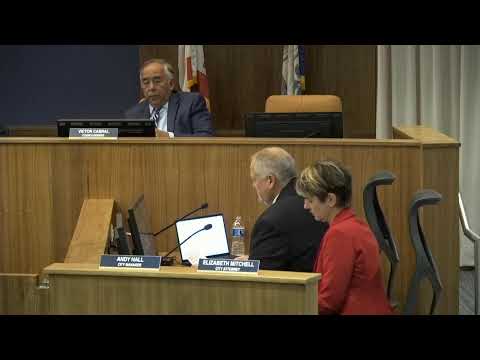
Councilmembers pressed staff about outreach to potential applicants after noting the city typically receives a small number of applications. Councilmember Cabral asked whether the city could expand notice beyond the brief newspaper advertisement; staff said the city posts notices online, maintains an applicant list, and sends notices to past applicants, and that staff will expand outreach. After the discussion the council added an explicit direction: the motion adopting the plan included a modification that the city allocate funds for a full‑page advertisement in the San Clemente Times to widely publicize next year’s application opportunity.
The consolidated plan package also includes the Orange County Regional Assessment of Fair Housing and an amended citizen participation plan that, among other technical changes, raises the staff reallocation threshold for CDBG activity changes from 45 percent to 55 percent of the annual allocation. Matamian explained the threshold change is intended to give staff greater flexibility to reallocate unspent funds across activities without initiating the full amendment and public comment procedures required by HUD for more substantial changes.
The council received no public speakers during the hearing and approved the resolution unanimously.
The adoption starts the city’s compliance clock for HUD reporting and gives staff authorization to finalize submittal materials and to manage proportional adjustments when the federal allocation is finalized.