Get Full Government Meeting Transcripts, Videos, & Alerts Forever!
Get email alerts on the Procurement Cards topic
No spam. Unsubscribe anytime.
Inspector General: City procurement-card review found isolated issues but no widespread fraud
Summary
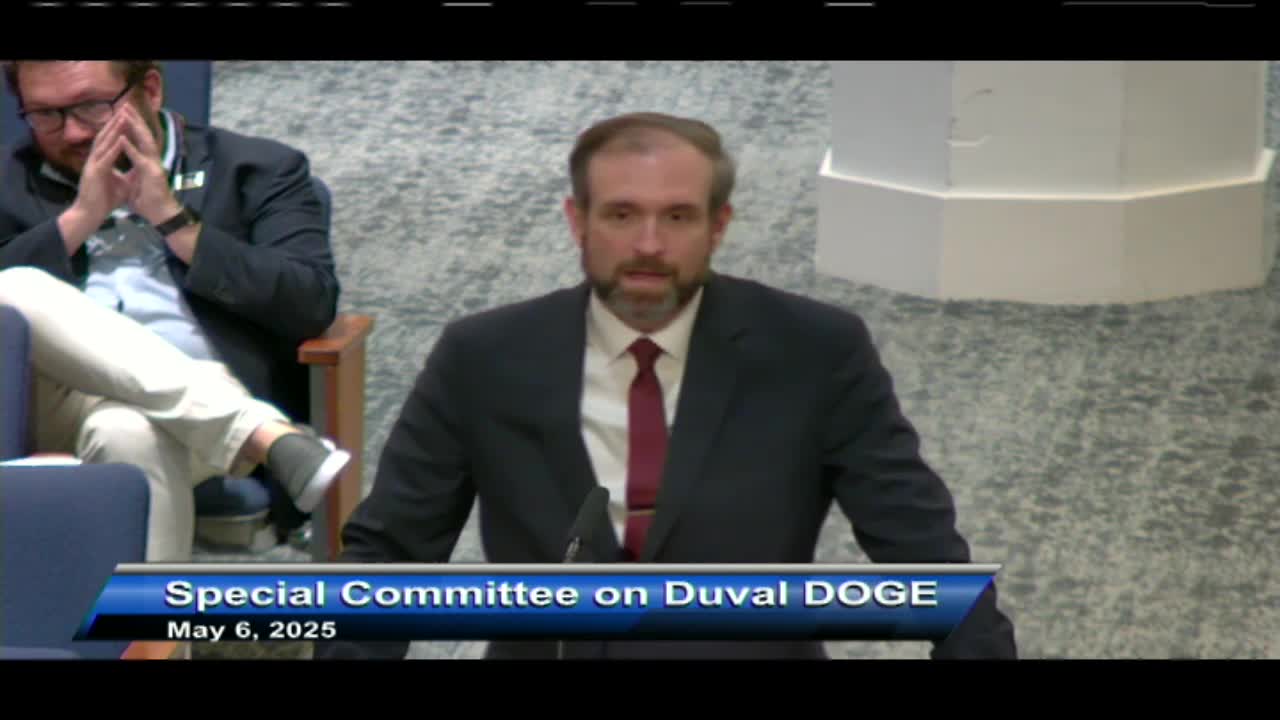
David Johnston, deputy inspector general for audit, told the Duval Doze Committee that a machine‑assisted review of three years of procurement‑card transactions flagged red‑flag and prohibited purchases but did not reveal systemic fraud.
David Johnston, deputy inspector general for audit with the Office of Inspector General, told the Duval Doze Committee that the office’s review of city procurement-card (P‑card) usage identified isolated problems but no widespread fraud.
Johnston said the office opened an investigation after a complaint from the Supervisor of Elections in late 2023 that identified “questionable purchase card payments” with missing supporting documentation. The office analyzed roughly three years of P‑card data and asked the city's Technology Solutions Department to run a machine‑learning review with vendor NLP Logix, he said.
The dataset covered transactions from December 2021 through February (the review period provided by staff), Johnston said. NLP Logix and the audit team separated transactions into two initial categories: expressly prohibited charges (fuel, printing, cash advances, alcohol, tobacco, personal charges, utilities and capital outlays) and “red flag” transactions (weekend purchases, potential splitting/structuring to avoid approvals, foreign transactions and third‑party platforms such as PayPal).
Johnston said the data showed about 11 employees held P‑cards during the period and total P‑card spending of approximately $4.7 million. The majority of purchases—about 80%—were under $500 and about 94% were under $1,000. Departments with the greatest transaction counts included the Jacksonville Sheriff’s Office, Neighborhoods and Special Events; Technology Solutions and the Fire/Rescue Department had higher mean purchase amounts, he said.
The follow‑up, investigator‑level reviews of flagged transactions showed some personal or mixed personal/professional charges, often through third‑party services such as PayPal or Uber when a card was saved in a user’s account. Johnston said many of those instances had already been identified by finance and reimbursed by employees. The office found “no widespread abuse or fraud” in the sampled, red‑flagged universe, but noted the review was not a line‑by‑line audit of every transaction.
Johnston said the OIG identified weaknesses in how the city’s standard operating procedures addressed missing‑receipt affidavits. The SOPs were updated in February 2023 to add language limiting excessive use of affidavits and requiring card users to acknowledge the procedures. The OIG recommended that employees reimburse the city for unreimbursed personal transactions and that finance and management pursue additional front‑end monitoring.
Committee members discussed an administration plan to bring a private‑sector monitoring product to a meeting next Tuesday that would provide near‑real‑time P‑card oversight. Johnston confirmed the OIG was invited and had participated in the initial presentation. Committee members expressed support for real‑time monitoring to catch questionable charges earlier.
Johnston also told the committee the OIG had intended to review travel purchases made on P‑cards (hotels and flights) but deferred that work after the mayor’s office changed travel approval policy—moving approvals out of departments to an administrative (central) review—because the new approval pathway altered the control environment.
The committee did not take formal action on the presentation. Committee members and staff agreed to continue coordinating with administration offices on the proposed monitoring contract and on future audits once the new travel‑approval policy has been operating long enough to assess its effectiveness.