Get Full Government Meeting Transcripts, Videos, & Alerts Forever!
Get email alerts on the Land Use topic
No spam. Unsubscribe anytime.
Council tables Riverside Flats site‑plan reapproval amid debate over higher parking requirement
Summary
Riverdale councilors voted to table a request to reapprove a previously vested site plan for the Riverside Flats apartments while staff and the developer explore options to address a new city parking ordinance that would raise the required stalls per unit.
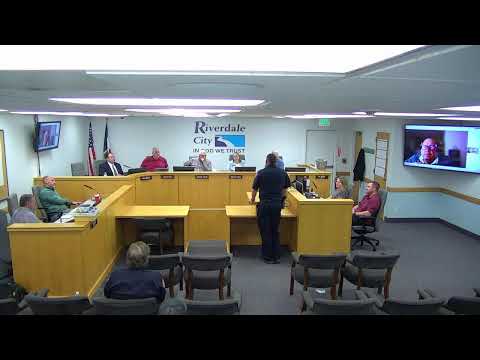
Riverdale City Council on Tuesday voted to table reapproval of an expired site plan for the Riverside Flats apartments to give staff and the developer time to seek options addressing a recently changed city parking ordinance.
City staff explained the site plan at issue was approved under an earlier parking standard (1.75 stalls per unit) but that a subsequent ordinance increased the requirement to 2.25 stalls per unit. Staff said applying the current 2.25 ratio to the approved plan would create a shortfall of parking stalls that, in staff’s view, would render the project infeasible without design changes or additional stalls. The developer argued the project’s financial viability depends on the approved layout and asked the council for direction.
City staff presented comparative research showing neighboring jurisdictions use a range of parking standards and noted single‑bedroom/ multi‑bedroom splits (rather than a blanket per‑unit ratio) as an alternative approach used elsewhere. Staff proposed several options for the council: deny the reapproval because the project no longer complies with the current ordinance; approve the reapproval under the old standard; amend the city parking code; or delay action so staff and the developer can explore alternatives.
Developer Chris Hatch of Forza Development described a multi‑year entitlement process and said market conditions and construction costs have changed since the original approval. Hatch said the project had been in the pipeline for several years and that redesigning the project to meet the new 2.25 requirement would likely make the project infeasible without a different financing approach.
Councilors debated precedent, legal risk and practical impacts. Several councilors cautioned that approving the plan in a way that departs from the ordinance carries legal risk if a third party challenges the decision. Staff counsel advised that while the council has discretion, deviating from adopted ordinance language is not generally good practice and carries risk.
After discussion the council voted to table the reapproval for one month and asked staff to meet with the developer during that period to explore alternatives — including whether a development agreement, minor site changes, or a targeted code amendment could achieve a workable outcome. Councilor Arnold seconded the motion (the motion maker was recorded in the meeting as making the motion but not identified by name in the transcript). The motion carried in a voice poll; councilors who voted "yes" during the roll call included Councilors Stevens, Arnold, Haas, Richter and Henson.