Get Full Government Meeting Transcripts, Videos, & Alerts Forever!
Get email alerts on the Remote Meetings topic
No spam. Unsubscribe anytime.
MCOG backs bill to ease teleconferencing rules for advisory bodies; Caltrans abstains
Summary
The Mendocino Council of Governments voted to support Senate Bill 239, which would ease public‑notice requirements for advisory bodies using teleconferencing; Caltrans’ representative abstained from the roll‑call vote.
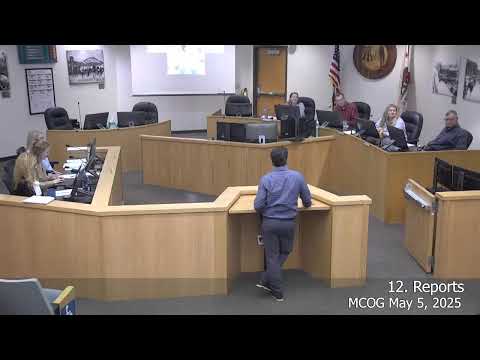
Mendocino Council of Governments on May 5 voted to adopt a position of support and authorized staff to submit a support letter for Senate Bill 239, a measure to ease teleconferencing notice requirements for advisory bodies to local agencies.
Staff said the bill would allow members of advisory bodies (for example, technical advisory committees and social‑service advisory councils) to participate remotely without requiring each teleconference location to be listed on the public agenda. Under current Brown Act practice staff described at the meeting, teleconferenced member locations must be identified and made available to the public or teleconferencing is limited to certain emergency exceptions. SB 239 would change that requirement for advisory bodies and, staff said, likely improve participation by remote rural stakeholders.
Board action and vote
After brief discussion, the board moved, seconded and held a roll‑call vote. The results recorded in the meeting were:
- Director Klein: Aye - Director Allman: Aye - Director Carter: Aye - Director Chris: Aye - Caltrans (Tasha Alstrand): Abstain - Chair Haschek: Aye
The motion passed with one abstention. Staff will submit a letter of support on behalf of the board.
Why it matters: MCOG staff said SB 239 is aimed at advisory bodies, where members often travel or are not based at a public facility; changing the notice requirement could reduce logistical burdens and encourage wider participation from local agency staff and community stakeholders.