Get Full Government Meeting Transcripts, Videos, & Alerts Forever!
Get email alerts on the Emergency Watershed Protection topic
No spam. Unsubscribe anytime.
Presenter outlines federal Emergency Watershed Protection Program and steps for local projects
Summary
At the May meeting the council heard a presentation from Shamika McCoy on the USDA Natural Resources Conservation Service Emergency Watershed Protection Program, including eligibility, typical local cost share, and a 60-day application window after an event.
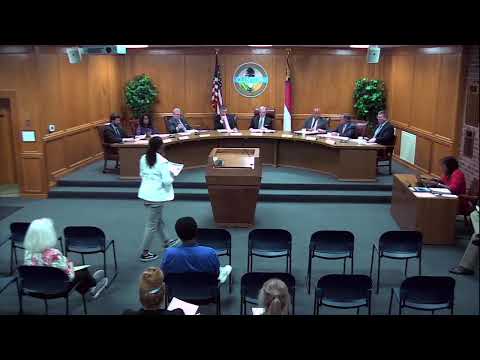
At the Clinton City Council meeting in May, Shamika McCoy, a retired Air Force service member and farmer, briefed the council on the federal Emergency Watershed Protection Program administered by the U.S. Department of Agriculture’s Natural Resources Conservation Service (NRCS).
McCoy said the Emergency Watershed Protection Program is “created to respond to emergencies, by natural disaster,” and listed common projects the program will authorize, including debris-clogged waterways, unstable stream banks, severe erosion threatening public infrastructure, wind-borne debris removal and repair of areas denuded by fire or drought. She told the council that both public and private landowners can be eligible, but projects must be submitted by a sponsor — typically a city, county or state agency.
The program requires a sponsor to provide land rights, obtain necessary permits and furnish the local cost share. McCoy said federal support can cover up to 75 percent of a project and in some approvals approach 90 percent; local contribution (about 25 percent) can be cash or in-kind. After a sponsor submits a letter to the NRCS, McCoy said, "they'll send out an engineer. The engineer will assess the site, and we deem it appropriate." She identified Tim Burt as the local NRCS contact who would oversee assessments.
McCoy advised that once an event is initiated there is a 60-day window to apply. She suggested specific local sites for follow-up inspection and asked the city manager to take notes so staff could pursue eligibility checks. Mayor Starling thanked McCoy and indicated staff would follow up; the manager and mayor signaled the matter would return to staff for potential action.
No formal council action was taken at the meeting on this presentation. The item closed with council direction to staff to evaluate potential local sites and next steps with NRCS.