Get Full Government Meeting Transcripts, Videos, & Alerts Forever!
Get email alerts on the Housing topic
No spam. Unsubscribe anytime.
Pima County to continue discussions on proposed 3¢ property tax for affordable housing; board delays vote to May 20
Summary
Supervisors debated a proposed 3-cent property tax increase to raise an estimated $207 million over 10 years for affordable housing and homeless services; the measure drew broad public support but supervisors asked for more modeling and stakeholder engagement before a final vote.
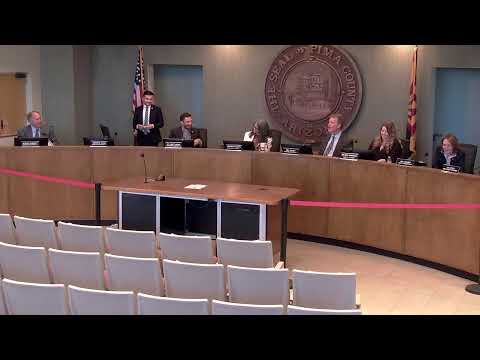
After an extended discussion on May 6, the Pima County Board of Supervisors voted to continue consideration of a proposed 3-cent increase in the county property tax rate that would dedicate funding to affordable housing programs. The board agreed to return the matter for additional analysis and stakeholder engagement at its May 20 meeting.
The proposal, advanced by Supervisor Steve Hines, would raise an estimated $207 million over 10 years if adopted and would be earmarked for development, preservation and maintenance of affordable housing, with a stated focus on households below area median income and people at risk of homelessness. The county’s fiscal memo, corrected and circulated before the meeting, estimated the per-household impact and presented leverage data drawn from earlier local gap-funding investments.
Supporters at the meeting included housing developers, nonprofit affordable-housing providers, the City of South Tucson’s mayor and community advocates. Compass Affordable Housing, La Frontera Arizona and the Southwest Fair Housing Council sent formal letters backing the tax.
Why it matters: Pima County’s housing needs assessment shows a shortfall of housing throughout the region, especially lower-cost units. The county has argued that dedicated, predictable local revenue is needed to leverage other public and private financing and to build or preserve housing at scale.
Board discussion: Several supervisors praised the proposal’s intent and the strategy’s potential to leverage private funding; Supervisor Allen noted earlier gap-funding showed strong leverage ratios and said housing is an “upstream” public investment that can reduce downstream social costs. Supervisor Cano and Supervisor Christy urged more district-level and stakeholder analysis. Supervisor Cano asked for a district-level breakdown of where the 3¢ impact would fall and for explicit plans on subsidies or fee waivers for affordable-house builders. Supervisor Christie asked for more comparisons that show “apples-to-apples” between earlier projected savings and outcomes.
Public input: More than a dozen letters and callers — including nonprofit leaders and community members — urged the board to adopt a sustained funding source for affordable housing. A sample of letters provided to the board described the tax as “pro-growth” and “pro-business,” arguing that housing supply investments protect long-term economic vitality.
Next steps: The board voted to continue the matter to the May 20 meeting and asked staff to provide additional district-level fiscal impact analyses, refine the subsidy options for affordable developers, and model alternatives requested by the home-builders group.