
Forest Service says Maroon Bells operations face budget shortfall; proposes ebike fee and RAFTA RFP to shore up funds
Get AI-powered insights, summaries, and transcripts
Subscribe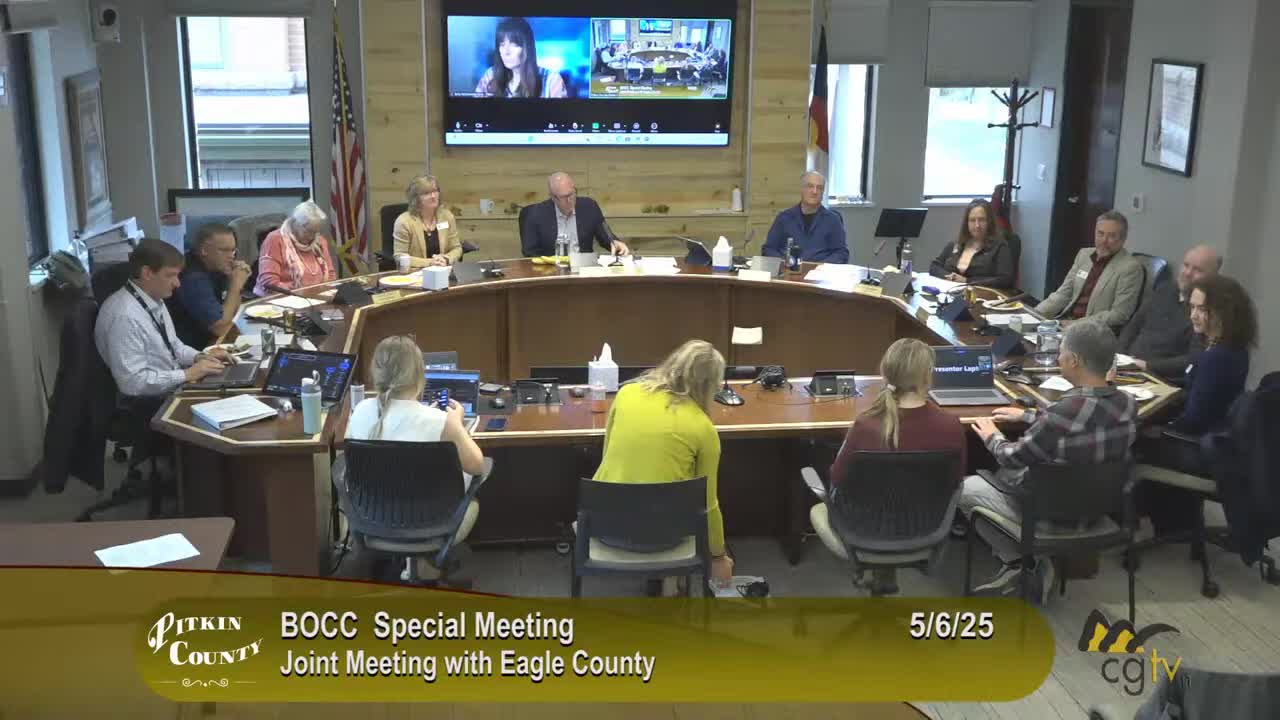
Summary
Forest Service leaders told Pitkin and Eagle County officials the Maroon Bells Scenic Area operates at a multi‑hundred‑thousand‑dollar shortfall and faces reduced services because of broad staffing losses; the agency plans to seek some new revenue via a proposed ebike fee and will publish a new RAFTA/operations RFP for 2026.
Forest Service officials told Pitkin County and partner representatives that operations at the Maroon Bells Scenic Area are unsustainably underfunded and that broader staffing losses across the White River National Forest are constraining management capacity across the Roaring Fork Valley.
Deputy District Ranger Jennifer Schuler summarized the fiscal situation: recreation fees and voluntary remittances currently provide the Forest Service about $220,000 annually for operations at the Maroon Bells, while estimated operating and deferred maintenance costs total roughly $600,000, leaving an annual revenue gap the Forest Service estimated at about $380,000. Schuler said the Forest Service has not collected any bike revenue to date and is exploring options to increase collections.
As an immediate revenue measure, the Forest Service proposed applying the existing motorcycle amenity fee ($5) to electric bicycles (ebikes) beginning in 2026. Schuler said current counters at the Bells show roughly 8,100 ebike visits annually; at $5 each that would generate an estimated $40,500 per year. She said the agency is exploring ticket scanning and partnerships with local rental shops so rental vendors can sell passes to customers before they travel to the valley.
RAFTA (the regional transit/shuttle operator) is preparing a request for proposals (RFP) for on‑site services that must be competitively procured; the solicitation is expected in mid‑May with a contract start date in 2026. The Forest Service said the current contract (H2O) needs to be replaced with an updated scope that reflects the CRMP (Comprehensive Recreation Management Plan) and modern operations needs.
In a longer, wider briefing, district and forest staff described sharp personnel declines across the White River National Forest. Staff said district field staffing will fall substantially in 2025 compared with 2024 levels; district recreation, trails, dispersed recreation, visitor information and wildlife staff all face cutbacks. Sam Masspin, recreation program manager, and Kevin Warner, district staff, described impacts that include far fewer trail‑clearing hours, reduced visitor information center hours, less routine restroom servicing and lower field presence for wildfire mitigation and visitor education. The Forest Service and county teams discussed patching gaps through partner funding and temporary county hires; Pick N County and municipalities are planning stepped‑up coordination and short‑term deployments of county deputies and temporary backcountry community officer positions to provide visible backcountry presence.
Forest staff warned that they will try to maintain operations at the Bells for summer 2025 but that services will be reduced and partners will need to step up to avoid resource impacts. "I have been told by our regional forester that we will not close the Maroon Bells Scenic Area for the summer," Jennifer Schuler said, "so we will find a way to somehow staff it at a level that is adequate enough to meet the basics of public safety and such." Officials urged residents to increase personal stewardship of public lands and to support coordinated volunteer and nonprofit efforts this summer.
Ending: The Forest Service asked counties and nonprofit partners to consider short‑term funding and staffing help for trail, toilet and visitor services and to continue coordinated regional pressure to restore federal capacity; the agency will return with the RAFTA RFP and further details on ebike fee implementation and projected revenues.