Get Full Government Meeting Transcripts, Videos, & Alerts Forever!
Get email alerts on the School Configuration topic
No spam. Unsubscribe anytime.
Committee recommends board-directed process, not mandatory referendum, for high-school reconfiguration study
Summary
Members favored removing the non-binding referendum requirement from Policy 119 and asked administration to draft a tailored process for studying high‑school configuration, including community engagement and data analysis, to be presented to the full board.
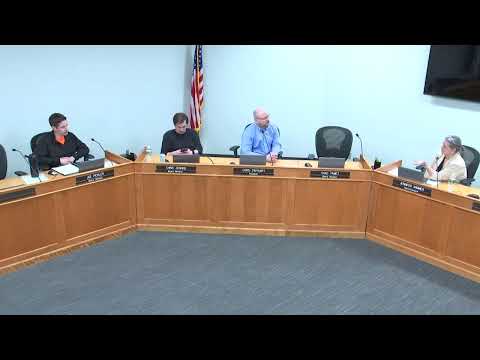
The policy committee reviewed Policy 119 (high‑school configuration) on May 6, 2025, and signaled a preference for replacing the policy’s prescriptive task‑force and automatic non‑binding referendum language with a board‑approved process tailored to current conditions.
Administration and committee members said the level of controversy that prompted the original policy has abated and that the board would be better served by a flexible, board‑directed study process. Committee members suggested the board should receive a draft plan from administration that outlines data to be collected, community‑engagement mechanisms (surveys, open meetings and other outreach), and proposed timelines; the board could then approve the study plan and decide whether to pursue a non‑binding referendum.
Why it matters: Policy 119 currently prescribes specific steps, timelines and a non‑binding referendum schedule for pursuing high‑school reconfiguration. Committee members said those rigid requirements may not reflect current community expectations and could limit the board’s ability to design the most useful engagement and decision process.
Key discussion points - Several committee members said the community appears less polarized than when the original policy was drafted and that a stepwise, board‑approved study process (data review, surveys, and broad engagement) would be appropriate. - Members agreed that if a referendum were used, it should be well‑timed and informed by thorough data, but they did not favor keeping an automatic referendum requirement embedded in policy. - Administration was directed to draft a recommended process for study and engagement (including options for surveys and task‑force formats) and present that plan to the full board for discussion at the next available meeting.
Next steps Administration will prepare a draft process and timeline, circulate it as a committee/board discussion item and present it to the full board in the coming meetings. Committee members supported either suspending or significantly simplifying the current policy language and using a board‑approved procedural plan for future work on configuration.